Last year, at the 17th Annual Advanced Placement (AP) Psychology Convention, 175 students, teachers and administrators from six schools and two states gathered at McDonogh School in Maryland to celebrate research conducted by AP Psychology students. The students presented their research in break-out sessions and poster sessions on topics ranging from replications of classic conformity and bystander intervention studies to current topics like “The Impact of the Hajib: Religious and Ethnic Stereotypes in Children.”
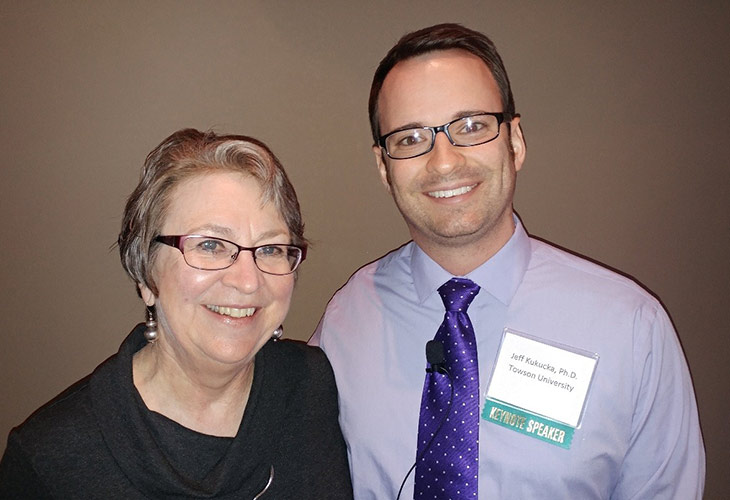
After captivating the students’ interest with real-life stories of wrongful convictions, examples of the confirmation bias in action, and resulting efforts to make meaningful changes in policy, he ended his talk with the following three points, “people are interesting, wherever there are people, there is psychology, and we can use psychology to solve real-world problems.” A common goal of psychology teachers is to help our students learn to be critical thinkers and consumers of information, to understand the real-world applications of the concepts that we study and to empower them to use the knowledge they have gained to make a difference in the world.
Now in its 18th year, the AP Psychology Convention provides the opportunity for students to practice these skills in an authentic way by selecting a topic of interest, researching it in depth and making recommendations for action and future research. Former students often return and credit this experience as having a profound impact on their future academic and professional careers.
About the author
 Peggy Ollerhead graduated with a BS in education and special education from Northern Arizona University. She earned a master’s degree and certificate of advanced study from Towson University in Maryland. She has been a practicing school psychologist at Roland Park Country School in Baltimore, Maryland for the last 25 years. Ollerhead’s passion for teaching and psychology led her to establish the school’s first AP psychology class in 1995. Her students have participated in the annual “Improving the quality of life of adolescents” research convention for 15 years. Through their participation in the convention, her students understand the value of being critical thinkers and consumers of information, learning by doing and preparing to use their knowledge to make a difference in the world.