

APA Summit on High School Psychology Education
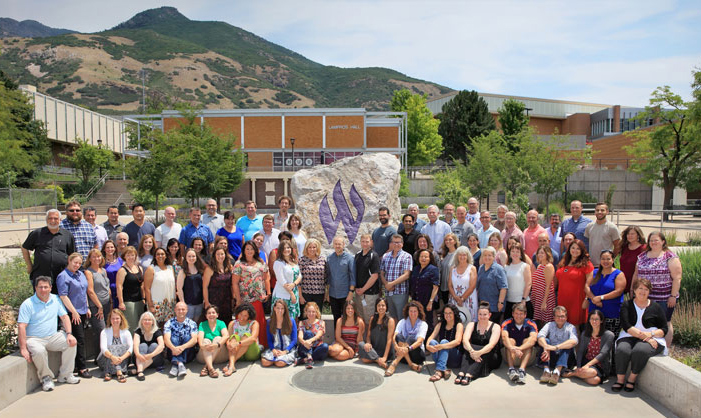
A weeklong summit on the teaching of high school psychology.

In recognition of the importance of high school psychology as the start of the pipeline into the discipline, the first-ever APA Summit on High School Psychology Education was held July 9–14, 2017, at Weber State University in Ogden, Utah. The mission of the summit was to create the best future for high school psychology education. A total of 70 psychology educators from high schools, community colleges and undergraduate psychology programs participated in the summit. Read about the summit in the APA Monitor on Psychology magazine or in the Psychology Teacher Network newsletter. Videos of the summit keynote addresses are provided at the bottom of this page.
APA has convened a number of important national conferences on education and training in psychology, including two national conferences on undergraduate education in psychology, over the last three decades. This summit was the first national conference on high school psychology education.
High school psychology courses are frequently students' first—and maybe the only—formal exposure to the discipline. And their popularity grows. Enrollment in high school psychology courses continues to rise annually.
- In 2017, more than 302,000 students took the Advanced Placement psychology examination.
- Also in 2017, more than 20,000 high school students worldwide either took the International Baccalaureate (IB) psychology exam or wrote their IB extended essay in psychology.
- According to the National Center for Education Statistics, in 2009 (the most recent year of available data), nearly 30 percent of graduating students earned credits in a psychology course during their four years in high school (U.S. Department of Education, 2011).
Furthermore, high school psychology teachers play an important role in educating the public about psychological science.
The summit addressed several important topics, including administrative, curricular and instructional matters. It allowed teachers, faculty and other stakeholders to discuss and recommend actions that could positively impact the teaching of high school psychology for years to come.
The mission of the summit was to create the best future for high school psychology education.
The summit had the following goals:
1. Strengthen the value of psychological science through the teaching of high school psychology.
2. Strengthen the delivery and assessment of psychological science through the teaching of high school psychology.
3. Strengthen the reach of psychological science through the teaching of high school psychology.
The summit had the following objectives to meet the goals above:
1. Make the case that high school psychology is and should be considered a science.
2. Articulate what skills students gain through a high school psychology course, how these skills prepare students for success in college and careers, and how teachers can promote these skills to students.
3. Develop a framework for the next revision of the APA National Standards for High School Psychology Curricula that considers psychology concepts and practices along with content.
4. Recommend best practices in assessment in order to enhance high school psychology teachers’ ability to accurately measure student knowledge and skills in their psychology classes.
5. Identify high school psychology teachers and promote quality in teacher credentialing so that teachers are prepared to teach the course properly as specified by APA’s National Standards.
6. Recommend and support high quality professional development opportunities for high school psychology teachers.
7. Develop a blueprint for enhancing diversity in high school psychology to diversify the pipeline into psychology, ensure that diversity concepts are addressed at both a content and interpersonal level, and increase access to psychology as broadly as possible.
8. Promote best practices in the use of technology and high school psychology education and make recommendations on how technology can best support high school psychology teaching and learning.
The summit brought together 70 participants who worked in eight separate working groups.
Each group worked to create specific outcomes related to their assigned strand. The steering committee also intends to produce an overarching publication to capture the summit deliberations and recommendations.
Psychology as a Science
Psychology is a science, but its recognition by the public, school administrators and other stakeholders is inconsistent. We will investigate where psychology belongs in the high school curriculum and make the case for psychology as science (e.g., for science credit at the high school level).
This group will develop a position paper regarding the role of psychology in the sciences and connect the current science standards (e.g., the Next Generation Science Standards) with the National Standards for High School Psychology Curricula.
Skills That Promote Flourishing
This group will examine and recommend skills promoting emotional well-being (e.g., resilience and gratitude), metacognition (e.g., “study” skills), and employability (soft skills, such as cooperation).
Outcomes include activity development, assessment and rubrics relative to teaching activities, and a document outlining best practices.
National Standards for High School Psychology Curricula
This group will develop scientific core skills and practices in psychology and develop a framework for updating psychology’s content standards.
The next working group to update the National Standards for High School Psychology Curricula will use the framework developed by this group to develop the next set of psychology standards aligned with guidelines for teaching introductory in psychology at postsecondary institutions.
Assessing Student Knowledge and Skills in Psychology
Assessment is integral to teaching and learning. This group will create:
- Exemplars of best practices for assessment in the high school psychology course.
- A guide to develop and plan assessments for high school psychology, including how to evaluate and use the data gathered.
- A toolkit to promote scholarship of teaching and learning among high school teachers as a means for assessing and evaluating student learning.
Credentialing and Identifying the High School Psychology Teacher
The preparation of pre-service high school psychology teachers and the identification of current teachers are both critical to consider. This group’s outcomes include:
- Templates with prompts to enable TOPSS members and regional networks of high school psychology teachers to craft state-based advocacy plans to:
a. Accept the high school psychology course for social studies and/or science credit.
b. Advocate a state-issued teaching credential for high school psychology for states where no credential currently exists, or assess the integrity of the current teaching credential in states where a credential currently exists.
- A plan to create a state-by-state database of high school psychology teachers that includes data gathering, data input, and a plan to refresh the database every three years.
Ongoing Professional Development
This group will work to recommend online and in-person professional development opportunities for psychology teachers.
The group will work to develop templates for online professional development modules that will build content and pedagogical knowledge, and recommend both online and in-person professional development opportunities as needed.
Diversity and Access
The participants will consider issues of diversity in the teaching of high school psychology, including ways to promote greater awareness and understanding of diversity issues among high school psychology teachers and students.
The group will develop resources for teachers addressing diversity issues, such as implicit bias and stereotype threat, with high school psychology students.
They will also develop or recommend guidelines on how teachers can introduce and infuse diversity in all areas of teaching psychology; these guidelines will include psychology content, explanation of topics to address, and in-classroom resources.
Technology and Online Learning
This group will produce a document sharing best practices in the use of technology for high school psychology teachers. The document will include exemplar tools, apps and examples on how to use tools to enhance teaching and learning.
This group will also make recommendations regarding online teaching and increasing the reach of psychological science, particularly in rural or underserved areas.
Finally, this group will produce a list of useful technology tools that are pedagogically appropriate for teaching specific psychology concepts.
During the summit, the eight working groups developed teaching resources and made recommendations to advance the summit’s mission of creating the best future for high school psychology education. Published summit deliverables are listed below.
Science
-
High School Psychology is Science
This resource makes the case that psychology should be included as a STEM discipline at the high school level. -
Strategies For Communicating Psychology as a K-12 Science
A review of the APA National Standards for High School Psychology Curricula and the Next Generation Science Standards Science Practices and Crosscutting Concepts. -
Talking Points for Advocating Psychology as a Science Course
How high school psychology meets the criteria of a science course so that states may award STEM credit for psychology coursework. -
"Promoting Psychological Science: A Compendium of Laboratory Exercises for Teachers of High School Psychologyopens in new window"
The Society for the Teaching of Psychology has published a new e-book that provides lab exercises for most of the topics taught in a high school psychology course. The idea for the e-book came out of the APA high school summit.
Skills
-
Teaching Resources for High School Psychology Teachers on Skills
Three sets of materials are provided for teachers and students, on metacognitive, transferable and well-being skills.
Assessment
-
Assessment Guide for Psychology Teachersopens in new window (PDF, 425KB)
This guide was developed to help teachers continue to build confidence in their assessment skills in order to provide useful feedback to students about their intellectual progress. -
High School Assessment Exemplarsopens in new window
These vetted assessment exemplars for high school teachers can be used in the introductory psychology class. Teachers can search for the “high school” topic area to find these templates.
Credentialing
-
Advocacy Toolkit for the Psychology Teaching Credential
This guide encourages teachers to advocate for the psychology teaching credential in each state.
Professional Development
-
Professional development opportunities for high school psychology teachers
A comprehensive list of professional development at the state, regional and national levels. -
Teaching Psychology: Where Can I Find Help?
This resource provides the psychology teacher with a quick reference for needs and questions that arise while preparing to teach the course. -
Resource Vetting Rubricopens in new window (PDF, 47KB)
This document should be used when vetting resources to use in the high school psychology classroom. -
Building, Guiding and Sustaining Regional Networks for Psychology Teachersopens in new window (PDF, 108KB)
This guide outlines benefits of regional networks, a "how to" starter kit, model formats and suggestions for overcoming obstacles. -
APA Performance Standards With Research: An Annotated Bibliography for High School Psychology Teachers
This resource was designed to provide teachers with historical and contemporary research to support the APA's National Standards for High School Psychology Curricula. (Archived, May 2026)
Diversity
-
Considering Diversity: A Self-Reflection Tool for Psychology Teachers
This resource aims to boost interpersonal and cultural sensitivity in both students and teachers. -
Video on the Value of High School Psychology
This video demonstrates the value of high school psychology for all students.
Technology
-
Integrating Technology in the High School Psychology Classroom
This resource provides technology tools for high school psychology teachers in six categories. -
TOPSS High School Psychology Course Template Available in Canvas
This resource set was available in Canvas to provide teachers with resources, videos and test banks to use in class. The template, developed for teachers by teachers, was meant to be customized. (Archived, May 2026) -
Video: High school psychology: Better understand your worldopens in new window
This video highlights the value of high school psychology for all students. -
Technology Tips & Tricks: Assessment and Engagement*
This blog post recommends formative assessment technology tools and mobile apps for the psychology classroom. -
Using Tech Tools in Your High School Psychology Classroom*
This blog post recommends social learning technology tools for the psychology classroom. -
Audience Members, Collaborators and Competitors: Technology Tools to Connect*
Suggestions of creation technology tools to connect students to the curriculum. -
Technology Tools for Psychology Teachers: How to Take Back Your Time*
This blog post provides teacher technology tools for the classroom. -
Using technology to help students understand content and participate in metacognitive skills*
This blog post recommends online tech tools for creating interactive lectures, which allow teachers to give direct instruction with built-in quick activities for students to keep them engaged.
* These blog posts were posted to the Psych Learning Curve blog, which was taken offline in mid-2025. Please contact topss@apa.org if you would like a copy of these original posts.
BEA Steering Committee
Co-chair: Randal M. Ernst, EdD, Lincoln Public Schools, Lincoln, Neb. (retired); Nebraska Wesleyan University, Lincoln, Neb
Co-chair: Amy C. Fineburg, PhD, Jefferson County Schools, Birmingham, Ala
Charles T. Blair-Broeker, MAT, Cedar Falls High School, Cedar Falls, Iowa (retired); Hawkeye Community College, Waterloo, Iowa
Regan A.R. Gurung, PhD, University of Wisconsin, Green Bay, Wis
Ladonna Lewis, PhD, Glendale Community College, Glendale, Ariz
Yadira Sánchez, PsyD, Academia María Reina, San Juan, Puerto Rico
Daria Schaffeld, MA, Prospect High School, Mt. Prospect, Ill
Kenneth A. Weaver, PhD, Emporia State University, Emporia, Kan
Kristin H. Whitlock, MEd, Davis High School, Kaysville, Utah
Weber State University Liaison
Eric Amsel, PhD, Weber State University, Ogden, Utah
Summit Co-Leaders
Tina Athanasopoulos, MA, CAS, John Hersey High School, Arlington Heights, Illinois
Elizabeth Yost Hammer, PhD, Xavier University of Louisiana, New Orleans
Tammy L. Hughes, PhD Duquesne University, Pittsburgh
Rob McEntarffer, PhD Lincoln Public Schools, Lincoln, Nebraska
Debra E. Park, MA, Rutgers University, Camden, NJ
Steven D. Turner, MEd, Albemarle High School, Charlottesville, Va
Brad Wray, Arundel High School, Gambrills, Md
Platinum Contributing Sponsors
$10,000 and above- APA Board of Directors
- APA Board of Educational Affairs
- APA Div. 2 (Society for the Teaching of Psychology)
- APA Education Directorate
- American Psychological Foundation (APF/Education Directorate Lee Gurel Fund for Professional Development of High School Teachers of Psychology)
- David and Carol Myers Foundation
- Weber State University (Office of the Provost and the College of Social and Behavioral Science)
Bronze Contributing Sponsors
$1,000-$2,499
- Anonymous
- APA Div. 9 (Society for the Psychological Study of Social Issues)
- APA Div. 14 (Society for Industrial and Organizational Psychology)
- APA Div. 54 (Society of Pediatric Psychology)
- APA Div. 56 (Division of Trauma Psychology)
- National Council for the Social Studies Psychology Community
- Psi Beta
- The College Board
- Utah Teachers of Psychology in Secondary Schools
Donor
- APA Div. 12 (Society of Clinical Psychology)
- APA Div. 15 (Educational Psychology)
- APA Div. 16 (School Psychology)
- Bedford, Freeman, and Worth Publishers
- Houghton Mifflin Harcourt
- Society for Personality and Social Psychology
Please contact the APA Education Directorate if you would like to contribute to this summit.
2017 Summit Keynote Videos
This content is disabled due to your privacy settings. To re-enable, please adjust your cookie preferences.
Summit Opening Remarks
Opening remarks on July 9, 2017, from the APA Summit on High School Psychology Education.
This content is disabled due to your privacy settings. To re-enable, please adjust your cookie preferences.
High School Psychology: A Long and Winding Road
Charlie Blair-Broeker, MAT, Hawkeye Community College, delivered an address on July 9, 2017, at the APA Summit on High School Psychology Education.
This content is disabled due to your privacy settings. To re-enable, please adjust your cookie preferences.
Introducing Diverse Perspectives in High School Psychology: Sources and Content
Tammy L. Hughes, PhD, Duquesne University, delivered an address on July 10, 2017, at the APA Summit on High School Psychology Education.
This content is disabled due to your privacy settings. To re-enable, please adjust your cookie preferences.
Teaching Psychological Science in a Post-Truth Age
David Myers, PhD, Hope College, delivered an address on July 13, 2017, at the APA Summit on High School Psychology Education.