

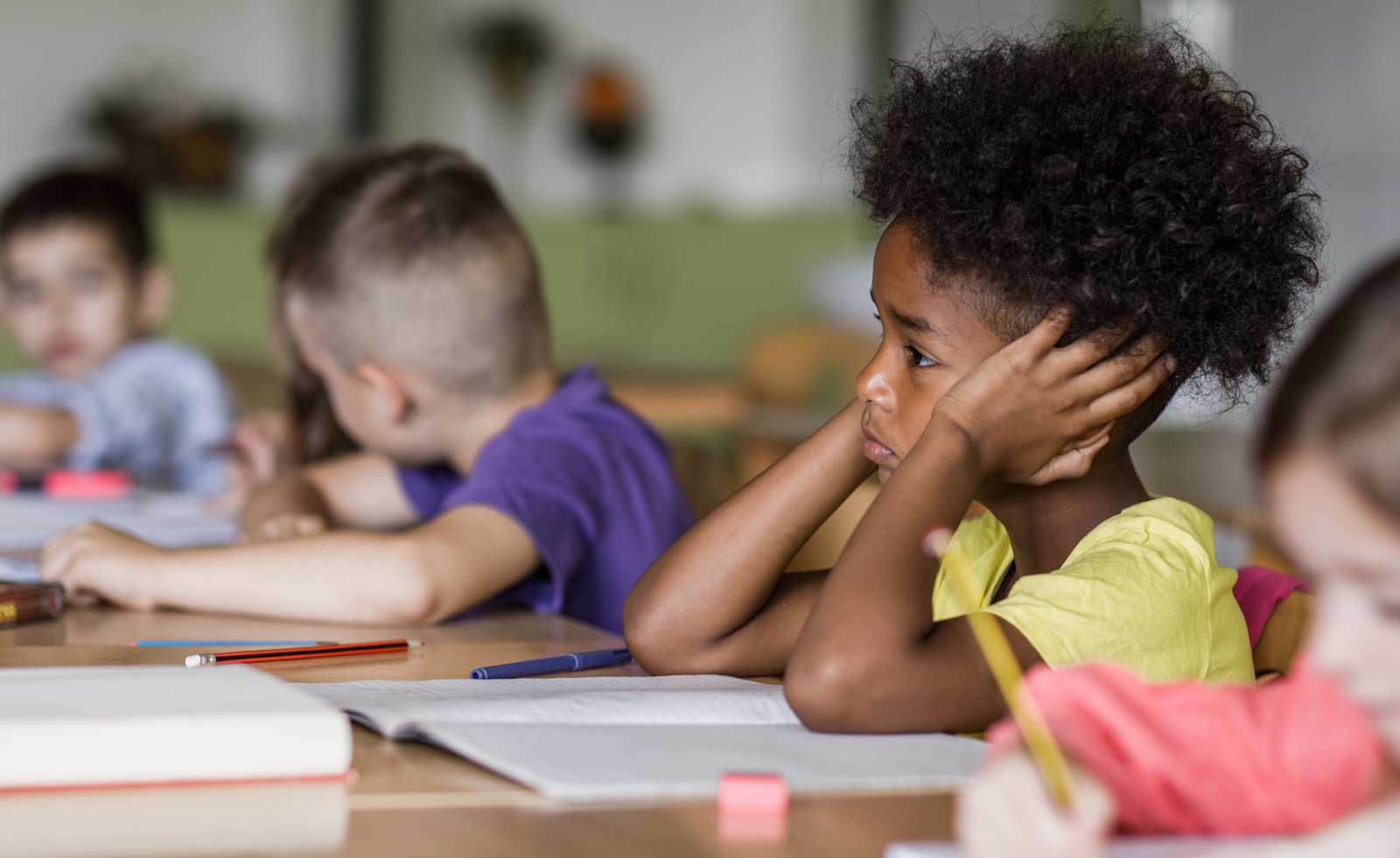
Teachers are an important part of establishing and maintaining healthy environments for students to learn and grow. Avoiding students who display signs of anxiety does not help them in any way. Teachers play an important role in guiding students suffering from excessive anxiety to professionals in the building who can be of assistance. Teachers can assist students who are expressing anxiety by providing emotional support, promoting positive peer relationships and connecting students with other professionals in the school who may be helpful resources.
What is anxiety?
Anxiety is an emotion that can feel like worry, dread, or uneasiness. Anxiety and fear are similar, but fear involves worry that is more realistic about things in the present, whereas anxiety involves excessive concerns that might not match the actual danger. Anxiety can also involve anticipating that negative things will happen in the future and ruminating about them. Some anxiety may be normal (e.g., before public speaking) or helpful because it may be motivating (e.g., getting ready for a test), but too much anxiety can interfere with daily functioning.
What are the signs of anxiety in children and teens?
Physical signs of anxiety include sweating, rapid heartbeat, increased breathing rate, stomachaches, and headaches, as well as changes in appetite and sleep patterns.
Emotional signs include excessive worrying, focusing on negative thoughts that bad things will happen, difficulty concentrating, feeling stuck, and irritability.
Behavioral signs include restlessness, acting out, avoiding situations or tasks, and looking out for danger.
What makes students anxious?
They may worry when they think their work has to be perfect, or may be uncomfortable speaking up in class. Students may also become anxious when they feel like they don’t understand something or experience uncertainty while they are learning.
Anxiety can also center around social events. Students may be anxious about fitting in, making friends, or fear being humiliated, judged, or rejected in social situations.
Students may worry more generally about what is going to happen in the future and about upcoming events and activities.
While younger children may be more likely to become anxious around separating from parents or the home environment, teens may be more likely to become anxious about social situations.
What problems can arise when students experience frequent or severe anxiety?
When students experience frequent anxiety they may:
- Withdraw from others
- Develop low self-esteem
- Avoid positive opportunities and experiences
- Have difficulty completing assignments
- Reduce effort for fear of failure
- Act out as a result of frustration or avoidance
- Develop physical symptoms
This information is designed to help teachers respond to students who may be in need of support. It is not intended to be used as a diagnostic tool or to replace the use of formal assessments employed by mental health professionals. Additionally, it is important to consider the context of the situation, individual differences, and cultural and linguistic factors.
What can teachers do?

Do: Trust that the student is struggling.
Don’t assume that their worrying is an act or a way to get attention.

Do: Try to understand what is worrying them by listening and validating their feelings.
Don’t minimize or dismiss their worries, telling them talking about their feelings is not appropriate.

Do: Explain what anxiety is and that it is a natural reaction to stress that impacts our thoughts, feelings, and behaviors like a wave that builds up and then goes away.
Don’t tell them they shouldn’t feel this way.

Do: Try to be patient with the anxious student.
Don’t become frustrated with the student’s anxiety.

Do: Gently challenge unhelpful thinking (e.g., ask them if they have ever failed a test before, or if they have done things that have helped them in the past).
Don’t belittle unrealistic thinking.

Do: Help students find a solution to their worries (e.g., make a plan to tackle a project or task).
Don’t leave them on their own to struggle.

Do: Give them advance warning about what is going to happen (e.g., substitute teacher); talk about what is going to happen and why.
Don’t surprise them with a change in schedule or routine.

Do: Normalize uncertainty and that making mistakes is an expected part of the learning process.
Don’t emphasize the correct answer rather than the process of learning.
Students may benefit from using these coping strategies
Encourage the student to use self-calming or anxiety-reducing techniques such as deep breathing, drawing, or journaling.
Allow the student to sit where they’re most comfortable, like near the teacher or a friend.
Provide a “take a break” pass to let the student walk down the hallway, get a drink, or leave the classroom when needed.
Assign students a study buddy or other peer support.
Allow them to have a comfort object, such as a stress ball.
When to seek assistance
- If you notice that a student displays symptoms that interfere with their school day or their ability to progress academically or socially.
- While all students might get anxious at times, seek assistance when it’s combined with transitions, crisis, outside stressors, or other extreme situations.
Only a qualified mental health professional can determine whether the anxiety a student displays should be diagnosed as an anxiety disorder.
Additional resources
Related Mental Health Primers
The Mental Health Primers are developed by the Coalition for Psychology in Schools and Education. This resource was updated in October 2021 with support from cooperative agreement NU87PS004366 funded by the Centers for Disease Control and Prevention (CDC). Its contents are solely the responsibility of the authors and do not necessarily represent the official views or endorsement of the CDC or the Department of Health and Human Services.