

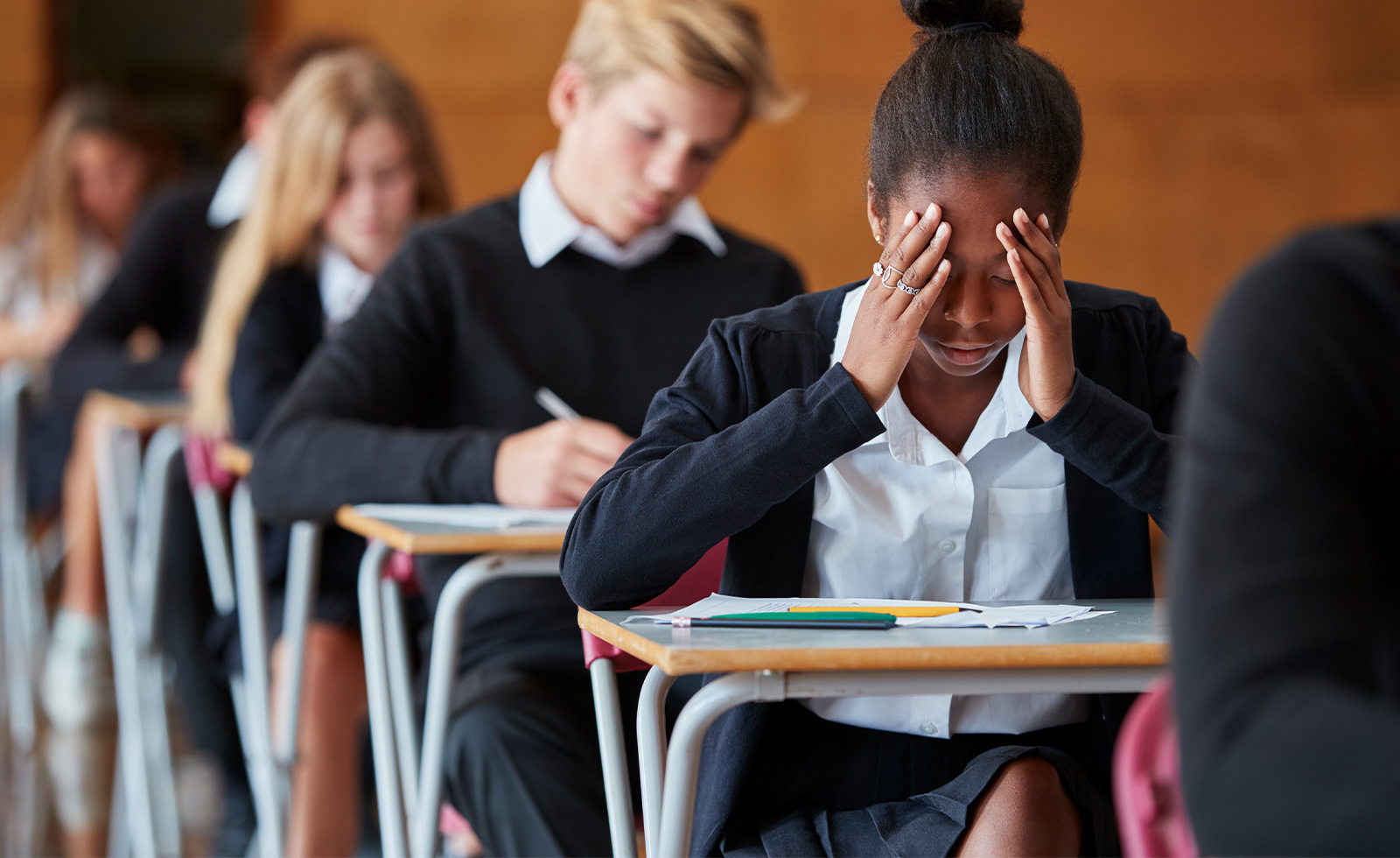
Teachers are an important part of facilitating student learning, well-being, and growth. Whether teaching remotely in a virtual learning environment (VLE), in person, or in a hybrid model, teachers can support students through crises such as the COVID-19 pandemic, exposure to racial injustice, and other situations. Teachers can also play an important role in identifying students who may need to meet with school mental health professionals.
Disclaimer
This information is designed to help teachers respond to students who may be in need of support. It is not intended to be used as a diagnostic tool or to replace the use of formal assessments employed by mental health professionals. Additionally, it is important to consider the context of the situation, individual differences, and cultural and linguistic factors.
How might children exposed to crisis behave in school?
Across a multitude of situations, students may respond to the crises that they have experienced by showing abrupt changes in personal hygiene, sleep habits, weight, school performance, mood, and/or participation in activities.
What can teachers do?

Do: Show caring by noticing changes in behavior, “You don’t seem like yourself lately. Is there something going on?” Invite students to connect via email, by calling their parents, or by mailing a note to their homes with a self-addressed stamped envelope for them to write you back.
Don’t push for information, solicit it from their peers, or ask the student pointed questions.

Do: Schedule regular check-ins with students/families you are concerned about, either virtually or in person.
Don’t assume that no response to a check-in means you are not still needed.

Do: Lend an ear. Give a casual invitation, like, “Let’s talk.”
Don’t ignore concerns or minimize what has happened.

Do: Be approachable by letting students know you are one of the adults here to keep them safe.
Don’t tell children everything will be the fine or the same.

Do: Listen more than you talk.
Don't dominate the conversation.

Do: Provide opportunities for students to express their feelings other than through talking. Invite them to write or draw about their experiences and feelings.
Don’t ask them to recount explicit traumatizing details of the events.

Do: Provide multiple different formats for students to connect with you. For example, in a VLE, you may choose to have cameras on or off, use the chat function, or connect via email.
Don’t assume that just because a student keeps their camera off in a VLE or chooses to use chat instead of their voice that they don’t want to connect.

Do: Remain calm when both referring to and discussing the events.
Don’t describe these events as a catastrophe or disaster.

Do: Keep to routines as much as possible.
Don’t give surprise assignments or make last-minute schedule changes.
Refer students to further help if needed
- Refer to school/district policies regarding crisis intervention and/or management.
- Contact school counselors, psychologists, social workers, and other personnel as needed to share your concerns about students.
Additional resources
Empirical research
Burns, D., & Doka, K. (2010). When kids are grieving : addressing grief and loss in school. Thousand Oaks, California: Corwin.
Grolnick, W. S., Schonfeld, D. J., Schreiber, M., Cohen, J., Cole, V., Jaycox, L., ... Zatzick, D. (2018). Improving adjustment and resilience in children following a disaster: Addressing research challenges. American Psychologist, 73(3), 215-229. https://dx.doi.org/10.1037/amp0000181
“Natural Disasters” (pp. 435-450), by Lazarus, P. J., Jimerson, S. R., & Brock, S. E. In S. E. Brock, P. J. Lazarus, & S. R. Jimerson (Eds.), Best Practices in School Crisis Prevention and Intervention, 2002, Bethesda, MD: National Association of School Psychologists; and from other crisis information posted on the NASP website at www.nasponline.orgopens in new window.
Virtual Mentor. 2010;12(9):750-753. doi: 10.1001/virtualmentor.2010.12.9.imhl1-1009.
Heath, M. A., & Cole, B. V. (2012). Strengthening classroom emotional support for children following a family member’s death. School Psychology International, 33(3), 243-262.
Swann, Jennifer (2017) Separation and divorce in the primary school: a critical consideration of the nature, incidence and impact on children, and possible school responses, both proactive and reactive. The STeP Journal: Student Teacher Perspectives, 4 (3). pp. 50-57.
Related Mental Health Primers
The Mental Health Primers are developed by the Coalition for Psychology in Schools and Education. This resource was updated in October 2021 with support from cooperative agreement NU87PS004366 funded by the Centers for Disease Control and Prevention (CDC). Its contents are solely the responsibility of the authors and do not necessarily represent the official views or endorsement of the CDC or the Department of Health and Human Services.