

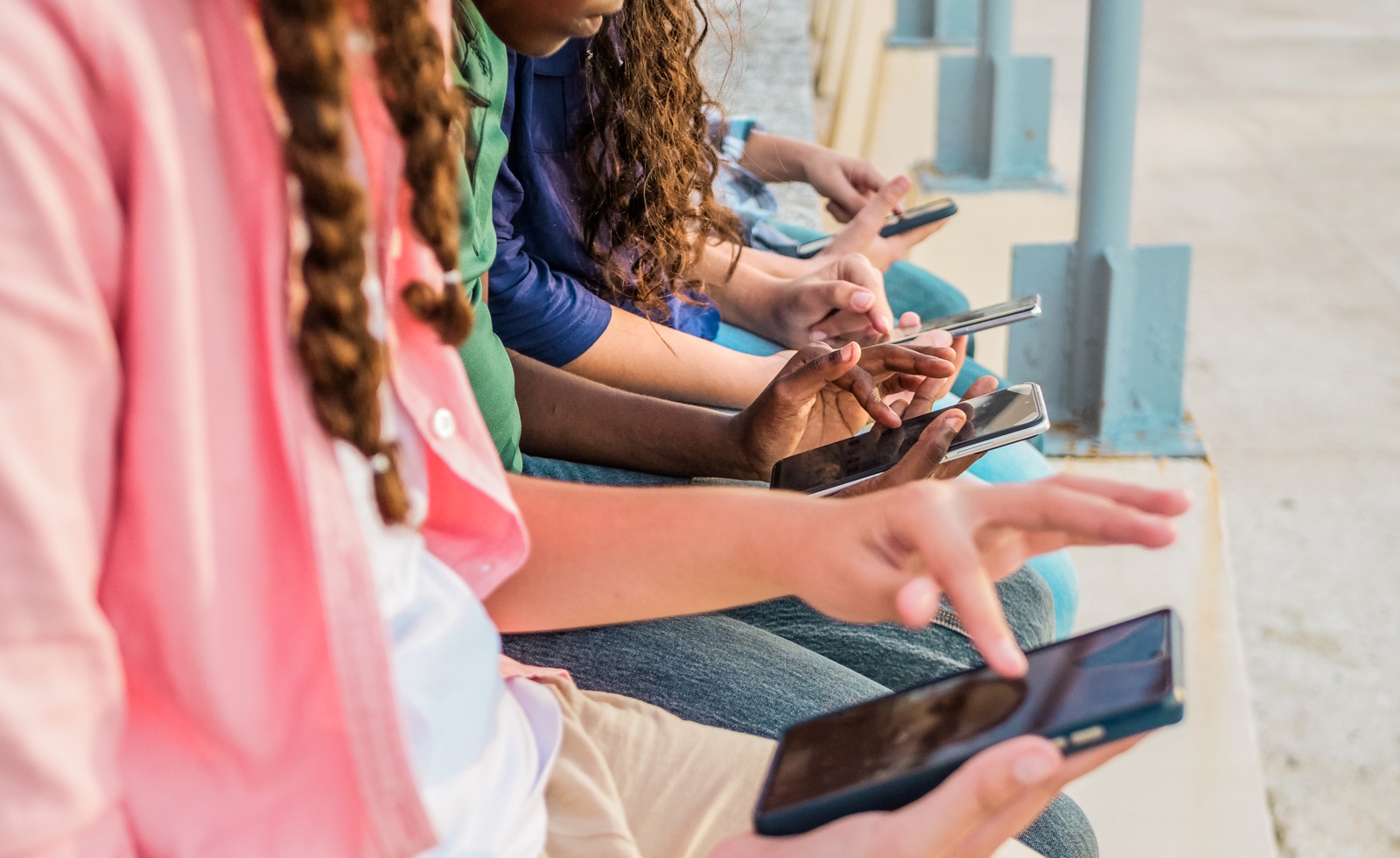
It is increasingly evident that online environments profoundly shape how students perceive their peers and themselves, which can ultimately impact classroom experiences. For instance, educators may observe heightened interpersonal friction during collaborative activities stemming from students’ digital interactions the previous evening. Students could appear distracted during lessons, their minds wandering to images they saw posted on social media. And comparisons regarding curated presentations of lifestyle—such as attire, travel, or social invitations—can lead to distress.
In today’s digital environment, many students are regularly exposed to images and information that invite comparison with others, including metrics such as “likes” and “follows.” Social media and online spaces make it easy for students to measure themselves against peers, influencers, and celebrities, often based on incomplete, inaccurate, or highly edited information. Critically, research suggests that social comparison in online contexts can negatively affect mental health and well‑being.1,2
When these social comparisons begin to harm students at school, educators may rightly become concerned. Understanding what social comparison is and how it shows up in the classroom can help educators respond with awareness, support, and appropriate connections to additional resources.
What is social comparison?
Social comparison refers to the drive to evaluate oneself against others.3 In certain situations, a tendency to notice others’ achievements may motivate students to set goals, build skills, or try new strategies; however, social comparison becomes concerning when it is incessant, emotionally distressing, or interferes with a student’s typical functioning.
Modern technology allows students to monitor others throughout the day with ease. For some students, constantly perceiving others as doing “better” than themselves can become very upsetting. In online environments, students may compare themselves not only to celebrities or influencers, but also to carefully selected versions of their peers’ lives. These comparisons can contribute to feelings of inadequacy, exclusion, or dissatisfaction. Interestingly, some negative effects of social media‑based social comparison may be especially common among girls.4
Note: We acknowledge there may be additional complexities to the scientific fields of social comparison and social media which warrant consideration but are beyond the scope of this brief report.
How might social comparison appear at school?
When social comparison begins to negatively affect students, educators may notice that students are:
- Engaging in frequent negative self‑talk, including comments about appearance, abilities, or self‑worth
- Demonstrating preoccupation with others’ plans or accomplishments
- Showing signs of low mood, withdrawal, or interpersonal tension
- Becoming distracted by what others are saying, doing, or posting online
- Spending significant time checking social media or seeking feedback on their own posts
- Expressing worries related to fear of missing out (“FOMO”)
This information is designed to help teachers respond to students who may be in need of support. It is not intended to be used as a diagnostic tool or to replace the use of formal assessments employed by mental health professionals. Additionally, it is important to consider the context of the situation, individual differences, and cultural and linguistic factors.
What can teachers do?
Do
- Talk about what social media does and does not represent. Help students to think critically about the content they see, recognizing that online content is often selective, edited, and does not show the true full picture of someone’s life
- Encourage opportunities for offline connection and belonging, such as classroom collaboration, clubs, or shared activities.
- Support students in developing emotional awareness and regulation skills, including identifying emotions, reframing unhelpful thoughts, and practicing healthy ways to cope with stress.
- Recognize that social media use exists along a spectrum. Avoid framing all social media as implicitly harmful (e.g., some social media supports community building, knowledge sharing, etc.).
- Help students think intentionally about how they use social media, including time they spend on it and the types of content they choose to engage with (e.g., ask students to carefully consider whether the accounts they follow support or hinder their well‑being).
- Address language that draws hurtful comparisons, and reinforce inclusive, respectful classroom norms. Remind students that everyone deserves to feel seen and safe, and the way we speak about one another matters (e.g., encourage empathy and kindness rather than judgement).
Don't
- Model negative self‑comparisons when talking about yourself (R. Iacoletti, personal communication, September 22, 2025) (e.g., “I will never be able to take a trip like that;” “I wish I was as smart as them”).
- Disregard students’ experiences in the digital realm because they take place online. These experiences are very real and can have very real consequences.
- Voice concerns about social media platforms or trends because you are unfamiliar with them.
- Assume that boundaries discussed at school will always be maintained outside of school.
Refer students for further help if appropriate
Be sure to follow local policies and procedures related to student support and crisis intervention. Share concerns with school counselors, psychologists, social workers, or other appropriate personnel as needed.
As a reminder, this primer is not a diagnostic tool. Educators are not expected to serve as mental health clinicians or diagnosticians. In scenarios like those described above, the teacher’s role is to notice concerning changes in behavior, respond early and respond with care, reinforce inclusive classroom norms, and connect the student to appropriate support/additional help when appropriate.
Additional resources
- Health Advisory on Social Media Use in Adolescence (American Psychological Association)
- Social Media, Youth, and Comparison (Mental Health America)opens in new window
- Understanding Social Comparison on Social Media (The Jed Foundation)opens in new window
- Digital Literacy & Well‑Being Curriculum (Common Sense Media)opens in new window
- Effects of Social Media Exposure on Self‑Evaluations (Media Psychology)opens in new window2
Related mental health primers
References
1Choukas‑Bradley, S., Roberts, S. R., Maheux, A. J., & Nesi, J. (2022). The perfect storm: A developmental–sociocultural framework for the role of social media in adolescent girls’ body image concerns and mental health. Clinical Child and Family Psychology Review, 25(4), 681–701. https://doi.org/10.1007/s10567-022-00404-5opens in new window
2McComb, C. A., Vanman, E. J., & Tobin, S. J. (2023). A meta‑analysis of the effects of social media exposure to upward comparison targets on self‑evaluations and emotions. Media Psychology, 26(5), 612–635. https://doi.org/10.1080/15213269.2023.2180647opens in new window
3Festinger, L. (1954). A theory of social comparison processes. Human Relations, 7(2), 117–140. https://doi.org/10.1177/001872675400700202opens in new window
4Nesi, J., & Prinstein, M. J. (2015). Using social media for social comparison and feedback‑seeking: Gender and popularity moderate associations with depressive symptoms. Journal of Abnormal Child Psychology, 43(8), 1427–1438. https://doi.org/10.1007/s10802-015-0020-0opens in new window
Acknowledgments
We would like to express our sincere gratitude for the essential contributions of the following University of Virginia Capstone students to this work: Emery Troxell, Jaimee Rissman, Kaylin Perks, Melanie Chuh, and Sophia Fox.
APA Pre-K to 12 Resources: Learn more about applying psychological science in pre-K to 12 schools and education.
© American Psychological Association, August 2026