skip to main content

This page has been archived and is no longer being updated regularly.

Deborah Tate, PhD

Health Psychologist
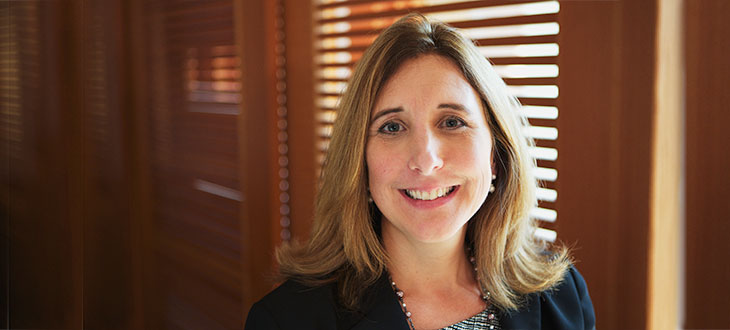
A profile photo of Dr. Tate
“It feels really good when a program you’ve worked on results in another person feeling better about themselves.”

No Couches or Potatoes

In studying psychology at Virginia Tech, Deborah Tate, PhD, quickly realized that rather than working with patients in a stereotypical patient-on-the-couch scenario, she preferred to help patients get off the couch.

Tate’s passion is helping others to live a healthier lifestyle, which is why she focused her training toward a career as a health psychologist. She wanted to dig deeper into the how and why of lifestyle choices, such as what motivates people to begin exercising or change their diet or on the flip side, do nothing at all.

“The leading causes of death are actually preventable,” Tate says. “Cardiovascular disease, diabetes and other types of chronic illness can be prevented or treated by making health and lifestyle changes.”

Dr. Tate in Action

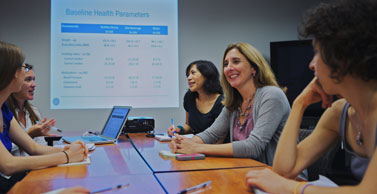
Dr. Tate meets with her research team.

Studying Obesity

Dr. Tate works with a team of psychologists, registered dietitians, health behavior specialists and exercise physiologists to study the prevention and treatment of obesity.
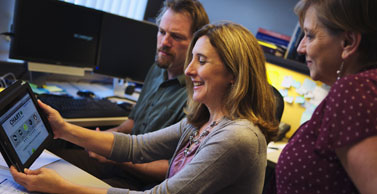
Dr. Tate reviews a website mockup on an iPad.

Technology and Health

Dr. Tate uses technology to help people understand the impact of their lifestyle and behavior choices on their health.
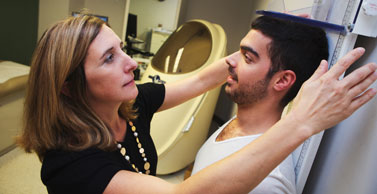
Dr. Tate measures the height of a study participant.

Tracking Progress

Dr. Tate measures the height, weight, blood pressure and heart rate of study participants to track individuals’ progress toward health and wellness goals.
Dr. Tate uses equipment to measure body mass index.

High-Tech Data Analysis

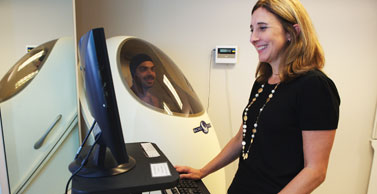
Dr. Tate uses high-tech equipment like the BOD POD®, which provides accurate reading of lean body mass and body fat percentage, to capture and analyze data for her study.
Dr. Tate and a nutritionist conduct a stress test on a study participant.

Assessing Fitness

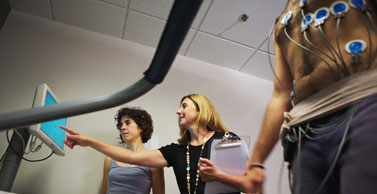
Once Dr. Tate has done an initial health assessment of a study participant, she and an exercise physiologist conduct a stress test to measure heart rate and assess fitness level.
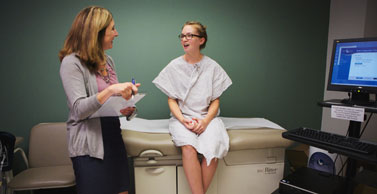
Dr. Tate discusses behavior modifications with a study participant.

Gathering Feedback

Dr. Tate gets feedback from study participants about the techniques and technologies used in her research. This feedback allows the team to adjust its products for maximum effectiveness.
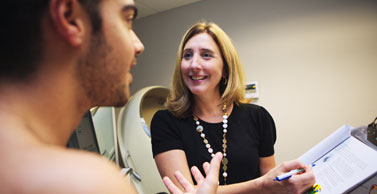
Dr. Tate meets with a study participant.

In-Person Communication

Face-to-face assessments complement the online tools and programs Dr. Tate uses to communicate with study participants.
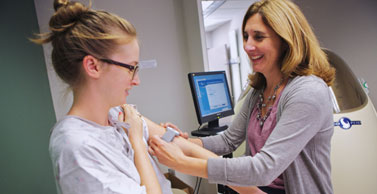
Dr. Tate gives a study participant an armband to monitor activity levels.

Data Collection

Dr. Tate and her team use various tools to gather data, like these armbands that can be worn day or night and track movement, steps taken throughout the day and calories burned.

Confronting Unhealthy Trends, Digitally

On average, young adults in the U.S. are gaining 30 pounds between the ages of 18 and 35. Not surprisingly, they are also starting to have cardiovascular disease, high blood pressure and cholesterol problems earlier than prior generations.

“Young adults don’t join weight loss programs until they are overweight,” says Tate. “And then they struggle to get it off.”

Tate wants to change that trend and is using her research to figure out how to do so.

Tate and her team are taking what they know about human behavior, for example the types of things that motivate someone to make a healthy choice compared to the situations that result in unhealthy choices, and combining that knowledge with technology. They are using their research findings to develop a Web and mobile program that provides both information and rewards to young adults to stay updated on their weight loss goals.

This program lets people measure important health markers like blood pressure, body fat percentage, cholesterol, glucose and insulin levels, and metabolic rate. It also provides a detailed analysis of individuals’ dietary intake and physical activity to keep their activity right in front of them at all times. That way, they can see the good results of healthy choices and connect undesirable results to unhealthy choices and make a different choice next time.

“We’re using technology because we know young adults are mobile and have busy lives,” says Tate. “This allows us to deliver a longer term program that meets their needs and schedules, which would be much harder to do face-to-face.”


Health Psychology at Work

Changing Habits, Changing Lives

Health psychologist Deborah Tate, PhD, studies people’s lifestyle choices to find out what it takes to get people to adopt healthier behaviors that can help prevent chronic disease. Her research focuses on improving weight-loss strategies and explores ways technology can help more people benefit from proven psychological interventions.

One Success at a Time

What Tate values most about her job is being able to help people on an individual level while creating new, evidence-based strategies that support healthy choicesopens in new window and have the potential to helps lots of people.

“It makes you feel good to see the results when an individual starts to feel better after losing weight, and they are able to do things differently than before,” Tate says. “Since the science that we do has results that you measure, it is easy to tell whether our strategy worked and made a difference in someone’s life.”

Health Psychology

Health psychologists use psychological science to understand biological, social and psychological factors that influence health and illness. They use their research to promote health, prevent illness and improve health care systems.

Date created: 2013
The content I just read: