

skip to main content

This page has been archived and is no longer being updated regularly.

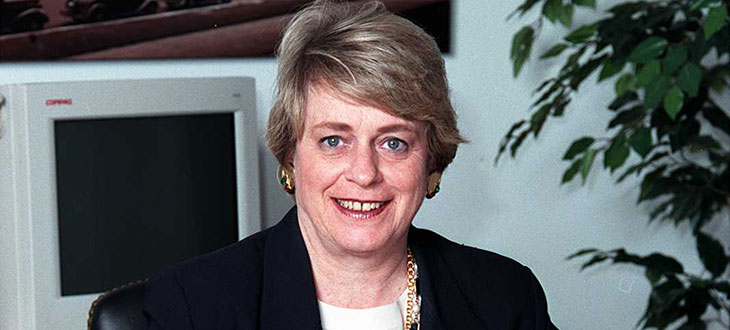
Ellen Scrivner, PhD

Police and Public Safety Psychologist
Ellen Scrivner, PhD
"Through my work with law enforcement, I know that I have made a difference in people's lives, both individually and community-wide."

Helping to Shape Police Work

When Ellen Scrivner, PhD, took her first job as a psychologist with the Fairfax County, Virginia, Police Department, she thought the position would last about a year. She stayed for seven, then moved to a neighboring jurisdiction, the police department in Prince George’s County, Maryland. Now, more than 30 years later, she looks back on a career that also took her to the U.S. Department of Justice, the Chicago Police Department, the John Jay College of Criminal Justice and the Police Foundation — with a few stops in between, including a presidential appointment as deputy director of the National Institute of Justice, the research arm of the Department of Justice. Along the way, she has been involved in shaping and witnessing enormous changes in the way police do their work. 

Historically, police departments were paramilitary organizations, she says. “You answered up the line and you responded to calls,” Scrivner says of police officers. “It was more a reactive style of policing.” There was no psychological screening of officers. However, several federal commissions in the 1960s and ’70s recommended changes in hiring practices. Police departments began to realize they needed to do things differently, and that was where psychologists came in. Scrivner began by helping to develop pre-employment psychological screening, but soon police chiefs were asking for more, including counseling for officers and their families, training programs, and assessment of officers’ fitness for duty. “We had something to offer that made them think about things in a different way,” she says. “It’s a field that grew and grew, and it continues to grow.” 

Police work started to become more proactive in the late 1980s and early 1990s because crime rates were soaring, Scrivner recalls. “Police were saying, ‘We can’t just keep arresting people, something else has to be done,’” she says. The answer was to institute “community policing,” where police are visibly out in the community, engaging in collaborative problem-solving to enhance public safety, even when no crimes are in progress.

Policing the Post 9/11 World

When Sept. 11 happened, policing changed again in an effort to predict who was likely to commit crimes in a community. “Community policing didn’t go away but people started talking about ‘intelligence-led policing’ — you needed to be able to predict who was going to do bad things in your community,” Scrivner says. This style persisted for a while, but eventually, it began to blend with community policing.

One of the most important recent trends in policing has been the spread of collaborative police reforms that are designed to strengthen the effectiveness of police agencies. Crisis intervention teams are one element of this reform and are very important for helping people in emotional distress, according to Scrivner, an expert in this area. These teams “came out of the community policing movement and were designed to pair police officers trained in crisis intervention with mental health professionals who respond to individuals in the community who are in a state of behavioral crisis,” she says. Often, these teams are created following a series of community complaints into how the department is interacting with citizens, thus triggering a federal investigation into police patterns and practices. “Crisis intervention teams have become almost a staple in what the government recommends,” Scrivner says. They have led to more people getting mental health care, rather than being arrested and put in jail, she says.

Making a Difference in People's Lives

Scrivner earned bachelor’s and master’s degrees in psychology from St. Louis University, then got married and moved to Washington, D.C. When her two children were older, she returned to school, earning her doctorate in psychology from Catholic University in 1985. While completing a visiting fellowship at the National Institute of Justice, she was recruited to help establish the Office of Community Oriented Policing Services, or COPS, at the Department of Justice, where she subsequently served in leadership positions (1994 - 2003), including as deputy director. The COPS Program has trained more than 500,000 police officers, community members and government leaders to form partnerships to help prevent crime and address public safety issues. After 9-11, the FBI requested her assistance in helping its newly appointed assistant director set up an Office of Law Enforcement Coordination to improve the coordination among local, state and federal law enforcement agencies. Scrivner also served as deputy superintendent for administration from 2004 to 2007 for the Chicago Police Department, and headed a leadership program for criminal justice and public safety officials at the John Jay College of Criminal Justice from 2007 to 2009. As she was thinking about changing career direction to devote more time to consulting and writing, she was named an executive fellow at the Police Foundation, a post that allows her to continue to advise police departments and other law enforcement agencies in areas including crisis intervention and changing leadership models.

Asked what has been most satisfying about her career as a psychologist, Scrivner sums it up simply: “Through my work with law enforcement, I know that I have made a difference in people’s lives, both individually and community-wide. It gives me a good feeling that I studied something that enabled me to make a contribution and a difference in people’s lives.”

Forensic and Public Service Psychology

The skills and expertise of forensic psychologists are in high demand. Forensic psychologists work in numerous job settings including private practices, government, military, academia, prisons and psychiatric facilities.

Date created: 2014
The content I just read: