

Your Science Can Affect Policy
Essential Science Conversations
October 2022

Your work advances knowledge, but also can be used to change policy. Yet many scientists are uncertain whether and how they can engage in advocacy work. In fact, psychological science plays a key role in public policy by providing essential knowledge that helps lawmakers establish priorities, improve decision-making, and resolve policy differences. Katherine McGuire, APA chief of advocacy, and panel of psychological scientists discuss how your research and expertise can shape policy, garner funding for essential programs, and improve human lives.
This program does not offer CE credit.
Speakers
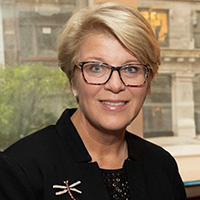
Katherine B. McGuire, MSc
Chief advocacy officer, APA.
Reggie Gazes, PhD
Associate professor of psychology, animal behavior, Bucknell University.
Erin Kaseda, MS
Clinical psychology doctoral candidate, Rosalind Franklin University of Medicine and Science.
William W. Stoops, PhD
Professor in the Departments of Behavioral Science, Psychiatry, and Psychology at University of Kentucky.
Moderator
Mitch Prinstein, PhD
Chief Science Officer, APA.
More in this series
The NIH Loan Repayment Programs encourage promising researchers and psychological scientists to pursue research careers by repaying up to $50,000 of their qualified student loan debt each year
October 2021 On Demand Webinar
Our panel of knowledgeable experts will discuss how psychological scientists can communicate their work to a broader audience
October 2021 On Demand Webinar
Our knowledgeable panel of open science experts discuss open science issues and answer questions
June 2021 On Demand Webinar
Improvements in the openness, rigor, and reproducibility of psychological science requires substantial changes in the culture of how we conduct and report science
April 2021 On Demand Webinar