


More than 1,000 new job advertisements for licensed psychologists were listed nationally each month in 2014 and there are attractive — and sometimes overlooked — opportunities in less-populated states and cities, according to a new study published by APA's Center for Workforce Studies.
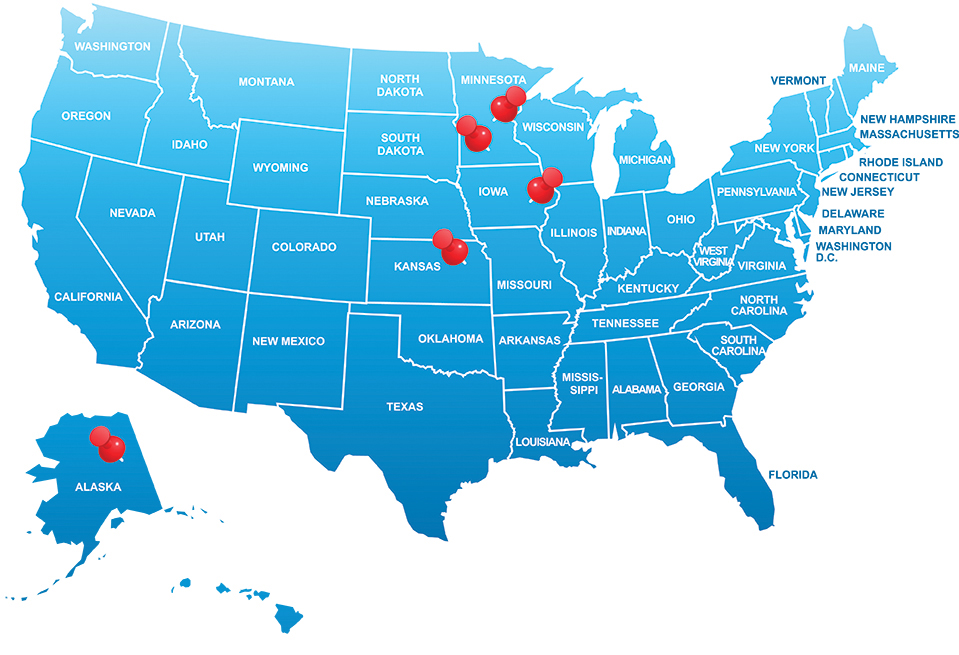
The states with the highest number of online job ads per 100,000 people were Alaska, Washington, D.C., South Dakota, North Dakota and Colorado. The cities with the highest numbers of online job ads for licensed psychologists per capita were Fairbanks, Alaska; Manhattan, Kansas; Mankato, Minnesota; St. Cloud, Minnesota; and Iowa City, Iowa.
"A lot of people tend to gravitate to urban areas, but these data show that there are more opportunities per person in smaller towns," says Stacey Larson, JD, PsyD, APA director of legal and regulatory affairs. "If you go to a smaller area where there are fewer psychologists, you may have an opportunity to move more quickly into positions of leadership within the work setting or a state psychological association."
The competition for the jobs in these areas is also probably less intense, Larson says. Psychologist Rebecca Richey's experience supports this theory. Richey, PsyD, who chairs the Early Career Psychologist Committee for the Colorado Psychological Association, earned her doctoral degree in Indiana and completed her internship in Tucson, Arizona. Richey says it was less difficult to find a job in those areas than in the densely populated city where she lives now.
After graduation, Richey moved to Denver. Now she works for the University of Colorado, and job competition varies dramatically across the state. In Denver, competition is fierce, but the opposite is true in the rural areas west of the city.
"A lot of early career psychologists approach me because they are having trouble finding a job in Denver," she says. "Many of them end up hanging up their own shingle. I think it would be a wonderful opportunity to work in a rural area if your family is mobile. They are beautiful places and the community is underserved, plus early career psychologists can get some experience under their belts."
Overlooked job areas
Pins represent areas with the most online ads for psychology jobs.
Who employs psychologists?
The APA report was the first of its kind conducted by the association. Online jobs data are a relatively new information source, says APA researcher Luona Lin, who analyzed data compiled by Burning Glass Technologies from more than 40,000 Web sources.
The report also showed that in 2014, the Department of Veterans Affairs posted the most online jobs for licensed psychologists with 860 ads, followed by Kaiser Permanente and the U.S. Army Medical Corps. The VA issued a report in January stating that psychologists were one of five occupations experiencing the largest staffing shortage in the organization.
The industry with the most licensed psychologists was health care and "social assistance," which included hospitals and ambulatory care settings.
"Many people get out of graduate school and think of starting a private practice, but these data show that early career psychologists may want to also consider the many opportunities in places like hospitals and the VA," Larson says.
Shaping a resume
APA's researchers also collected data to determine the skills in demand in the job ads, and they found that research and communication skills were the top two. These were followed by writing, organizational and supervisory skills. Although job ads in academic settings are likely looking for academic research experience, research skills in other contexts could include behavioral analysis, evaluation and assessment, development of treatment plans and data analysis, Lin says.
"I think this shows that it's important to list more than ‘psychotherapy' as a skill," Larson says. "Many people don't realize they have developed writing or research skills during their training, and it's important to tailor a resume to reflect this."
Eddy Ameen, PhD, assistant director of APAGS, believes the skills data bode well for the field in general.
"If you were applying for a licensed psychologist job 20 years ago, I imagine you would primarily be expected to be a good clinician," Ameen says. "By asking for applicants today to show competency in other areas like research and communication, we are demonstrating that our field is more than just clinical work. To maintain the viability of our field, we need people who are dynamic and can communicate the importance of the profession."