Telma Miranda and Carolina Garraio, who represent Ordem dos Psicólogos Portugueses (OPP), originally developed two complementary projects based on Spence’s and colleagues’ (2008) idea that psychology can advise on two levels: sustainable behavior change in individuals and on engagement and resolution strategies required for society to debate the profound economic and structural changes required. For this reason, the first project consisted of a school-based intervention, and the other was a farmer's intervention towards using more sustainable tools and methods.
Once APA launched the possibility of funding the LLI’s projects, Telma and Carolina worked together to aggregate both projects. This final version consists of a 30-hour training course, provided by OPP, to provide educational psychologists with theoretical and practical tools to create, implement and monitor climate change-related projects at their schools or other educational contexts. Some of its goals are to (a) extended (national) knowledge transfer about climate change among school psychologists; (b) promotion of healthier and more active school environments in responding to social problems as health, climate and sustainability, through the contribution of psychologists (e.g., by including the implementation of climate-change related projects as an indicator criteria to the “Escola SaudávelMente” best practices seal of OPP); and (c) creation of a network of psychologists trained specifically in the creation, implementation, and monitoring of climate change projects promotion in school contexts.
Contact information:
Read complete Capstone Project description: “Behavioural Insights for sustainable eating and meat production” (PDF, 3MB)opens in new window
Jamaica has made a steady stride in its goal to increase access to mental health for all Jamaicans. Since the 1970s the government used advertisements to increase public awareness and over time, they have increased the presence of community mental health agents. While these actions have increased the number of hospital psychiatric visits since 2013, the possibility of outpatient care, and the accessibility of mental health attention in specialized projects, Jamaica has a far way to go. Like many other nations, stigma and specialized personnel pose as impediments to access to mental health. I propose that the government of Jamaica develops a staging approach to accessing mental health care. This approach would require that the government invests in training personnel and creating jobs that can work closely in communities. Mental health agents will be able to create community interventions that will decrease stigma and give people the tools to manage their health. The communities' relationships with the agents would provide easier access to care for the challenges that they cannot manage in the home, and this will decrease the demand for hospitals and create space for severe cases.
Contact information:
Read complete Capstone Project description: “How Does Advancing Educational Opportunities for Psychologists Increase Access to Mental Health In Jamaica?” (PDF, 104KB)opens in new window
The lesbian, gay, bisexual, trans, and queer (LGBTQ+) community has been historically marginalized and reports widespread experiences of hate and discrimination all over the world. Although there have been developments that indicate a shift in more positive attitudes toward LGBTQ+ people globally, discrimination based on sexual orientation and gender identity is still perpetuated by many institutions worldwide. In the Philippines, LGBTQ+ individuals continue to be treated differently because of their gender and sexuality. Moreover, the COVID-19 pandemic has exposed the inequalities that LGBTQ+ people experience and, to some extent, has even exacerbated the challenges that already existed even before the pandemic.
My capstone project is aimed at addressing discriminatory and hateful practices toward the LGBTQ+ community. Particularly, this project seeks to provide information that allows for gender-sensitive practices and mechanisms that will address discrimination and hate against the LGBTQ+ community. This program follows the gender mainstreaming and development framework.
Contact information:
- Email Junix Jerald Delos Santos
Read complete Capstone Project description: “Bahagi ka ng bahaghar: Advocating a gender-responsive program against LGBTQ+ prejudice and discrimination in the Philippines” (PDF, 145KB)opens in new window
To demystify how we see teens' mental health in Haiti it is necessary to raise awareness about the mental health of adolescents through psychoeducation. Our project consists of developing psychoeducational contents (animated videos, posters and slogans) and facilitating creative, interactive workshops on major psychological issues affecting teenagers: stress/anxiety; depression; suicidal thoughts, suicide, self-harm. These actions are important to educate about the mental health needs of adolescents, encourage teens to seek help to address their mental health needs without shame, educate about prevention behaviors related to teen mental health, raise awareness on the duty of assistance and support of the entourage, and break taboos on teen mental health needs.
The contents will be available and promoted online via a website and social media platforms targeting teens and their support network (parents, teachers, community leaders, etc.). We are partnering with schools, professionals of Haitian Association of Psychology, educators, and artists to ensure that all the materials are adapted to the needs of our targets. At the end of the project, we expect to touch 50,000 social media users, 70% of whom are teenagers. We expect to facilitate 10 workshops for 150 peer supporters and 20 workshops for 500 teenagers. We will create 10 videos, 50 posters, and 4 major slogans. This project is important to educate and promote teenagers’ mental health and highlight the contribution of art and community to this honorable cause.
Contact information:
Although it has been a reference in the response against HIV/AIDS in the first decades of the epidemic (da Fonseca & Bastos, 2018), unfortunately, in the last years, Brazil has been experiencing an increase in cases. According to the last Epidemiological Bulletin of the Brazilian Ministry of Health in 2020, 920,000 people are living with HIV in Brazil. In recent years, the Ministry of Health reveals that the highest concentration of new cases is among young people between 25 and 39 years old. In parallel with the rise of cases, there is scarcity of prevention programs focusing on comprehensive sexual health based on a human rights perspective. Historical sexual education programs in Brazil have been mainly organized and funded at the federal level with cross-sector partnerships with state and municipal governments, and in turn with schools. Centralized federal funding also financed NGOs at the local level that help to carry out those school-based programs. Even though funding started to be decentralized the main framework and overall organization still take place mainly at the federal level. The purpose of this project is defining, based on a systematic review, comprehensive sexual health education programs, aimed at modifying the behavior of adolescents, with better cost-effectiveness for implementation in the context public education and healthcare systems such as the Brazilian. Furthermore, it aims to translate and disseminate scientific knowledge (through a policy brief) in order to target stakeholders, and particularly affected communities. The project is being carried out in partnership with the Brazilian Ministry of Health.
Contact information:
- Email Angelo Brandelli Costa
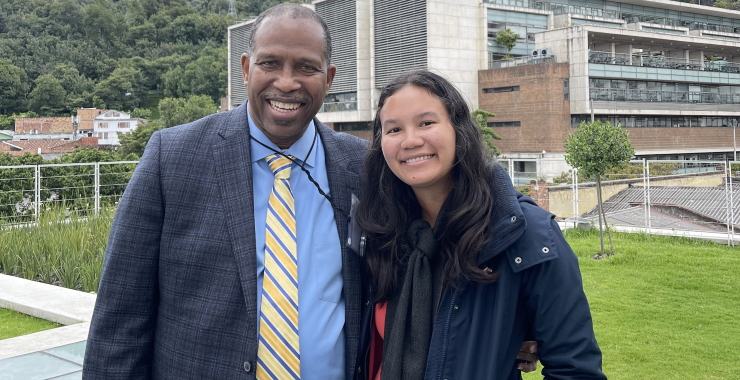
Daniella along with her mentor, Frank C. Worrell, PhD, (APA president 2022), is working on a project to create equitable access to mental healthcare in Jamaica. Considering that stigma is a barrier to equitable access, the target for the project is decreasing stigma around mental illness and increasing mental health literacy. This involves a multi-faceted approach, including collaborating with government ministries who are already implementing a mental health curriculum in secondary schools and creating a concurrently running public health campaign which incorporates information from the mental health curriculum as well as culturally relevant information about stigmas that exist in Jamaica and messages given in patois. This public health campaign includes messages from social media influencers and Jamaican musical artists who are willing to share their experiences related to challenges with their mental health. Furthermore, this approach also includes direct social contact with persons with mental illnesses through events held on World Mental Health Day. The effectiveness of the public health campaign will be evaluated using focus group discussions.
Contact information: