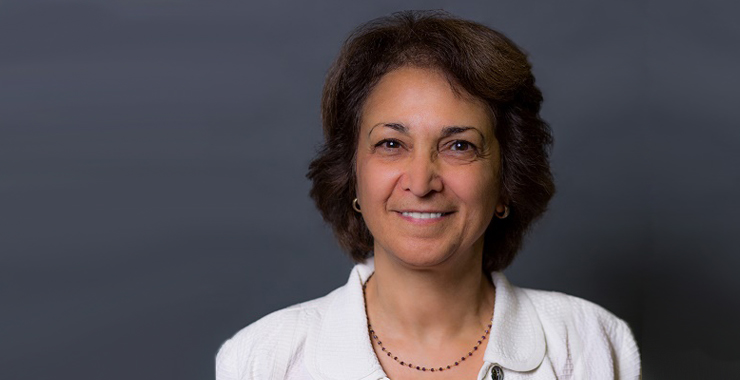
In the 1980s, Mary Karapetian Alvord organized workshops for parents who were adopting children from Russia. Some of those children had had harrowing early experiences that might have destroyed them, but in many cases, they were thriving.
Alvord, a clinical psychologist who treats mostly children and adolescents using cognitive–behavioral therapy (CBT) in the Maryland suburbs of Washington, D.C., wanted to understand why that was. Exploring the topic, she found studies done on resilience, which she defines as basically "the ability to cope with challenges." The research showed that people could bounce back from severe adversity, even trauma, if they had certain strengths and supports.
"I thought, 'Oh my gosh, this is wonderful!'" she recalls of her discovery. "I was behaviorally trained, so I'd always adhered to more of a strength-based model."
But did a person have to be born resilient? Was luck a key component? Alvord didn't think so. She had realized early on in graduate school, watching preschoolers who were having a hard time making friends, that children could learn the skills they needed to improve their relationships — "taking turns, sharing, being kind, keeping your hands to yourself." Social competence and self-regulation, it turned out, were two key components of resilience. She became convinced it could be taught.
Alvord began to give talks on the topic, created a "resilience builder program" (which she later publishedopens in new window), and started running groups using the program. By the time resilience had become a household word in the early 21st century, Alvord was an established authority.
Resilience is an important element of the "social and emotional learning" approach now gaining momentum in education. A number of studies have examined the trait, but Alvord believes she pioneered the development of an intervention that can help any child become more resilient. In fact, she co-wrote the chapter on resilience interventions in the APA Handbook of Clinical Psychology.
"The beauty of CBT is that it changes based on the research," Alvord says. That is, a method has to prove its worth in trials to be accepted as evidence-based treatment. As soon as she could figure out how to do it in her practice, Alvord began to measure the effectiveness of her Resilience Builder Program®.
"I was trained very much in the scientist–practitioner model," she says.
Alvord's thriving private practice, Alvord, Baker & Associates LLC,opens in new window which she created 25 years ago with clinical social worker Patricia Baker, in 2009 earned her the APA's first Presidential Innovative Practice Citation, because not only does the practice offer its clinicians the opportunity to do research, but it also trains them and other mental health providers in the community. Alvord herself supervises staff members individually for the first two years.
The practice, with a staff of 17 psychologists and three social workers in two offices, in Rockville and Chevy Chase, Md., runs thirty groups, each with up to six children of the same gender in grades K–12 (largely in second through eighth grades), most with anxiety or attention disorders.
"We still have a very long wait list. People want CBT. They know it's evidence-based, and they're willing to wait," she says.
The young people meet weekly, ideally for one year, to work on social competence and self-regulation, using the Resilience Builder Program.
"The analogy I use is learning a musical instrument," Alvord says. "You can learn about how to do it, but unless you actually practice, you're not going to get any better."
She funded the research on resilience done at Alvord, Baker & Associates for the most part herself, but notes that the studies were never easy to square with clients' needs in a clinical setting, and she stopped practice research this year. Alvord has collaborated with Brendan Rich, PhDopens in new window at Catholic University since 2009. In 2015, they began to measure how well the Resilience Builder Program worksopens in new window in schools, primarily in disadvantaged areas.
Alvord has started a nonprofit organization, Resilience Across Borders,opens in new window to sustain this research. As adjunct associate professor of psychiatry and behavioral sciences at George Washington University medical school in Washington, D.C., she teaches CBT, and has free access to professional journals, a valuable perk for an independent researcher.
In 2017, Alvord published Conquer Negative Thinking For Teens: A Workbook to Break the Nine Thought Habits That Are Holding You Back, which addresses how to change "thinking errors," for kids who are anxious, depressed or angry. Alvord wrote the book,opens in new window which has been selling well, with her friend Anne McGrath, executive editor of publications at U.S. News & World Report.
"I like doing things with other people," Alvord says.
Her own earliest models for resilience were her parents, Armenians who fled to Iran from the Soviet Union around 1930, and nearly 20 years later started over again in the United States, learning English and taking on a whole new culture. Alvord grew up in New York City, and traces her love of technology to her engineer father's encouraging her to use tools, to solder, to make an effort to understand how machines and electronics worked.
"He wanted me to not be intimidated. I think it gave me the attitude that, 'Hey, I can figure this out. If I can take radios apart and put them back together, I can make this webcam work,'" she says.
Alvord installed electronic medical records in her practice as early as 1997, and embraces telehealth for her practice in an area of the country "where driving five miles can take you an hour," she says. "I love efficiency."
Alvord embraces the media, too, serving as APA public education coordinator for the Maryland Psychological Association, because she sees talking with reporters as an efficient way to get psychological research out to the public. "I probably do two interviews a month," she says. She has also done a number of webinars, and is a past president of Division 46, the Society of Media Psychology and Technology.
Alvord studied psychology as an undergraduate at Stony Brook University in Stony Brook, N.Y., and earned her psychology doctorate from the University of Maryland College Park. Before opening her practice, Alvord organized a state-funded community mental health clinic for children, and served as director of psychology training at a day and residential mental health treatment program.
Alvord says she loves the flexibility of working as a psychologist, and that she valued it especially while raising her three children, now grown. She tries to extend that to psychologists and social workers at Alvord, Baker & Associates as well.
"When we won the award in 2009, I didn't realize we were unusual," she says. "I've just followed my passion. When you have a passion for something, it tends to work out."