skip to main content

Sport psychologists grapple with worried athletes during COVID-19

With fall approaching and the pandemic ongoing, sport psychologists are helping prepare athletes for an uncertain future.

APA Style leaf logo Cite This Article in APA Style
O'Hara, D. (2020, July 20). Sport psychologists grapple with worried athletes during COVID-19. https://www.apa.org/members/content/athletes-covid-19

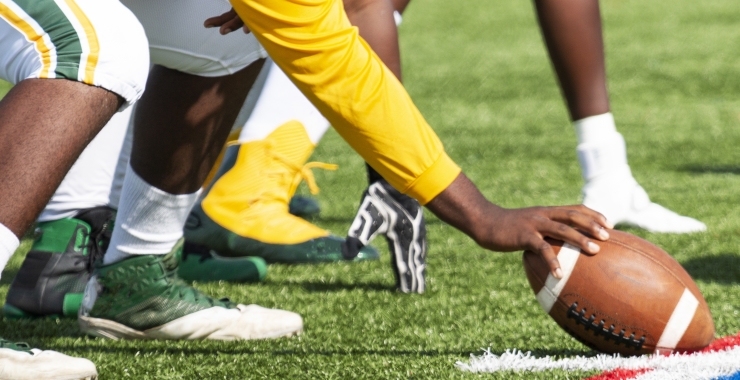
Football on the field

For elite athletes at every level, COVID-19 has disrupted their routines and training for months, undermined a major pillar of their identity, and possibly threatened their livelihood. The sport psychologists who support these athletes must themselves navigate a shifting terrain.

"Part of our job is to hold the hope for our athletes, to help them understand what the future looks like. But I can't right now, because just like them, I don't know," says Hillary Cauthen, PsyD,opens in new window director of performance services for Texas Optimal Performance and Psychological Services in Austin, Texas, who works with high school athletes.

That's true at every level of sport. At Texas Tech University (TTU) in Lubbock, student-athletes have been drifting back to campus for weeks, even as Texas has been hit with alarming new spikes of the disease. Late in June, nearly two dozen TTU football players and staff members tested positive for the virus. But Tyler Bradstreet, PhD, director of clinical and sport psychology at the university, said that while TTU will be following guidelines from the Centers for Disease Control and Prevention, the football season appears to be on track.

That's great news in football-happy West Texas, but what that season will look like remains to be seen. The football coaching staff has "Plans B, C, and D ready to go in August," depending on what happens with COVID-19, Bradstreet says. The two important issues for him are the safety of his athletes and their community, including some older coaches, and maintaining sensitivity about the goals, identity, and mental health of "this driven group of kids" who perform at a high level, often with hopes of making it to professional leagues.

"We don't want our athletes to be so afraid they can't perform, but we don't want them to be reckless, either," says Bradstreet. "How can we look at this as an opportunity for growth?"


The new normal

In early March, Chris Bader, PhD,opens in new window assistant athletic director for mental health and performance at the University of Arkansas (U of A) in Fayetteville, was telling athletes he thought the lockdown would last a few days, but events quickly overtook the U of A and other colleges. All over the country, players were sent home to varying circumstances, and their coursework was moved online. Some homebound athletes have had access to conditioning opportunities, while many others have not. Some college athletes have had to vie with younger siblings for time on the family computer to attend classes, meet via video with their teams, and receive counseling, Bader notes. Many have shared their concern that they might not be able to pick up their sport where they left off, he says. Some have reported they don't have access to healthy food optionsopens in new window. Some have watched family members fall ill or lose jobs.

"The definition of the student-athlete got challenged. The question became, 'How do we support them in whatever circumstances they're in?" Bader says.

The National Collegiate Athletic Association (NCAA) polled (PDF, 1MB)opens in new window more than 37,000 student-athletes in the early weeks of the pandemic and discovered that they had high levels of stress and depression, caused mostly by the disruption and uncertainty in their lives. Stressors included fear of exposure to COVID-19 (43%), lack of motivation (40%), feelings of stress or anxiety (21%), and sadness or depression (13%). About 80% said they were having a hard time keeping up their athletic training, in part because they didn't have access to an appropriate facility.

Drilling down into psychological challenges

Trent Petrie, PhD,opens in new window a professor, researcher, and sport psychologist at the University of North Texas (UNT) in Denton, conducted a separate survey (PDF, 600KB)opens in new window of nearly 6,000 student-athletes from all three divisions of collegiate play. Petrie's study drills down into the psychological challenges student-athletes have faced and seeks to clinically assess their coping and psychological functioning during the pandemic and its aftermath. Two-thirds of respondents were women; four-fifths were white, even though Black athletes are well represented in most sports.

About 22% of respondents in the UNT study (PDF, 7MB)opens in new window expressed a clinical level of depression, and 26% reported subclinical levels of depression. Between 10% and 15% reported clinical levels of psychological distress; most had at least moderate levels of distress. Women were more likely to report high levels of both depression and distress, and were three times as likely to be among the 30% of respondents who reported subclinical or clinical levels of disordered eating behaviors.

One other troubling finding was that many student-athletes who had been receiving counseling pre-COVID-19 no longer are. Petrie's hope is that as athletes return to campus, the study will serve to remind sport psychologists that the stress these athletes have experienced won't disappear overnight.

"They will continue to be buffeted by these ripples" from the events that began in the spring, Petrie says.

Getting creative with telehealth

Telehealth has been working well, as a general rule, for sports psychologists at all levels of play, provided athletes have access to the necessary technology, clinicians report. Many have found creative ways to combat "Zoom fatigueopens in new window." For example, Cauthen sends videos, worksheets, and games to her high school athletes, and often keeps the sessions short if they seem distracted.

Nyaka NiiLampti, PhD,opens in new window vice president of Wellness and Clinical Services for the National Football League, says NFL team clinicians are working with professional players via telehealth to help them navigate the uncertainty of their lives, and their present situations, which can include dealing with family issues to a degree they might not be used to. Players on NFL teams are making a point of staying in contact with teammates; veterans are reaching out to rookies to offer support. But at the end of the day, "everyone is competing against one another, in terms of making the team," NiiLampti says. When they go back, they'll need to be able to perform.

A spectrum of emotions

William Parham, director of the National Basketball Players Association's new Mental Health and Wellness Program, says that even for professional athletes, "a spectrum of emotions has arisen" during the pandemic. He notes that professional athletes have been talking openly in recent months and years about mental health issues like depression and trauma, setting an example for other athletes and the general public, and working to remove the stigma around getting help that exists in many communities.

Parham says professional "hoopers" in general are eager to get back on the court, but he called COVID-19 "an equal opportunity virus" that threatens players, staffers, and fans alike. Indeed, a handful of NBA players have opted outopens in new window of participating in the truncated 2019-20 basketball season planned for July 30 to mid-October 2020 at Walt Disney World in Orlando, Florida, another state where the disease has been surging.

NiiLampti says the professional football season is expected to proceed, beginning with training camps in July, even as the coronavirus flares in many places where games are to be played.

These players' livelihoods could be significantly affected by what happens in the coming weeks, and that is incredibly stressful for them, NiiLampti says. If they don't get help managing their anxiety now, they may not be able to play well in the fall, she says.

NiiLampti is especially concerned about athletes at the end of their playing careers at all levels of sports. Transition out of sports is difficult anytime, she says, but sport psychologists need to help athletes grieve the additional disappointing circumstances COVID-19 has forced on them.

High school athletes’ concerns

Cauthen typically works with individual high school student-athletes in the Austin area. For them, a major concern is whether college recruiters will have a chance to assess their skills. Like many sport psychologists now, Cauthen has been “dually trained” to address both goal-setting, confidence and other performance issues, and clinical concerns like depression, anxiety and relationships.

"If they are happy and healthy, they are going to perform better in their sport," she says of her clients.

High school athletes in the COVID-19 era have been robbed not only of their sport and their school experience, but also of adolescent rites of passage like proms, awards banquets, and possibly graduation. Cauthen said she has seen sadness, frustration, anger, depression and anxiety in adolescents she works with.

But she also has seen a response other sport psychologists have noted as well: For some athletes, the pandemic has offered them a respite from the stressors of their sport. They're relaxing more, sleeping better, and reconnecting with their families.

"We forget how much they're ordinarily doing on top of school," Cauthen says. "For some of them, this has been a really good reset."

Recommended Reading

APA Member Benefits

Connect with peers

APA Community


Save 35% off pay now rates

Avis and Budget


New products available

APA Merch Store opens in new window


Competitive low rates

Student Loan Refinancing

You may also like