Meet Ellie, a computer-assisted therapy program developed by the Institute for Creative Technologies at the University of Southern California.
Carter, K. (2019, January 9). How computer-assisted therapy helps patients and practitioners. American Psychological Association. https://www.apa.org/members/content/computer-assisted-therapy
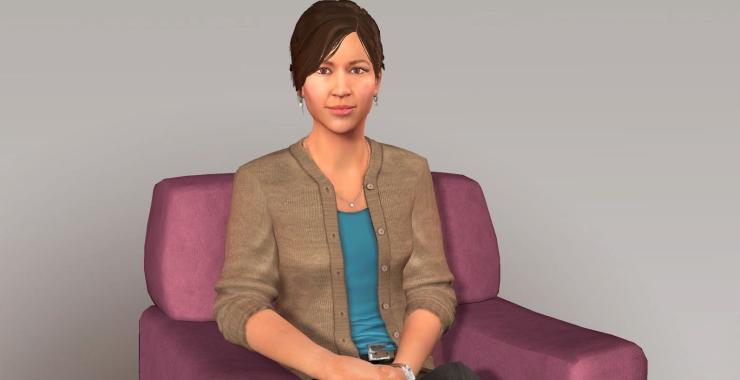
A counselor asks her male client if he’s been sleeping well. He responds that he hasn’t been. She then asks if he goes out to as many places as he used to, and he replies that he does not. She completes her assessment and notes that he’s showing signs of anxiety and avoidance. “Let me pull up a website for you and refer you to a provider that might be able to help you,” she offers. A website pops up next to the counselor on the client’s screen; the client is not in an office talking to a therapist, but in the privacy of his own home, talking to Ellieopens in new window, an avatar, on his computer.
Ellie is a software program, SIMCOACH, which is a type of computer-assisted therapy that supports and supplements therapy. Developed by the Institute for Creative Technologies (ICT) at the University of Southern California, SIMCOACH creates a virtual reality (VR) environment, where users can interact anonymously without feeling like they are actually in therapy, explains Albert “Skip” Rizzo, PhD. He originally created SIMCOACHopens in new window to screen military personnel for post-traumatic stress disorder (PTSD).
Ellie’s programming uses cutting-edge facial, body and voice recognition softwareopens in new window that can read a person’s subtle emotional and behavioral state in real time. The program evaluates speech patterns, facial expressions, eye movements, body language and posture to respond accordingly and identify indicators of trauma or depression. Meanwhile, human practitioners listen along looking for signs that the user should begin the screening process for mental health treatment. Ellie’s inquiries are actually screening questions for conditions like PTSD or anxiety, says psychologist Louis-Philippe Morency, PhD, co-creator of Ellie.
To create a computer program to find these signals, Morency focused on researching behaviors that are related to mental illnesses, including schizophrenia, psychosis or depression. While studying these actions, like smiling, he confirmed the obvious findings — that people who are depressed smile less – but he also found that when depressed people do smile, their smile is smaller than that of a happier person. Morency used these findings about what to observe in a person who might be suffering from a mental health problem to add to Ellie’s development. Answering Ellie’s questions can bring out these behaviors in people, and then the psychologists watching behind the scenes are able to use them for evaluation and ultimately for making the right referrals.
While SIMCOACH shouldn’t be used on its own to give a diagnosis, it is a helpful tool that can allow more in-depth assessments by clinicians after use, says Morency. Another way computer-assisted technology can aid the work of therapists is through VR simulations — for example, having someone give a speech in front of an audience to help with their fear of public speaking or do simulated rock climbing if they have a fear of heights. “Users think it’s a video game,” Rizzo says.
VR is about interaction with content that can be delivered digitally, according to Rizzo. Similar to SIMCOACH, AI-Therapyopens in new window’s Overcome Social Anxiety program is a behavioral intervention that uses online questionnaires to create a treatment plan specifically tailored to users’ personal anxiety symptoms. Throughout the online treatment process, users are guided by voice recordings of clinical psychologists, simulating face-to-face therapy. Created by psychologist Fijola Dogg Helgadottir, PhD, Overcome Social Anxiety uses artificial intelligence (AI), which is the intelligence of machines that gives them the ability interpret and learn from data, to assess the anxiety levels of users “just as psychologists do, and with the same results,” Helgadottir says.
In her research, Helgadottir studied evidence-based treatment for social anxiety, combined her studies with her own clinical practice experience and noted the typical thoughts that people share in therapy sessions. She then learned computer programming to code the part of the AI program herself on the basis of that research. The Overcome Social Anxiety program works on an algorithm, which learns users’ psychological profiles and builds a treatment model based on that profile just like an actual therapist would. It is similar to ads that pop up online, based on one’s searching history.
First, users complete an online questionnaire about their symptoms. After they learn about symptoms of anxiety and check off the ones they have experienced, they list their negative thoughts and the program provides them with ways to replace those thoughts with more positive ones. Then users participate in exercises during which the program creates an individualized model of social anxiety for each individual user, says Helgadottir. For example, if a user has identified symptoms of avoidance, the program generates a request to start a conversation with three people. Users try this and enter into the program what they have learned following their attempt to complete the request. The exercise is repeated until they report that they no longer avoid engaging in small talk with others.
Users complete another questionnaire after they finish the exercises to note any changes in their symptoms. Helgadottir points out that Overcome Social Anxiety is an evidence-based program, shown by researchopens in new window (PDF, 225KB) to be effective in the treatment of anxiety. Study results indicate that the program has a completion rate of 28 percent, which is high for self-administered interventions, and users’ social anxiety symptoms decreased significantly after using the program.
These VR and AI therapy programs treat mental health without the face-to-face experience, which Rizzo says can encourage people to admit to symptoms that they wouldn’t admit to on a checklist or in an in-person interview.
With SIMCOACH, Morency recalls a study in which users were observed in a session with Ellie. Half of them were told that there was a human behind the virtual character, and the other half were not told there was an actual person there. In a follow-up assessment, Morency found that more people were aware of their own behavior when they were told that there was a human behind the SIMCOACH. “We measured signs of sadness, and there was a significant difference among people who thought there was [only] a computer [there]. They felt more comfortable showing sadness because they thought there was no person there,” he says.
Even though there is a psychologist behind the scenes, calling VR therapy or SIMCOACH an actual therapist is a stretch, warns Rizzo. “Users are not engaging in an actual conversation with the program like you would with a real practitioner, and they’re not being monitored,” he says. “You need good clinical skills to do a proper assessment and treatment plan. You don’t want people...treating themselves, there will always be a need for an actual provider.”
Helgadottir also acknowledges that there is often a fear of practitioners being replaced by computer-assisted technology, but she stresses that AI is only to be used as “an addition” to therapy. It is a great supplement to clinical practice, and the practitioner can be free to focus on behavioral things like having clients learn by reflecting on experiences in exposure therapy, she says. Also, since most patients come in with more than one diagnosis, therapists can focus entirely on different problems, “like OCD or [general anxiety disorder], and leave the social anxiety specific work to the computer program and be assured users are getting a thorough evidence-based treatment for social anxiety,” she adds.
“I use it with my patients,” she says. “It is useful to get people to do [therapy] homework.” Clinicians can recommend VR tools as homework as well, says Rizzo, and VR can also be used to supervise activities that take place in between sessions.
Morency adds that SIMCOACH “can and should be used as a tool for people who don’t even know they have a problem and haven’t sought help” for the purpose of referring them to therapists. Used as a screening tool, SIMCOACH can allow more in-depth assessments by actual clinicians after use, and if someone is diagnosed with PTSD or depression, the tool can be used for follow-up in therapy, he says.
“We’re not making a doc in a box, we are not making a virtual clinician,” stresses Rizzo. “We are improving access.”
Technology, Mind & Society 2019
APA’s Technology, Mind & Societyopens in new window conference showcases the most important current research in psychology and other disciplines concerning the interactions of humans and technology — research that moves us toward the goal of ensuring that technology enhances the lives of all people.
Technology, Mind & Society Keynote Speakers
 Sara Czaja, PhD is a professor of gerontology and the director of the Center on Aging and Behavioral Research in the Division of Geriatrics and Palliative Medicine at Weill Cornell Medicine. Czaja’s research interests include aging and cognition, aging and healthcare access and service delivery, family caregiving, aging and technology, and functional assessment.
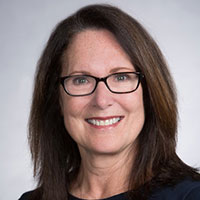 Camille Nebeker, EdD, MS is an assistant professor of Behavioral Medicine in the Department of Family Medicine & Public Health, School of Medicine at UC San Diego. Nebeker’s research focuses on community research capacity building and the ethical dimensions (e.g., consent, privacy, data management) of emerging technologies (e.g., pervasive sensors, ubiquitous computing) used in health research.
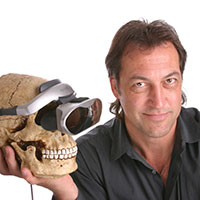 Albert “Skip” Rizzo, PhD is a clinical psychologist and director of Medical VR at the University of Southern California Institute for Creative Technologies. He is also a research professor with the USC dept. of psychiatry and school of gerontology. Rizzo has conducted research on the design, development and evaluation of Virtual Reality (VR) systems targeting the areas of clinical assessment, treatment, and rehabilitation across the domains of psychological, cognitive and motor functioning in both healthy and clinical populations.
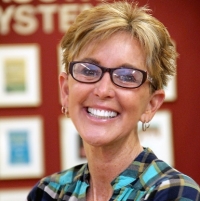 Valerie Shute, PhD is the Mack & Effie Campbell Tyner Endowed professor in education in the department of educational psychology and Learning Systems at Florida State University. Her current research involves using games with stealth assessment to support learning — of cognitive and non-cognitive knowledge, skills and dispositions. For more details on her research and publications, read her bioopens in new window on Florida State University's website.
 Kumar Garg is the senior director for technology and society at Schmidt Futures. His four core areas of work include: promoting the positive digital transformation of society by investing in data collaboratives that address concrete societal problems; expanding the number of people that are involved in discovery and innovation; investing in early stage risk-capital in nascent university research, high-potential people, and young organizations; and advancing public policy that sustains and leverages science and technology. He previously helped shape policy for the Obama Administration, serving in a variety of roles in the White House Office of Science and Technology Policy.