skip to main content

Jonathan Comer studies family life during COVID-19

 
APA Style leaf logo Cite This Article in APA Style
O'Hara, D. (2020, August 20). Jonathan Comer studies family life during COVID-19. American Psychological Association. https://www.apa.org/members/content/covid-19-disruptions

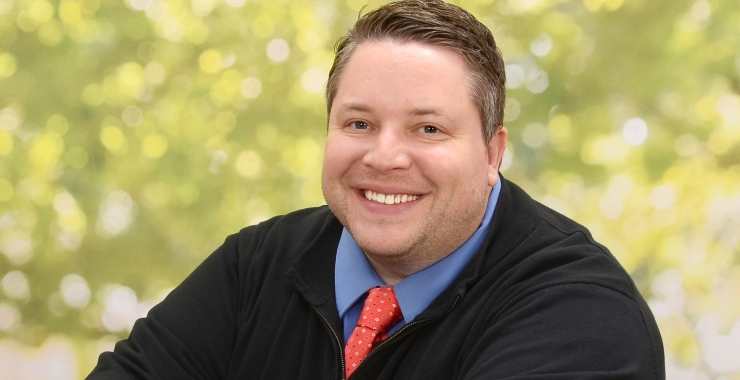
Jonathan Comer

Over the course of his career, Jonathan Comeropens in new window, PhD, has looked at the mental health effects of several high-profile disasters on children and families—the 9/11 destruction of the World Trade Center in New York City in 2001, the Boston Marathon bombing in 2013, and Hurricane Irma in 2017. Now, he and several collaborators in the United States and Canada are studyingopens in new window how families are handling the disruptions created by the COVID-19 pandemic.

Comer and other researchers from a number of institutions are following roughly 1,500 families with children ages five to 17 who are answering 30-minute surveys at a number of time points over the course of several months. Questions will explore how families are adjusting to life during the pandemic, coping with any COVID-related losses,balancing work and childcare responsibilities, and adapting to homeschooling, work disruptions and financial hardships that have come up.

The team plans to check in with the families at least until the end of 2020, so this won't be merely “a snapshot” of the effects of the pandemic, says Comer, professor of psychology and psychiatry at Florida International University (FIU) in Miami and director of the Mental Health Interventions and Technology (MINT) Programopens in new window at FIU's Center for Children and Families.opens in new window

“We're able to capture a moving picture of how functioning adjustment unfolds over time,” he says. “What are the different pathways, the risk factors, and what are the protective factors buffering against negative adjustment” and the development of mental health problems?

The novel coronavirus has menaced the entire planet, yet individuals’ experience has been tremendously varied, from moderate inconvenience to harrowing life changes. Going forward, “the prolonged ripple of economic hardship,” social isolation and other stressors will affect families unevenly as well, Comer says. “That's where you’ll see the trajectories start to separate. How many layers of a child’s life have been disrupted and traumatically transformed?”

Some hard-hit families fare better than others

Symptoms of mental health problems after disasters can include depression, anxiety and problems with conduct, but Comer has learned from his years of study that even among hard-hit families, some fare better than others.

“Disaster exposure never occurs in a vacuum. It almost matters more what a person has experienced before and after the event than what happens during the event. Prior trauma is one of the biggest risk factors for developing PTSD (post-traumatic stress disorder),” says Comer.

Every year, natural disasters alone—floods, tornadoes, earthquakes and the like—affect 160 million people, according to the World Health Organization. War, terrorism and mass assaults add a horrific layer to that. Comer studied 9/11opens in new window and the Boston Marathon bombing,opens in new window which was followed by a high-profile manhunt for the perpetrators, in part because he was in the vicinity both times, but “there are disruptive events in nearly every area,” he says.

Comer’s own children go to a school in the same district as Marjorie Stoneman Douglas High Schoolopens in new window in Parkland, Florida, north of Miami, site of a mass shooting in 2018 that claimed 17 lives. Some families that directly experienced that disaster were subjected to painful misinformation campaignsopens in new window on social media—posts by strangers that portrayed surviving students as actors and the shooting as a hoax staged to promote gun control.

“Social media is a mixed bag,” Comer says. “On the one hand, it captures a lot of injustices, but it isn’t governed by the same sensitivity and standards as traditional journalism. We don’t see fact-checking, and we see reports that are not in the public interest,” including “grotesque images” that can be tremendously upsetting, he says.

Media can extend a disaster’s reach

Media and social media coverage can greatly extendopens in new window the emotional reach of disaster. Before 9/11, researchers used “a bull's-eye model” to identify people who might be at risk for trauma, Comer says.

“We used to think that the closer you were to the epicenter of a disaster, the larger the mental health impact. Now we know that physical proximity is not necessarily destiny when it comes to mental health,” he says.

Comer found that some children who were thousands of miles away, in San Diego, for example, showed strong stress reactions related to Hurricane Irma.opens in new window On the other hand, people who are “right there” but have economic stability and social support before, during and after a disaster may not suffer any mental health consequences at all.

“That’s sort of the continuing theme of all this, that it’s more complex than where you were at the time,” Comer says.

In terms of the present pandemic, or any other disasters, Comer advisesopens in new window families to try to minimize the amount of upsetting information that reaches their children about the event, limiting media and social media exposure; to answer their children's questions honestly and succinctly, but to leave out distressing details as much as possible; and to remain calm while, at the same time, letting their children know that it's normal to feel upset, afraid or angry.

Studying disasters and their effects on families is only one aspect of Comer's workopens in new window; looking at families under duress can give valuable insights into how they function in general, he says. He also investigates child anxiety disorders and the heritability of psychopathology in children.

And, he explores the use of technology, including telehealth, to facilitate the delivery of mental health services to families. As it happens, that work is also pertinent to the COVID-19 experience. The pandemic has forced school, work, doctors’ visits and even playdates onto virtual platforms.

Early results on teletherapy look good

But while telehealth is rapidly gaining acceptance among mental health clinicians and patients, and the general public, the scientific community still needs to establish its benefits and best practices, Comer says. So far, the news is good.

He typically works with parents and children together, interactively and in real time. For that type of coaching, Comer says, telehealth can actually be more effective than an office visit, because the sessions can take place in a natural setting. For example, a therapist working with a family that’s struggling to stop fighting at the dinner table can observe and offer coaching while everyone in the family is actually sitting at that table. Comer says his researchopens in new window is backing up the efficacy of telehealth in that type of coaching.

Telehealth can be a win for clinicians and families both. Mental health workers are in short supply, and many families have a hard time getting to office sessions because of transportation issues, lack of child care and time conflicts with work and other activities.

“The tie-in with my work with disasters is that with technology, we live in a much smaller world,” Comer says. “The bad things are closer, but support and services are also closer. Telehealth is definitely one of those areas of technology that is positive.”

In the study to assess families' coping during COVID-19 mentioned earlier, other investigators include Lindsay Malloy,opens in new window PhD, Ontario Tech University, Oshawa, Ontario, Canada; Donna Pincusopens in new window, PhD, Boston University, Boston, Massachusetts; Jill Ehrenreich-May, PhD, University of Miami; Robin Gurwitchopens in new window, PhD, Duke University in Durham, North Carolina; Angela Evansopens in new window, PhD, Brock University, St. Catharines, Ontario, Canada; and Tara Perisopens in new window, PhD, the University of California at Los Angeles.

Recommended Reading

APA Member Benefits

Member Benefits

Connecting with peers

APA Community


Find Your Perfect Gym

Active&Fit Directopens in new window


New products available

APA Merch Storeopens in new window


Competitive low rates

Student Loan Refinancing