The Joy for Allopens in new window robotic cat has built-in sensors that respond to motion and touch. It can move its heads and paws, meow and purr. The dog version moves, wags its tail, barks and makes other sounds in response to voices. Photo: Ageless Innovation
O'Hara, D. (2019, October 2). Your future companion could be a robot. https://www.apa.org/members/content/robot-companion

We may not think of robots as warm and fuzzy, but some specially designed interactive “comfort” robots are easing into roles as pets, therapeutic aides, assistants and shoulders to lean on. And research shows that they can make a difference with some mental health symptoms like agitation and depression.
While some comfort robots resemble plush toys, others look more like cartoon characters or avatars, suggesting a whole new way to think about what a robotic companion might do, and look like.
Therapeutic companion robots made a big splash a decade ago with Paro,opens in new window a furry robotic seal designed to provide comfort to Japan’s aging population. Created by Takanori Shibataopens in new window, a robotics engineer, Paro has been used internationally at nursing homes, hospitals and other settings where live animals aren’t practical. Research suggests that comfort robots offer similar benefits to real pets, like nonjudgmental companionship, and the abilities to lessen anxiety and agitation, and to mediate social interactions with other people.
Paro can learn its name, and how to get a particular handler to stroke it, leading to something of a relationship. Studiesopens in new window done over the years have shown that Paro and other companion robots can ameliorate anxiety, depression and social isolation in institutional settings. At the same time, their use has waned in the United States, perhaps because PARO costs $6,000 as a Class II Medical Device, though Shibata says Medicare and some insurance started to accept reimbursement of prescribed use of PARO for therapy. He says there are 5,000 Paros in use in more than 30 countries, mostly as companions for the elderly, including about 3,000 in Japan.

Brian Scassellati,opens in new window a Yale University computer scientist and robotics expert who is also trained in cognitive science, uses robots in his work with children with autism spectrum disorder (ASD), but says, "We tend to stay away from robots that are furry." He says fur can wear out more quickly than some other materials, and he doesn't believe it's necessary for a relatable robot.
Scassellati was part of a team that in 2018 put social robots to work as therapeutic play partners in a month-long experimentopens in new window with children, ages 6 to 12, with ASD. Each "cute," plastic, foot-high Jibo robot, which looks something like a desktop sunlamp, was modified to have two expressive eyes in its round face. For 30-minutes each day, one robot sat with one child and a caregiver, chatting, making eye contact and playing six interactive games. By the end of the month, the children all had improved in their ability to maintain eye contact and perform other social skills. The robots in Scassellati's experiment adapted to each child, a common characteristic of companion robots.
Scassellati says that the best thing companion robots like Paro do is to facilitate social interactions. For example, if middle school kids hear their grandmother has a new robot pet, they may ask Mom to take them to visit her in the nursing home. Other residents may drop by, too; the staff may linger to chat and marvel at the robot. The problem is that, eventually, the novelty wears off, and people stop coming around, Scassellati says.
He notes that research on comfort robots has moved toward incorporating digital tools to help keep seniors living independently.
One such robot is the Joy for Allopens in new window robotic dog and cat, which retail for $99. Equipped with built-in sensors that respond to motion and touch, the furry Joy for All cats move their heads and paws, meow and purr; the sturdy dog moves, wags its tail, barks and makes other sounds in response to voices. Recent studies have shown that Joy for All pets calmed delirious patientsopens in new window in hospitals, and appear to improve the mood and quality of life of nursing home residentsopens in new window with dementia as well.
These robotic pets were developed by Ageless Innovation, formerly part of Hasbro. A $1 million grant from the National Science Foundation is helping Ageless Innovation and Brown University expand the robot’s capabilities. The developers haven’t settled on what tasks to incorporate into the Joy for All pets yet, says Bertram Malleopens in new window, professor in Brown’s department of cognitive, linguistic and psychological sciences, co-director of the university's Humanity-Centered Robotics Initiative (HCRI) and principal investigator on the grant.
The Joy for All companion pet provides "felt comfort," Malle says, and with the capabilities his team will add, "it will help older adults handle some of the challenges of everyday living — from remembering medication and appointments to locating misplaced objects, to detecting agitation or falls."
Wendy Moyleopens in new window, a professor and researcher in aging and mental health at Griffith University in Brisbane, Australia, has done a number of studiesopens in new window with Paro and other comfort robots and has found that they have inherent value for the socially isolated, including the 5.7 million elderly people now living with dementia in the United States. Moyle says studies have shown that some nursing-home residents get less that half an hour of daily face time with caregivers.
"That's not a lot of interaction," says Moyle, adding that family members may avoid visiting relatives with dementia because their condition can be distressing. Companion robots can provide real comfort for those people, and represent "an opportunity to engage residents, particularly people with dementia, in something that may improve their quality of life," she says.
Both Moyle and Scassellati spoke of difficulties that can arise when it's time to take a companion robot away from study subjects. "It does raise ethical concerns," says Moyle, though her subjects have been able to adjust satisfactorily to substitute faux-animal companions.
Scassellati's robots were presented as characters with a backstory, alien space explorers who had crash-landed on earth. Study subjects learned at the beginning that the robots would be going back to their home planet, and there was also a going-away party, all "so the kids aren't just suddenly abandoned by the technology."
That's just one of the considerations that go into employing robots. Even fully functioning adults imbue them with the characteristics they portray, so their forms have to be chosen carefully. When Shibata created Paro, he modeled it on a baby seal because he figured people wouldn't have preconceived notions about how that animal would behave.
And Malle says, "the more human-like a robot looks, the more people expect affective, social, perhaps even moral capacities from the machine."
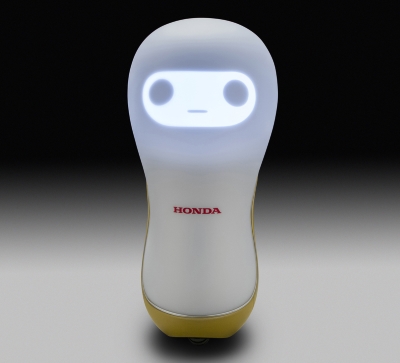
And Toyota, which has announced it is transforming itself into a "mobility companyopens in new window," has been working on service robots for 15 years. It will deploy a number of different types at the 2020 Tokyo Olympicsopens in new window, as mascots, greeters, servers and assistants to disabled visitors, even while it continues to develop interactive robots for wider useopens in new window.
Scassellati notes that Japan is way ahead of the United States in embracing robot helpers, partly due to a more accepting culture. In Japan, families might go to considerable expense to obtain a robot companion for their older adults.
In the United States, he says, "The response is more like, 'What? You're going to have a machine look after my parents? That's inhuman!'"
Technology, Mind & Society 2019
APA’s Technology, Mind & Societyopens in new window conference showcases the most important current research in psychology and other disciplines concerning the interactions of humans and technology — research that moves us toward the goal of ensuring that technology enhances the lives of all people.
Technology, Mind & Society Keynote Speakers
 Sara Czaja, PhD is a professor of gerontology and the director of the Center on Aging and Behavioral Research in the Division of Geriatrics and Palliative Medicine at Weill Cornell Medicine. Czaja’s research interests include aging and cognition, aging and healthcare access and service delivery, family caregiving, aging and technology, and functional assessment.
 Camille Nebeker, EdD, MS is an assistant professor of Behavioral Medicine in the Department of Family Medicine & Public Health, School of Medicine at UC San Diego. Nebeker’s research focuses on community research capacity building and the ethical dimensions (e.g., consent, privacy, data management) of emerging technologies (e.g., pervasive sensors, ubiquitous computing) used in health research.
 Albert “Skip” Rizzo, PhD is a clinical psychologist and director of Medical VR at the University of Southern California Institute for Creative Technologies. He is also a research professor with the USC dept. of psychiatry and school of gerontology. Rizzo has conducted research on the design, development and evaluation of Virtual Reality (VR) systems targeting the areas of clinical assessment, treatment, and rehabilitation across the domains of psychological, cognitive and motor functioning in both healthy and clinical populations.
 Valerie Shute, PhD is the Mack & Effie Campbell Tyner Endowed professor in education in the department of educational psychology and Learning Systems at Florida State University. Her current research involves using games with stealth assessment to support learning — of cognitive and non-cognitive knowledge, skills and dispositions. For more details on her research and publications, read her bioopens in new window on Florida State University's website.
 Kumar Garg is the senior director for technology and society at Schmidt Futures. His four core areas of work include: promoting the positive digital transformation of society by investing in data collaboratives that address concrete societal problems; expanding the number of people that are involved in discovery and innovation; investing in early stage risk-capital in nascent university research, high-potential people, and young organizations; and advancing public policy that sustains and leverages science and technology. He previously helped shape policy for the Obama Administration, serving in a variety of roles in the White House Office of Science and Technology Policy.