skip to main content

Mary Koss’s sobering research on sexual exploitation may someday help prevention

APA Style leaf logo Cite This Article in APA Style
O’Hara, D. (2024, July 29). Mary Koss’s sobering research on sexual exploitation may someday help prevention. https://www.apa.org/members/content/sexual-exploitation-prevention

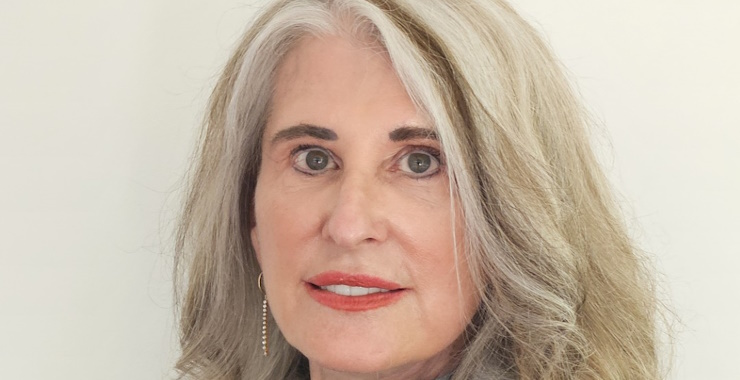
Mary Koss, PhD
(Photo: Paul G. Koss, MD)

Mary Koss, PhDopens in new window, a regents’ professor in the Mel and Enid Zuckerman College of Public Health at the University of Arizona in Tucson, conducted the foundational scientific study of sexual exploitation of women, The Scope of Rape (PDF, 1MB)opens in new window. Across the five decades since she began this inquiry, Koss has continued to hone the methods she developed for that initial study, and to explore how best to deal with the aftermath of the all-too-common crime of rape.

“My primary allegiance is to victims, to survivors,” she says.

The original version of The Scope of Rape, which caused a sensation when it was published in 1987, found that one in four American women had experienced a rape or attempted rape, most often at the hands of someone she knew. Then, in a 30-year prevalence comparisonopens in new window published in 2022, using new data gathered with an updated version of the Sexual Experiences Surveyopens in new window (SES), the questionnaire she had created, Koss and her colleagues showed that sexual exploitation is even more common than that first study indicated: One in three women reported experiencing rape or attempted rape.

APA recognized Koss in 2000 with its Award for Distinguished Contributions to Research in Public Policyopens in new window and, in 2017, the Award for Distinguished Contributions to the International Advancement of Psychologyopens in new window. In addition, the APA’s Division 35 (Society for the Psychology of Women) gave her the Carolyn Wood Sherif Award, its highest honor, in 2019. She has won many other awards and was featured in a 2022 episode of the public radio program “This American Lifeopens in new window.”

This month, Koss published a fresh survey using a revamped version of her questionnaire, the SES-V, which marks a pivot away from the predominantly White college women she originally studied. The national sample of 347 participants included women and men ages 18 to 83, not all college educated, as well as people of color, and LGBTQ and differently abled individuals. In this new study, 60% of women and 29% of men reported they had experienced a rape, while 89% of respondents in all reported experiencing some type of sexual exploitation, which in some cases was a noncontact experience, like being coerced to share sexually explicit images through the internet.

Koss has come to realize that sexual exploitation is not only common but also deeply resistant to both prevention and redress, despite decades of awareness and advocacy that have produced such potent popular movements as Take Back the Nightopens in new window and Me Tooopens in new window, and billions of dollars spent by the Centers for Disease Control and Preventionopens in new window, the Department of Justiceopens in new window, and other agencies.

Prevention strategies

In Koss’s original study, which surveyed 6,159 male and female students in 32 colleges and universities across the United States, one man in 19 said he had perpetrated rape or attempted rape. In the 2022 follow-up study, one out of every eight men reported he had raped someone, or tried to.

Koss points to a recent meta-analysisopens in new window that examined rape prevention strategies undertaken between 1985 and 2018 to reduce sexual violence, which concluded that those efforts utterly failed in “reducing victimization or perpetration.” Koss wrote a commentary agreeing with those researchers’ unsettling conclusionsopens in new window, which traced the history of prevention efforts from attempting to teach adolescents better relationship skillsopens in new window, to putting the onus on menopens in new window to prevent rape—which met with considerable hostility—to reliance on bystanders to interveneopens in new window.

Koss herself has studied how to train bar staff to head off situationsopens in new window that appear to be exploitative. She found in her 2021 study of 2,471 students at 13 colleges that the increase in rape over the past 30 years was in large part “due to the growth of alcohol-related rapes,” she says. Three-fourths of rapes in the second study occurred after the victim became incapacitated from drinking, compared with half the rapes reported in the 1987 study. Even deep into the 21st century, many perpetrators simply didn’t think it was wrong to have sex with someone who was too drunk to object.

“You can change how people define rape. You can change whether they think certain things are right or wrong. You can change their attitudes, stereotypes, myths, but that doesn’t change their behavior,” Koss says.

What might? Koss thinks a consistent sex education program in elementary and high schools that taught “positive skill-building about sex and relationships” would go a long way toward giving young adults practical behavioral skills for how to have enjoyable and consensual sex. “You should start early,” she says. However, she also thinks such a national campaign, or even getting access to students to test one, is unlikely to get traction in the present political climate.

Restorative justice

Koss was also the principal investigator for the RESTORE programopens in new window, the first peer-reviewed quantitative evaluation of restorative justiceopens in new window (RJ) conferencing, a voluntary, face-to-face moderated meeting between the victim and the perpetrator of sexual assault. RJ sessions give victims and their supporters a chance to talk about the effects the rape had on them, and the perpetrators an opportunity to acknowledge their actions and express remorse—and for each to listen to the other. Then, together, participants create a supervised plan for redressing the damage.

One reason Koss has embraced restorative justice as a remedy, she says, is the failure of the criminal justice system. The comprehensive conviction rate is about 2% for all incidents of reported rape. Cases fall away at every single step in the process, Koss says, from the two-thirds of victims who decide not to report the crime, to police who decline to investigate, to spoiled or lost evidence, to prosecutors who decline to bring cases, and finally, to victims who must contemplate facing the brutal, public, spirit- and reputation-wrecking gauntlet they must run if they ever do actually reach a courtroom. That 2% conviction figure holds even when the victim is a child, Koss says. And as a victim in the system, as opposed to a participant in an RJ conferencing session, “you have zero control,” she says.

Rape takes a harsh toll on its victims. One study found that, for those who sought help, the average cost for a month of medical treatmentopens in new window in 2013, before insurance payments, was $6,737. Another study put the estimated lifetime cost of rape per victimopens in new window, in 2014 dollars, at more than $122,461, largely for lost work and medical and mental health expenses. The same study put the societal cost at $3.1 trillion, including the effects on perpetrators and the activities of the criminal justice system. And a reported 2.4% of American women experience rape-related pregnancyopens in new window over their lifetimes.

Effective policy has been an important goal for Koss, who testified in Congressional hearings that led to the first Violence Against Women Act in 1994 (PDF, 18MB)opens in new window. But experience, and more recent research, have shown that there is no easy fix for sexual violence (PDF, 3MB)opens in new window. We need to know more.

Koss sees SES-V as a bridge to a new generation of investigators, and to a more inclusive perspective on who is vulnerable to sexual exploitation in our society. Working on that has been “a real closing of the loop for me,” she says. “I don’t have to worry. There will be people doing this research in the future.” Koss explicitly recruited junior people and critics of the SES for the project. “I figured they’re the best people to see the problems.”

The pandemic turned out to be something of a gift, too, given that Koss and her far-flung collaborators could gather every other week via video, with few distractions. “I’ve never been as productive as I have these past two years,” she says.

Recommended Reading

APA Member Benefits

Connect with peers

APA Community


Save 35% off pay now rates

Avis and Budget


New products available

APA Merch Store opens in new window


Competitive low rates

Student Loan Refinancing

You may also like