skip to main content

Working during COVID-19: Therapists share their telemental health experiences

APA Style leaf logo Cite This Article in APA Style
Carter, K. (2020, May 7). Working during COVID-19: Therapists share their telemental health experiences. https://www.apa.org/members/content/telemental-health-experiences

Thanks in part to telemental health, many psychologists are continuing to see patients during the global coronavirus pandemic. Quite a few have seen an increase in demand for their services as the nation deals with the contagion.

Yasmine Saad, PhD “Our job is to help our patients find a balance between protecting themselves and not giving into fear,” says Yasmine Saad, PhD, president and owner of Madison Park Psychological Servicesopens in new window in New York City. During this time, the first thing she wants to determine when working with her patients is whether they can protect themselves from the dangers of COVID-19 without being consumed with or triggered by fear. She finds that those who become triggered have underlying issues that disrupt their balance of healthy caution and feelings of being overwhelmed. “Their mind is racing, and they just cannot take care of themselves,” Saad says. “The important thing is to help them release what is making their mind go, go, go.”

It is also common for these patients to tend to ruminate on negative thoughts while self-isolating, such as their being all alone in the world, Saad explains. In these circumstances, Saad cautions against only using technology to help, and encourages pairing telemental health with meditation and mindfulness exercises. “Our work as psychologists is to help people look at their minds. There are so many mental health apps out there, but they have a short-term effect if people don't look at their minds and their ingrained beliefs,” says Saad.

LaNail Plummer LaNail Plummer, EdU, LPC (DC), LCPC-S (MD), is CEO and clinical director of Onyx Therapy Groupopens in new window in Washington, D.C. She says some of her clients are experiencing fear-based responses to COVID-19, appearing to have anxiety, depression, stress, or responses to underlying traumatic experiences. Other clients seem to have social-based responses to the pandemic and struggle with the current nationwide self-isolation and social-distancing advisement.

When we are required to stay inside, “we are forced to pay attention to the people we live with and we are forced to pay attention to ourselves,” says Plummer, adding that “when you are quarantined, there is no place to run.” The challenge for these clients is that they have to implement the skills that they have been practicing in therapy all along — but in a more specific way that incorporates their families. Plummer suggests they participate in guided meditation and practice reframing any negative thoughts they might have.
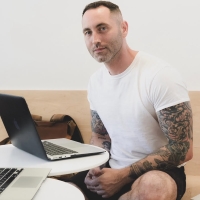
Chris Donaghue, PhD Chris Donaghue, PhD, LCSW, CST, a psychotherapist who works with individuals and couples, has felt changes in his work since he made the switch to telehealth. “I miss the face-to-face work because it allows for me to track microexpressions, postures, and more importantly, the methods of attachment that allow me to do deeper relational work,” he says. “Its far more difficult to connect from a distance, via technology.”
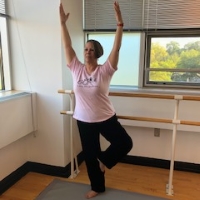
Vanessa Jackson Vanessa Jackson, EdD, MFA, MA, is a professor of somatic studies and teaches mindfulness, mediation and soul yoga dance movement in higher education, K–12 urban public schools, and private classes for women. She has always emphasized the need to relax and maintain a daily structure, and now she finds herself reinforcing the benefits of self-care such as “deep breathing, quieting the mind and mindfulness during these uncertain times.” 

Encouraging self-care

Plummer has also stressed the importance of self-care in her practice, encouraging people to do things such as increasing communication with others and going to the gym. But now, she's changing her methods from suggesting external elements of self-care techniques to suggesting indoor ones. “We have to encourage clients to create self-care moments using the technology that they have available,” she says. She suggests doing exercises on YouTube; following up with gyms to see if fitness classes are being held virtually; and attending video happy hours, book clubs and game nights. Plummer also points out that the self-care she encourages is focused not only on mental health and relaxation, but also on moments of enjoyment. “[Clients] forget that magazines and coloring books can be a source of entertainment, and they can be found online, so we can do the things we used to do when we were kids.”

Saad tells her clients to use this time of self-isolation to practice self-care that brings joy. “Try to see if you can still create joy — dance, enjoy music or take up a new hobby. This is a time to be playful like a kid, to find our inner child.”

Access to technology during social isolation

Jackson has some clients who are over 70 years old in her yoga classes, and some of them have limited tech abilities; however, they still value personal contact and interactions. “They have been successful using their phones to participate in my yoga sessions using a conference call-in number. This is amazing that they are able to achieve the same level of release and relaxation using a phone as a face-to-face class,” she says.

Most of us are lucky, points out Plummer. “We have access to technology that we didn't have ten years ago,” she says. But not everyone is so fortunate. It's easy to assume that everyone has Wi-Fi and a smart phone and can log in for an online meeting — but that's not always true of low-income families and some of the elderly population. Also, there are some clients who might have access to technology, but telemental health is just not a good fit for them. In these instances, it is harder to treat clients during times of social isolation.

Plummer also notices that this time of self-isolation creates the potential opportunity for clients who have a history of unhealthy coping skills to return to them. Some people who are recovering from addictive behaviors end up wanting to increase the frequency of their sessions to process their issues, and not doing so face to face might be less than ideal. Plummer suggests that these patients should increase socialization by checking in with others through phone calls until in-person sessions are possible again.

Services in high demand

Jackson has seen a slight increase in her services since social isolation began, especially her free Noontime Friday online meditation sessions that include 30 minutes of deep breathing and calming practices. She also started a Saturday morning yoga session on Zoom. 

Both Plummer and Saad are also dealing with higher demand during COVID-19. Clients are asking to increase session times, and they're checking in more often, says Plummer. Her practice has a long wait list but is still taking more clients. Saad is also dedicated to showing up for her clients. “We are here to help, especially at this time,” she stresses. “In the crisis, you cannot not provide mental health care.” But these increasing demands can be stressful on mental health care professionals. They must remember that while helping others, it is important to help themselves.

Donaghue agrees. “I want all mental health workers to make sure we are not getting compassion fatigue or any vicarious trauma. It's imperative that we are all setting boundaries, imposing limits on our accessibility, and not burning out,” he says.

Plummer points out that she must be mindful of what she is asking of her team of clinicians. It is important for health care professionals to create boundaries around how many clients they can see so they don't become overwhelmed. “It is very tempting to want to be a martyr, so that you forget about your own sleep or your own need to take a break, because you want to help your client so much,” she says. But “it is important to make yourself a priority so you can be a good mental health service provider.”

Offering a sliding payment scale

Providing good service can be difficult when people are forced to stay home from their jobs without pay, and many people do not have mental health care covered by insurance. To continue serving their clients that might have these problems, Saad and Plummer offer a sliding payment scale, so that the costs of their services will be set based on a client's ability to pay. Fees for people with lower incomes will be reduced, but therapists must be careful to balance sliding scale fees with enough full-price charges, in order to maintain overhead costs.

Jackson also wanted to continue connecting with her clients in a meaningful way, so she offered free weekly meditation, mindfulness and yoga classes to her clients and their families. She also developed a 7-week online coaching practice to help her clients use meditation and mindfulness to keep their focus on positive instead of negative things, a practice she would normally charge $600 to access.

Plummer and Saad are confident that the average client will get through the COVID-19 pandemic. Once COVID-19 is behind us, they both believe that mental health services provided remotely, through technology, will remain. Plummer expects that while some clients will return to in-person sessions, many others will be more comfortable with the convenience of telemental health — and stick with it.

If the psychological field expands telemental health, Plummer hopes to be able to provide services to more people, such as counseling services to families through the school system. Saad agrees that the expansion of telemental health is a positive thing that can come from COVID-19, and there is now an opportunity to learn about its best practices.

Looking forward

Donaghue is hoping for more discussions around resilience, after this difficult time passes. “We can therapeutically harness and curate social media use to build a more robust and resilient psyche if we learn how,” he says. “The crisis is accentuating or uncovering some of our patients core symptoms and internal issues and providing for an opportunity to go deeper in our work,” says Saad. Both Plummer and Saad want to see more academic training around telemental health care and to have it included in textbooks. Saad hopes there will be research studies exploring how the pandemic has affected clients “so we can prepare better responses for the future.”

Lessons learned: What to take from the pandemic

Saad has seen diverse reactions to the COVID-19 crisis in her clients. “Some have little exposure to the virus and others have their whole families affected with several members on the ventilator. Patients' reactions do not only vary according to each one's psychological make up, but also according to how much exposure to the virus their loved one has.” Despite these different reactions to the pandemic, she has learned that there are common ways to help her clients — specifically, anxiety management, grief issues, trauma, overthinking with negative thoughts.

Plummer has learned that society is ready for telemental health. “Our field has focused on face-to-face services; however many people are more open to telemental health than before. I've learned that our teaching and education agencies, such as PESIopens in new window, can quickly and efficiently meet the needs of clinicians and field workers, to ensure that we are trained and supported,” she says.

Since the start of social distancing, Donaghue says, “the COVID-19 pandemic has taught me the importance of connection for mental health and preventing trauma. I'm witnessing how relationships of all kinds are what drive and define biological and psychological health, and I'm seeing how connection can heal us and how its absence and distance can wound us.”

“I am re-evaluating my need for a physical space to conduct my mindful meditation and movement sessions,” says Jackson. Even though she believes her clients will still need the personal touch that comes with meeting in-person, she is open to using technology more often, post COVID-19. “My goal is to reach and teach as many people as possible, and technology will allow me the freedom to tap into a broader audience of people.”

Recommended Reading

APA Member Benefits

Connect with peers

APA Community


Save 35% off pay now rates

Avis and Budget


New products available

APA Merch Store opens in new window


Competitive low rates

Student Loan Refinancing

You may also like