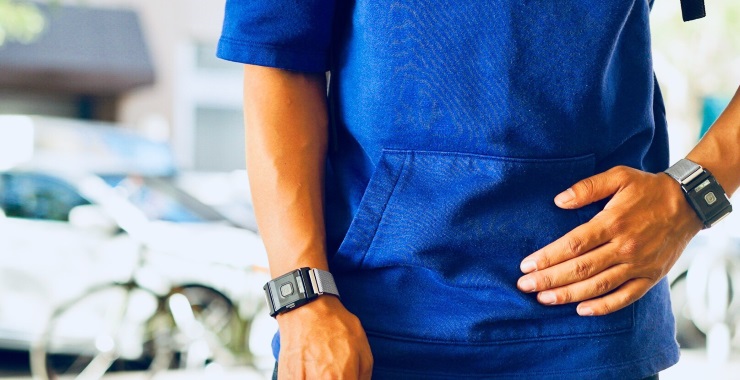
TouchPoints are wireless devices worn on the wrists that reportedly "change the brain's response to stress,” according to their developer, neuropsychologist Amy Serin. (Photo: Courtesy TouchPoints)
O'Hara, D. (2019, June 6). Wearable technology for mental health. American Psychological Association. https://www.apa.org/members/content/wearable-technology
Digital technology offers real hope for reaching more people with mental health care help. But while the need is strong, the technology might require some patience.
Shortages and uneven distribution of mental health professionals abound, with many rural and poor areas having no coverage at all. The U.S. Department of Health and Human Services projects that the shortfall (PDF. 452KB)opens in new window will only deepen through 2025. Digital technology offers real hope to reaching those people in the future.
"There's also a subgroup of people who have no interest in seeking a face-to-face modality," says Michelle Newmanopens in new window, PhD, professor of psychology and a researcher at Pennsylvania State University (PSU) in University Park, Pennsylvania. "Or sometimes this will be the foot in the door" for people who might have been reluctant to seek help.
Portable devices that can gather information, assess activity and other biomarkers, and even deliver interventions have tremendous potential, say the scientists who study them.
"The earlier you can detect a shift in a person starting to go in a negative direction, the better," Newman says. The trick now will be figuring out how to use these new tools to intervene for the good of the individual.
Perhaps one in five Americans has a smartwatch or activity tracker like a Fitbit, which typically returns better quality data than a smartphone presently can, but dedicated wearable technology devices are also being developed specifically for mental health care. Here are a few examples available now, or on the horizon:
- Abilify MyCite, developed by Otsuka America Pharmaceutical and Proteus Digital Health,opens in new window is used to treat schizophrenia and bipolar disorder and as an adjunct for depression in adults. A sensor in the pill lets a patch the patient wears on his torso know when it's been ingested. Up to three-fourths of patientsopens in new window with schizophrenia do not take their medication as prescribed; nonadherence can result in poorly managed symptoms and major life disruptions. Ability MyCite's usefulness in bettering adherence has not been established, but Otsuka hopes for "clarity" about patient behavior "to better inform decision-making for physicians and their patients," a spokesman said.
Abilify MyCite reports to a tracking mobile application (app) on the patient's smartphone, which can transmit the data to the patient's physician. Two years after receiving FDA approval, Abilify MyCite wholesales for $1,650 for a 30-day supply, and remains poised for a limited rollout via selected insurance firms and state Medicaid programs. - Amy Serinopens in new window , PhD, a Peoria, Arizona, neuropsychologist, has developed a tactile bilateral alternating stimulationopens in new window system, TouchPointsopens in new window (formerly Buzzies), a pair of wireless devices worn on wrists or in pockets when a patient feels anxious, that Serin says can "change the brain's response to stress to a great degree." The basic model costs $160. While "the concept and even the technology are not new," Serin, who heads up a clinical practice at three centers outside Phoenix, added a wireless portable component and improved the stimulation, and has done or sponsored research to support her contention that TouchPoints "takes away your stress."
- Awake Labs,opens in new window based in Toronto, Ontario, has developed and is testing an app on a Samsung smartwatch to allow facility-based caregivers to track the emotional states of adults with intellectual and developmental disabilities, and respond. Working with Community Living Windsor,opens in new window a care facility, in a pilot project funded by the Ontario Brain Instituteopens in new window , Awake Labs hopes that data gathered now will make the as-yet-unnamed app usable in more settings, says Andrea Palmer, Awake Labs' chief executive officer.
"The dream for a lot of us has been to be there with our clients, and now tech is allowing us to do that, to be right there with people struggling with stressors," says Adrian Aguileraopens in new window, PhD, associate professor and a researcher at the School of Social Welfare at the University of California Berkeley.
The most promising device is the smartphone. More than three-fourthsopens in new window of Americans own one, "this little powerful computer in their pockets," says Aguilera. Smartphones have sensors — accelerometers, for instance, which measure the force of acceleration caused by movement or gravity — with tremendous promise for mental health in the long term. However, wearable technology in general so far is lagging in terms of practical mental health applications. Among the reasons are its novelty, complexity and cost.
John Carroll,opens in new window PhD, an experimental psychologist and d irector of the Center for Human-Computer Interaction at PSU, notes that wearable technology is not for everyone, and that it won't suffice for people with severe symptoms. "It's incredibly useful to distinguish the serious cases from the non-serious ones," Carroll says.
"There are a lot of valid concerns," says Timothy Aungstopens in new window, PharmD, associate professor of pharmacy practice at the Massachusetts College of Pharmacy and Health Sciences, a researcher on digital technology in pharmacy. "For example, what is the data being gathered, and who has the right to access that data?"
The answers to those questions are not always as transparent as the public might think. A recent investigationopens in new window in the Journal of the American Medical Association found that 29 of 36 top-ranked apps for depression and smoking cessation shared data with Google and Facebook that could have compromised individuals' privacy, even though the terms and agreements of only 12 of those apps divulged in user agreements that this could happen.
In light of the 21st Century Cures Actopens in new window of 2016, in which Congress loosened regulationopens in new window of some medical and mental health innovations, and with the FDA asserting plans to "reimagine" its oversight role when it comes to digital health technology, caution is imperative among clinicians and consumers alike.
Stephen Schueller,opens in new window PhD, assistant professor of psychological science at the University of California at Irvine, and executive editor of PsyberGuideopens in new window, an online library that rates and reviews mental-health apps, estimates that upwards of 10,000 are available. "Most are pretty bad; some are even potentially harmful," he says. One 2015 surveyopens in new window concluded that most informational apps skimped on core psycho-educational principles , while monitoring apps generally failed to track such critical information as medication and sleep. PsyberGuide, a project of One Mindopens in new window , generally reviews only the 2 to 4 percent of apps that are evidence based. Schueller says, "We want to get those out to the public."
The FDA has app roved two apps, both from Pear Pharmaceuticals: reSET, which helps improve abstinence from alcohol, cocaine, marijuana and stimulants, and reSET-O, for opioids.
There's a good reason why the smartphone is the chief conduit of portable technology, even though it's not a perfect tool for gathering data. About half of people who own a smartwatch , the most common consumer wearable, stick them in a drawer after acquiring them. The smartphone, on the other hand, is ubiquitous. Especially among younger people, when a smartphone is not on the user's person, chances are that person is either in the shower or asleepopens in new window.
"The uptake doesn't require any additional thought. It's embedded in what people are doing on a day-to-day basis," says David Mohropens in new window, PhD, professor of p reventive medicine at Northwestern University's medical school in Chicago, an APA Fellow, and founder and director of the Center for Behavioral Intervention Technologies at Northwestern. Mohr's team has developed and studied a suite of apps called IntelliCare that offers interventions for anxiety and depression, now available on Android and iPhone.
Mohr also headed up a team that used GPS and other smartphone features to estimate the moodsopens in new window of unseen subjects by their level of movement and phone use, both frequency and duration. A side benefit of the study was to point up "numerous clinical opportunities" the smartphone offers, including "continuous monitoring of at-risk populations with little patient burden" and just-in-time adaptive interventions (JITAI)opens in new window, appropriate supports delivered when an individual needs them.
But Mohr says that his and other studies have been hard to reproduce. "I've become very skeptical about a lot of data," he says. "We're running into a problem of variability."
That is, the activity level of a 60-year-old, or anyone in Milwaukee, Wisconsin, in January, is going to be different from that of a 25-year-old resident of Key West, Florida. "We're going to need to do much larger studies," Mohr notes.
Wearable devices, perhaps a sensor attached to the skin like a temporary tattoo, worn around the clock for a week or so and sending data to a smartphone, may have a role. That data could be more precise than the information a phone can gather, and "the subject wouldn't need to remember to put it on every day," Mohr says.
At the same time, he says, researchers are going to have to do a better job of testing effectiveness — whether a device or an app will actually be useful in a care setting, that is. Testing protocols for digital innovations must also be speeded up and otherwise adapted to reflect how quickly things change in the field, he says.
"Digital technologies are not fixed," Mohr says. "Even during a trial, we have to be continuously optimizing and updating. And so what we should be testing is not the application but the principles. What is the digital service trying to do?"
Technology, Mind & Society 2019
APA’s Technology, Mind & Societyopens in new window conference showcases the most important current research in psychology and other disciplines concerning the interactions of humans and technology — research that moves us toward the goal of ensuring that technology enhances the lives of all people.
Technology, Mind & Society Keynote Speakers
 Sara Czaja, PhD
is a professor of gerontology and the director of the Center on Aging and Behavioral Research in the Division of Geriatrics and Palliative Medicine at Weill Cornell Medicine. Czaja’s research interests include aging and cognition, aging and healthcare access and service delivery, family caregiving, aging and technology, and functional assessment.
Sara Czaja, PhD
is a professor of gerontology and the director of the Center on Aging and Behavioral Research in the Division of Geriatrics and Palliative Medicine at Weill Cornell Medicine. Czaja’s research interests include aging and cognition, aging and healthcare access and service delivery, family caregiving, aging and technology, and functional assessment.
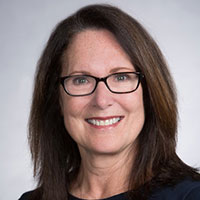 Camille Nebeker, EdD, MS
is an assistant professor of Behavioral Medicine in the Department of Family Medicine & Public Health, School of Medicine at UC San Diego. Nebeker’s research focuses on community research capacity building and the ethical dimensions (e.g., consent, privacy, data management) of emerging technologies (e.g., pervasive sensors, ubiquitous computing) used in health research.
Camille Nebeker, EdD, MS
is an assistant professor of Behavioral Medicine in the Department of Family Medicine & Public Health, School of Medicine at UC San Diego. Nebeker’s research focuses on community research capacity building and the ethical dimensions (e.g., consent, privacy, data management) of emerging technologies (e.g., pervasive sensors, ubiquitous computing) used in health research.
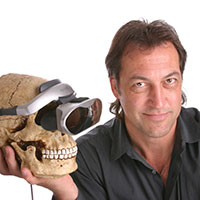 Albert “Skip” Rizzo, PhD
is a clinical psychologist and director of Medical VR at the University of Southern California Institute for Creative Technologies. He is also a research professor with the USC dept. of psychiatry and school of gerontology. Rizzo has conducted research on the design, development and evaluation of Virtual Reality (VR) systems targeting the areas of clinical assessment, treatment, and rehabilitation across the domains of psychological, cognitive and motor functioning in both healthy and clinical populations.
Albert “Skip” Rizzo, PhD
is a clinical psychologist and director of Medical VR at the University of Southern California Institute for Creative Technologies. He is also a research professor with the USC dept. of psychiatry and school of gerontology. Rizzo has conducted research on the design, development and evaluation of Virtual Reality (VR) systems targeting the areas of clinical assessment, treatment, and rehabilitation across the domains of psychological, cognitive and motor functioning in both healthy and clinical populations.
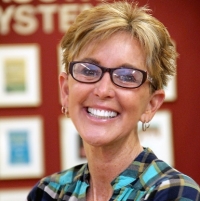 Valerie Shute, PhD
is the Mack & Effie Campbell Tyner Endowed professor in education in the department of educational psychology and Learning Systems at Florida State University. Her current research involves using games with stealth assessment to support learning — of cognitive and non-cognitive knowledge, skills and dispositions. For more details on her research and publications,
read her bioopens in new window
on Florida State University's website.
Valerie Shute, PhD
is the Mack & Effie Campbell Tyner Endowed professor in education in the department of educational psychology and Learning Systems at Florida State University. Her current research involves using games with stealth assessment to support learning — of cognitive and non-cognitive knowledge, skills and dispositions. For more details on her research and publications,
read her bioopens in new window
on Florida State University's website.
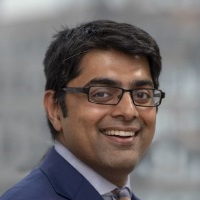 Kumar Garg
is the senior director for technology and society at Schmidt Futures. His four core areas of work include: promoting the positive digital transformation of society by investing in data collaboratives that address concrete societal problems; expanding the number of people that are involved in discovery and innovation; investing in early stage risk-capital in nascent university research, high-potential people, and young organizations; and advancing public policy that sustains and leverages science and technology. He previously helped shape policy for the Obama Administration, serving in a variety of roles in the White House Office of Science and Technology Policy.
Kumar Garg
is the senior director for technology and society at Schmidt Futures. His four core areas of work include: promoting the positive digital transformation of society by investing in data collaboratives that address concrete societal problems; expanding the number of people that are involved in discovery and innovation; investing in early stage risk-capital in nascent university research, high-potential people, and young organizations; and advancing public policy that sustains and leverages science and technology. He previously helped shape policy for the Obama Administration, serving in a variety of roles in the White House Office of Science and Technology Policy.