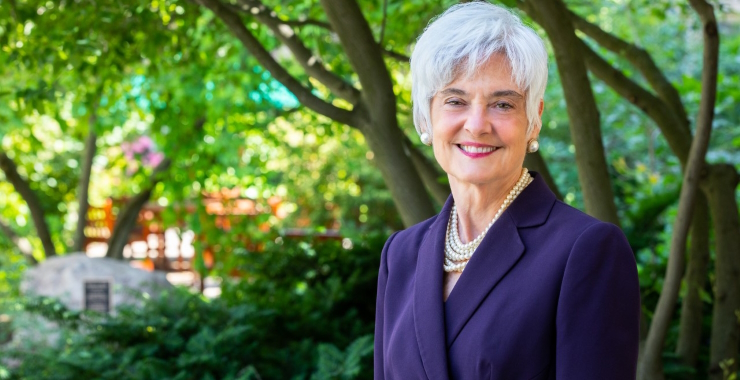
Efforts to ensure that neurodiverse workers are hired and given opportunities to reach their full potential should be a priority in today’s workplace, because so many individuals and families are affected, says Susanne Bruyère, PhD, professor of disability studies and the academic director of the Yang-Tan Institute on Employment and Disability in the ILR School (New York State School of Industrial and Labor Relations) at Cornell University in Ithaca.
The term “neurodiversity” has emerged to acknowledge that variation is a given in the way human brains work, but it is often used to describe people with autism spectrum disorder, ADHD (attention-deficit/hyperactivity disorder), learning differences, and other neurodevelopmental conditions.
Bruyère, a fellow both in APA Division 14 (Society of Industrial and Organizational Psychology) and Division 22 (Rehabilitation Psychology) has spent her career researching and advocating for policy change around inclusive hiring for people with disabilities, older workers, and for the past decade or so, neurodiverse individuals, especially those with autism. An estimated 17% of children ages 3 through 17 in the United States have one or more developmental disabilitiesopens in new window—physical, learning, language, or behavioral—and in a study published this yearopens in new window, nearly 3% of 8-year-olds were found to have autism. That is a dramatic increase since 2000, when the reported incidence of autism was well under 1%. The reasons for the increase are not entirely clear, but are often interpreted as resulting at least in part from better methodology for diagnosing autismopens in new window. In any case, “there’s going to be an increasing number of neurodiverse individuals in the workplace,” Bruyère says. Autism occurs across races and ethnic and socioeconomic backgrounds, and currently is diagnosed four times more in boys than girls.
Most autistic adults are un- or under-employed
One 2013 studyopens in new window found that only about 20% of autistic people were employed full time, and that only slightly more than half of subjects with autism had ever worked at a paying job. A minority of people with autism are not able to work, but many others have a great deal to offer employersopens in new window , Bruyère says. Many have the characteristics of logical thinking, being organized, focused, quick learners, and proficient problem solvers. Leaders in STEM-based industries in particular (science, technology, engineering, mathematics) have found that autistic individuals can be valuable additions to their workforcesopens in new window . “The company data is out there to suggest that some people (with autism) outperform their peers in comparable jobs,” Bruyère says.
However, getting them into jobs can be challenging.
“The interview process has been problematic for neurodiverse individuals,” Bruyère says, due to communication issues that make “impression managementopens in new window” difficult. They may have a hard time making eye contact, detailing their strengths, or describing an event in context in response to a behavioral interview question, tending to focus instead on particular details.
Many neurodiverse job applicants may even eliminate themselves even before the interview, though, Bruyère says, turning away from job listings that ask if they are “an effective team player” or “work well with others.” Or they might look for indicators of a neurodiversity-inclusive workplace such as internships for neurodiverse individuals, partnerships with local area employment organizations serving autistic individuals, or “anything on the hiring organization’s website that demonstrates that this is an affirmatively hiring organization.” When those signals are missing—“something that tells you you’re wanted”—autistic individuals (as well as those with disabilities) may be less likely to apply, she says.
More obstacles lurk in the application screening process itself. Often literal to a fault, the neurodiverse might refrain from, say, claiming proficiency with a software they don’t have but could easily acquire. Screening algorithms may eliminate them on a number of counts.
Demonstrating skills rather than talking about them
“We’ve found in our research that there are ways to tweak those processesopens in new window,” Bruyère says—through welcoming websites and mindful job descriptions, for example, and training for recruiters and managers to help them transcend their biases and be more open to neurodiverse applicants. Confronting the barriers that turn some job applicants away is the first step. “The educational process does help,” she says.
Best of all is to offer alternatives in the interview process to enable people to affirm their relevant skills. Examples might be to “give people an opportunity to demonstrate skills rather than talk about their skills.” Internships are a great tool for that, Bruyère says, giving the applicant a chance to learn about the workplace and the job in a hands-on fashion, and affording supervisors a chance to observe the applicant’s strengths. Providing internships to the neurodiverse on a regular basis is one way to “change work culture,” too, she says.
Bruyère has prioritized getting her findings into the hands of employers and decision makers. “I credit our funders with encouraging us to make sure that our research doesn’t just lie in a book on someone’s table, that the information is in a user-friendly format that gets out to people.”
To that end, the Yang-Tan Instituteopens in new window at Cornell, which conducts research and supports employers’ efforts to hire workers with disabilities, produces more than 600 webinars annually, is active on social media, and offers information and training tools online. Bruyère has written five books and more than 180 articles and book chapters on workplace disability inclusion, and teaches two online courses.
An “ardent fervor” for inclusion
She has found that many employers are eager to learn what her team has to share.
“I’m so impressed with the companies that have taken this on as an affirmative hiring focus,” and with their “ardent fervor to understand how to be successful at it,” she says.
More than 50 corporations have signed on to the Neurodiversity @ Work Employer Round Tableopens in new window sponsored by the nonprofit advocacy group Disability:IN, including Boeing, Ernst & Young, Ford, IBM, Microsoft, Pfizer, and JP Morgan Chase. Participants pledge to create initiatives to hire the neurodiverseopens in new window. One of the pioneers was SAPopens in new window, a global software company based in Walldorf, Germany. While SAP fell short of its initial goal, set in 2013, of hiring 650 autistic people by 2020 (1% of its total workforce), the firm has created hundreds of training opportunitiesopens in new window for students and recent graduates all over the world.
Equal access for all
Corporations committed to hiring the neurodiverse are able to move much more quickly than nonprofits or government agencies, which may be hampered by lack of funds, Bruyère says. Advocates have learned a great deal from their efforts, and the lessons also apply to that “broader group of previously marginalized workers,” she says.
She would like other psychologists, especially those specializing in industrial-organizational psychology, “to broaden their thinking of what a diverse workplace is, and to have disability and neurodiversity included in that,” along with race, ethnicity, and gender.
She says, “As our awareness grows, it’s not just a matter of having a diverse workforce, but of having a workforce in which everyone feels included—and has equal access to opportunity.”