Amid widespread concern about youth mental health—from rising rates of depression to exposure to hateful rhetoric—digital technology is often framed as a primary culprit. In 2023, Surgeon General Vivek Murphy issued an advisory warning of the “profound risk” social media may poseopens in new window to adolescent mental health. A 2025 report from Common Sense Mediaopens in new window found that 80% of parents express concern about their children’s exposure to digital media.
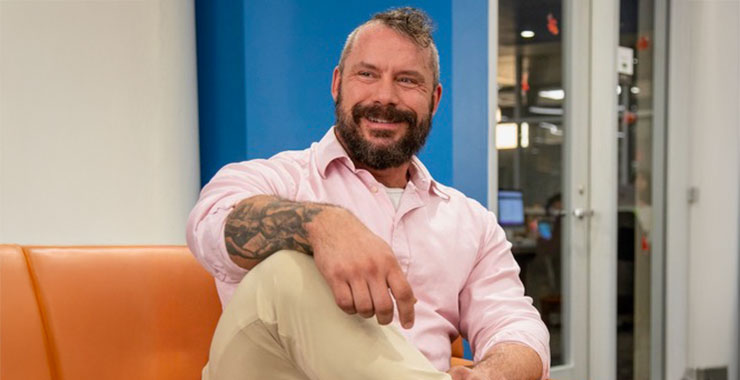
With the rapid rate of change in the way teens use technology, it’s easy to blame technology for what has been called a “mental health crisis” among adolescents. But the real story is more nuanced, says Mike Parent, principal researcher at Hopelabopens in new window, a social innovation lab and impact investor.
“The dominant narrative is that social media is bad and every problem that young people have is because of it,” Parent said. “That’s not true. There are both problems and opportunities.”
Parent began his career researching gender, sexuality, and behavioral health. Later, as an assistant professor of counseling at Texas Tech University and associate professor at the University of Texas at Austin, his research narrowed in on adherence to traditionally masculine gender norms—particularly anabolic steroid use and the drive for muscularity.
Post academia, Parent shifted his focus to youth well-being. At Hopelab, he works directly with young people and research partners to produce public-facing reports focused on the intersection of identity, mental health, and technology—work that aims to complicate, rather than reinforce, dominant narratives.
“Our work is to make sure those narratives are balanced,” Parent said.