
"Complacency is perhaps the cardinal sin for those charged with protecting public health."
— Sir Liam Donaldson
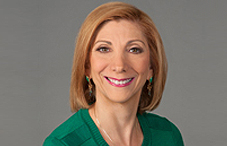
We all have personal reasons for doing the work we do, what we advocate for and what we study. I focus on suicide prevention because when I was an adolescent, a close friend's mother died by suicide. During my training, I lost two patients to suicide. I was profoundly affected by these losses and developed a deep appreciation of the suffering loved ones experienced related to these deaths. I have dedicated much of my career therefore to training psychologists and psychologists-to-be to assess and work competently with suicidal people and their families and investigate culturally competent interventions for African Americans who attempt suicide, particularly those exposed to intimate partner violence.
But if we want societal change, we must go further by adopting a public health perspective. We can learn from our successes in tobacco reduction and the HIV/AIDS epidemic to enhance our suicide prevention endeavors. We must delineate a public health agenda to address diverse populations to reduce the morbidity and mortality associated with the continuum of suicidal behavior.
A public health model must include:
- Standardizing and providing training to trainees and psychologists on suicide assessment and treatment.
- Training community members as gatekeepers for identifying and referring those at risk.
- Creating, assessing and disseminating programs that have a broad impact.
These universal primary prevention strategies can directly improve people's lives; doing so is our social responsibility. Such programs must incorporate an ecological framework and address the individual, his or her social environment and relationships, his or her broader communities and society at large. In recent years, there have been fascinating developments, including:
- Upstream approaches, such as the Good Behavior Game, a classroom management technique that reduces suicidal ideation 20 years later (Kellam et al., 2011).
- The Signs of Suicideopens in new window prevention program in high schools.
- Gatekeeping programs in universities, such as Question/Persuade/Referopens in new window.
- The U.S. Air Force Suicide Prevention Programopens in new window, focused on early identification and treatment.
- The Henry Ford Health System Initiative, which offers depression care in a large health system (Hampton et al., 2010).
- Finding the Light Withinopens in new window, a community mobilization public arts effort designed to reduce stigma associated with suicide.
We must be familiar with these best practices, modify them to fit different settings and populations, and be leaders in creating and promulgating culturally relevant, evidence-based programs that can be implemented in diverse communities.
Notwithstanding the politics of the Affordable Care Act, the prospect that millions of Americans will have health insurance covering mental health benefits at a level comparable with their physical health care is a watershed moment that could truly destigmatize mental health care and suicide prevention services. As psychologists, we must use our research to advocate for systems of care that effectively identify, target and treat suicidal people and their families. We can incorporate innovative interventions in these care systems, such as the Relieflink app my colleagues and I developed at Emory University.
Moving our public health-oriented suicide prevention efforts forward requires visionary leadership, honest appraisal of our past successes and failures, consensus building following meaningful debate and deliberation, engagement of all relevant stakeholders including patients and families, and active engagement in relevant communities. It is tragic that each year in America, 38,000 die by suicide; there is a recent spike in the rates of suicide in young veterans; and rates of suicidal behavior among lesbian, gay, bisexual, transgender, queer and questioning youth are frighteningly high in part due to bullying. These are numbers that we must — and we can — reduce.
As Dr. Eric D. Caine asserts in the American Journal of Public Healthopens in new window, "Preventing suicide is a winnable battle!"