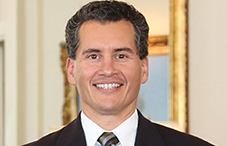

As I write this column, I am days away from taking over as executive director for APA's Education Directorate. Since I decided to take the position a few months ago, I have experienced one of the most interesting times of my professional life. Up until now, to the most casual observer, my professional trajectory has been somewhat foreseeable. After earning my PhD in psychology at the University of Texas at Austin, I went to the Medical University of South Carolina to further my training in the neurobehavioral and developmental consequences of alcohol use and abuse. After two years at MUSC, I accepted a tenure-track position at Baylor University in the department of psychology and neuroscience. I established my laboratory, taught courses, trained graduate students and did all the other things assistant professors do to earn tenure and promotion. In other words, this was a pretty insular and predictable beginning — no eyebrows raised.
Similarly, over the last decade, I began to take on leadership roles inside and outside the university, such as graduate program director, department chair, Council of Graduate Departments of Psychology board member and chair, and Board of Scientific Affairs appointee to the APA Commission on Accreditation, to name a few. My career trajectory was still squarely in the realm of the predictable. Now — cue eyebrows — I am headed to APA. And people are asking me:
"Why are you going to the APA Education Directorate?"
"What is the APA Education Directorate?"
"What will you do there?"
Of course, these are fair questions. In fact, these are questions I had to answer for myself as I contemplated the move.
As one would expect, answering the why has a lot to do with the what. The mission of APA's Education Directorate is to advance education and training in psychology and to promote the application of psychological science in education and training. This singularity of vision is shared across all areas that comprise the breadth and diversity of the directorate.
These areas are led by an outstanding group of directors, in my senior staff, and their respective excellent support staff. I will work closely with my deputy executive director, Catherine Grus, to facilitate the work in these areas, which include the Center for Psychology in Schools and Education (Rena Subotnik), Government Relations (Karen Studwell), Pre-College and Undergraduate Education (Robin Hailstorks), Graduate and Postgraduate Education (Garth Fowler), Sponsor Approval (Antoinette Minniti), Continuing Education (Greg Neimeyer), Administration and Governance (Jackie Tyson), Communications (Hunter Clary), and the Office of Program Consultation and Accreditation (Susan Zlotlow and Jacqueline Wall).
A separate column (or two or three) could be written about each of these areas and the amazing work accomplished in them. For now, it will have to suffice to say that these are bright, energetic, talented and committed individuals who share the view that quality education and training are central to psychology's ability to advance our science, research and health practices for the public good. Given my long-held commitment to education and penchant for being around bright and energetic colleagues, the decision begins to look much less unpredictable.
When presented the opportunity to share in and help shape further the directorate's mission by collaborating with education and training groups, APA divisions, state association leaders, the Board of Educational Affairs and APA governance, it was easy to come up with the why. This is a unique opportunity to help advance the discipline, which captured my imagination long ago. The chance to do so building on the strong foundation left by Cynthia Belar's stellar leadership, at a time when we face exciting opportunities and challenges, made the decision to come to APA not only predictable but easy.
I look forward to our work together.