
Technology has become an indispensible part of modern health care. But with technology come data — a lot of it. Now armed with a grant from the National Institutes of Health (NIH), psychologists, computer scientists, engineers, statisticians and physicians from 11 universities are joining forces to make sense of it all. Their goal is to find new ways to gather data from wearable sensors worn by people to track their movements, physiological states and behaviors — and turn it into useful, usable information to improve health.
NIH awarded a four-year, $10.8 million grant to establish the National Center of Excellence for Mobile Sensor Data-to-Knowledge (MD2K), based at the University of Memphis. The project is just one component of NIH's Big Data to Knowledge initiative, which aims to translate vast biomedical datasets into actionable health information.
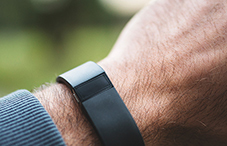
Wearable devices such as the FitBit — a wristband that tracks activity levels and sleep — have become popular with consumers. But behavioral health researchers see even bolder opportunities for mobile sensors.
"There are a lot of opportunities in terms of how this technology can help people who are struggling with certain health behaviors, and also help their health providers keep better tabs on them," says Gayle Beck, PhD, a University of Memphis psychologist who is participating in the project.
MD2K focuses on two health concerns: congestive heart failure and smoking cessation. Both, of course, have strong behavioral components. And researchers believe that data from sensors can ultimately help change those behaviors for the better.
Sensors can gather physiological data about respiration, heart rate and skin conductance (a measure of stress). They can detect motions, such as the wrist movements associated with smoking. With technology such as GPS and wireless cameras, sensors could even detect whether, say, a heart-disease patient is approaching a doughnut shop, or an ex-smoker is heading toward a bench where co-workers are lighting up cigarettes.
Collecting data is relatively easy. Making sense of reams of data is the challenge, says Mustafa al'Absi, PhD, a psychologist at the University of Minnesota Medical School who is participating in the smoking component of the project. His lab is focused on developing reliable physiological measures that can be linked to certain behaviors or emotional states. "We are trying to develop a model whereby we can predict times when people are tempted to smoke or to drink or even to eat," he says.
That's where computer scientists and statisticians come in. Together, the interdisciplinary MD2K team hopes to identify reliable patterns of activity that suggest when a person might be experiencing a craving. "Craving is a state of mind, but a state of biology, too," al'Absi says.
Ultimately, the researchers expect the technology will provide valuable feedback both to patients and to their health-care providers. "The intention is for it to become a two-way street," Beck says.
Imagine a smoker who is showing signs of stress. The sensor device might start flashing or beeping, warning that she's at risk of lighting up. She might even receive a supportive text message or phone call from a health coach. "The notion is to provide immediate feedback to people, possibly before they recognize that they're at increased risk," Beck says.
As long as there is a guarantee of data privacy, participants in pilot studies have been willing to have their activities tracked, Beck says. "Participants seem to be living their lives and doing the things they're used to doing."
"It's amazing how receptive people are to mobile technology — even generations that didn't grow up with technology," al'Absi adds. "That bodes well for the option of intervening."
While it takes some effort for researchers from such diverse fields to learn a common language, M2DK's interdisciplinary approach is vital for tackling the big challenges of understanding and applying large data sets, says Wendy Nilsen, PhD, a health scientist administrator at the NIH Office of Behavioral and Social Sciences Research. "There's such a huge space for psychology in this. When computer science, engineering and behavior all come together, that's where the real power is."
To learn more about the project, go to the Mobile Sensor Data-to-Knowledge websiteopens in new window or to NIH's Big Data to Knowledge websiteopens in new window.