Three years ago, psychologist Michelle Kaufman, PhD, was teaching a qualitative research methods course at a university in Ethiopia when she started seeing and hearing about behavior among students that she couldn't ignore.
"I witnessed groping, and also started to hear stories of how the female students felt pressured to have sex with male students or instructors on campus," says Kaufman, an assistant professor at Johns Hopkins Bloomberg School of Public Health. "The status of women in Ethiopia is one of the worst in the world, and these harmful social norms made it a difficult learning environment for the women."
After years of researching the intersection of gender norms and sexual risk behavior in Nepal, South Africa and Tanzania, she suspected that the Ethiopian women were being forced to compromise their human right to sexual health and safety. In response, she launched a study with two Ethiopian universities to evaluate what types of interventions would protect these women's rights on the campuses there.
As part of the study, Kaufman is interviewing male students about their attitudes toward women on campus and sexual violence, as well as female students about their experiences with coercion. She is also facilitating group discussions with students about the climate for women on campus and what could be done to prevent women from being coerced into sex. She is planning community events to raise awareness about why certain behaviors hurt women, and hopes to work with university administrators to review the policies related to sexual assault on campus.
"I think many of the early programs that aimed to reduce sexual violence in the U.S. and abroad may have failed because they focused solely on the voice of the victim and female empowerment," she says. "While female empowerment is crucial, if we don't change the attitudes around masculinity and power, this problem will not go away."
Although sexual violence in Ethiopia is more conspicuous than in the United States, Kaufman says she was keenly aware that it is also a problem on American college campuses. This reality came to the fore in the last year after scandals at several universities made headlines, including a gang rape at Johns Hopkins. Kaufman was asked to join a research team at the university to explore the issue along with several other universities. They are compiling their results to share with the White House Initiative to Protect Students from Sexual Assault to help leaders shape national policies. Kaufman will also be interviewing sexual assault survivors and analyzing survey data from Hopkins as part of the project.
Kaufman is one of a growing number of psychologists who are working to influence human rights in public policy and practice. Although the field of "human rights psychology" is not strictly defined (see sidebar), all of these psychologists have a common goal: protecting the rights of all people.
Growing experts abroad
Like Kaufman, Sandra Zakowski, PhD, a professor in the department of psychology at the Illinois School of Professional Psychology, knows that human rights violations are often hidden, and she believes psychologists can play a vital role in documenting the impacts these violations have on people. Through Physicians for Human Rights and the Heartland Alliance Marjorie Kovler Center for the Treatment of Survivors of Torture, Zakowski has conducted psychological evaluations of people who are seeking asylum in the United States.
Many have been victims of war, torture, gender-based violence and the trauma of fleeing their home countries. The documentation of their suffering provides important information for the legal proceedings as they seek asylum, she says.
By documenting their experiences, Zakowski believes she is giving credibility to what they have suffered. She is also inspired by working with people who have survived such adversity and found the strength to keep going.
Zakowski is partnering with two former clinical psychology students from northern Iraq to study the psychological consequences of the Kurdish genocide. She helped the students develop an assessment tool that they used while interviewing 100 survivors. Although the data have not yet been formally analyzed, Zakowski says it is clear that the survivors are still suffering from the traumatic consequences and the lack of access to mental health services.
A highlight of the project was training the students in Iraq to develop the assessment tool and conduct interviews, Zakowski says. It is important not only to build expertise abroad through collaboration and education, but to learn from partners outside American borders by asking questions and hearing their perspectives, she says.
Helping children heal
In Uganda in the 1990s, the army would round up everyone in a village, pick a boy, hand him a gun and ask him to kill a woman — who could have been his mother or sister, says Mike Wessells, PhD, a professor of clinical, population and family health at Columbia University.
The army did this to break the bond between the boy and his community so he would not later desert, says Wessells. He has studied child soldiers in such countries as Uganda, Afghanistan, Sri Lanka and Guatemala, where teens are frequently forced to join armies or lured by the promise of food, shelter and a better life.
 They often suffer significant psychological trauma and distress. "Children comprise approximately half the population in developing countries, and their rights are frequently trampled on a massive scale in war zones," he says. "Human rights standards are necessary because governments often commit mass human rights violations, and international human rights standards take precedence over law."
Wessells is interested in helping child soldiers reintegrate into society after wars are over. These youth not only need psychological support, but also assistance with finding livelihoods outside the army.
"The U.N. Convention on the Rights of the Child is very clear that any child who has been subjected to abuse, mistreatment or torture has a right to psychological recovery, and protecting this right is the responsibility of psychologists," Wessells says. "I think we work hard to support people in our own borders, but what about those outside our country?"
Wessells first became interested in helping children overseas the first time he visited a Palestinian refugee camp in Jordan in 1992. Through the years, he has witnessed the extraordinary pain many children have suffered, but he has been impressed with how quickly they can recover when supported with the right resources.
"They have a tremendous ability to solve their problems and find dignity in situations that make my knees buckle," he says. "If in some small way I can support them and document their experiences, my life is infused with meaning."
Among Wessells's most far-reaching efforts was securing reintegration support for former youth soldiers. In the aftermath of the U.S. war against the Taliban, the United Nations planned to establish separate programs for youth and adult soldiers who needed assistance with disarmament, demobilization and reintegration. In the 11th hour, however, the U.N. decided to cut the program for children and only offer one for adults. Wessells convinced the nongovernmental organization UNICEF to run it. More than 4,000 children participated in the program in 2003 and 2004, Wessells says.
After years of working in armed conflict settings, Wessells became increasingly aware that there was little agreement about the kinds of psychological support that were needed in these settings. Some organizations, for example, provided specialized support for post-traumatic stress disorder, while others focused on holistic psychosocial well-being through less clinical approaches. To help address this polarization in the field, Wessells co-chaired a global task force in 2007 that developed the first consensus guidelines on mental health and psychosocial support in emergency settings, including armed conflicts and natural disasters.
Now these guidelines are widely used in nearly all humanitarian emergencies, he says.
Understanding empathy
Psychologists such as Sam McFarland, PhD, are taking a different approach to promoting human rights. He hopes to uncover ways to foster empathy with other human beings by investigating the psychological predictors correlated with a concern for all of humanity.
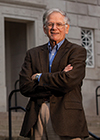 In one study, for example, McFarland analyzed data from five national studies to determine how much participants identified with people in three groups: their own communities, Americans and all humans. He also asked participants how willing they would be to help people in need in each of those groups.
He found that fewer than 10 percent of the participants identified "quite a bit" with all humans; most only identified "somewhat" (Journal of Personality and Social Psychology, 2012). Although this was initially disconcerting, McFarland was encouraged by results from a follow-up study that showed most people see concern for all humanity as a moral ideal, even if they are not living up to this ideal (Current Directions in Psychological Science, 2013).
"People seem to intuit on a deep level that all human beings are part of one family," says McFarland, a professor emeritus in the psychology department at Western Kentucky University. "I think we can capitalize on that intuition by teaching college students about the history of human rights and some of the exemplars who made contributions in this area."
Mixing politics and psychology
As a graduate student, Katya Migacheva, PhD, studied the socio-psychological roots of conflict and approaches to peacebuilding. She then received a fellowship through APA's Div. 9 (Society for the Psychological Study of Social Issues) and applied to be a senior fellow on the Tom Lantos Human Rights Commission in 2012. In the latter position, she became privy to the plights of different oppressed groups who sought help from the commission, a bipartisan group of members of Congress who work to raise awareness of severe human rights abuses in different parts of the world. The commission also engages the federal government in efforts to help people whose rights are violated.
 Migacheva had the opportunity to meet with representatives of the Rohingya Muslim community in Myanmar, who were seeking protection from the international community because the Burmese government would not recognize them as citizens and condoned discrimination and persecution against them. These Muslims had been placed in camps where they had no access to education or medical services and were forbidden from receiving international aid. They were hoping that the U.S. government could leverage its ties with the Burmese authorities to highlight and alleviate their plight.
"Understanding the roots of the prejudice they were experiencing helped me better advise congressional leaders as they wrote a resolution urging Burma to end persecution of the Rohingya," says Migacheva, who now works as an associate behavioral and social scientist at the Rand Corp. in California. "My hope is that the people I worked with in Congress will see psychologists as a valuable resource."
Human rights in the United States
Of course, human rights violations are not just a concern abroad. Many psychologists are focusing on neglected populations here in the United States. Among them is Craig Haney, PhD, who has conducted research in prisons and immigration detention centers throughout the country to better understand the conditions in these environments — and the impact these conditions have on those in confinement.
One trend that Haney found particularly disturbing was the frequent use of long-term solitary confinement in American prisons. These inmates are typically alone in a cell for at least 23 hours a day and only allowed out to shower and exercise in a small space.
 "In some cases, they have been kept there for decades," says Haney, a distinguished professor of psychology at the University of California, Santa Cruz. "Over the years, I've interviewed hundreds of inmates in long-term isolation and found increased rates of depression, impulse and anger control issues, cognitive problems like difficulty thinking and remembering, and high rates of self-harm and suicide."
Inmates who are thought to be affiliated with prison gangs may be placed in isolation because authorities believe they are a threat to prison security, even if they have not committed any other infractions. Haney also found that a high concentration of inmates suffering from mental illness are relegated to isolation units, in part because they do not get the treatment they need in the system and often struggle to follow the rigid rules in prisons.
Haney's expertise in the psychological effects of incarceration was sought out recently when prisoners who had been held in solitary confinement for more than a decade at Pelican Bay State Prison in California filed a class-action lawsuit against the state of California. He conducted in-depth interviews with many of the inmates, and in September the state filed a settlement agreeing to end indefinite solitary confinement. More than 200 prisoners are in the process of being released to the general prison population, Haney says.
"It was very gratifying to be part of this policy change," Haney says. "The criminal justice system is a place where there is a tremendous need for more psychological data, and I am committed to using insights from psychology to make a difference in people's lives."
Addressing barriers to good health
Brian Smedley, PhD, executive director of the National Collaborative for Health Equity, is another psychologist who is advocating for the rights of a marginalized population: those living in neglected communities.
"Everyone should have an equitable opportunity to achieve their best health status," Smedley says. "Communities with high levels of poverty typically lack access to healthy food and exercise options and suffer from environmental degradation like polluting industries. We are working to remove barriers to good health for people in these communities."
 To promote better health in these areas, the National Collaborative supports an initiative called "Healthy Places Matter" that assists teams working with communities to improve land use, education, housing and transportation policies in their area. In King County, Washington, the team collaborated with city council leaders to pass an Equity and Social Justice Ordinance in 2011 that requires the county to promote policies that give everyone in the community an equal chance to achieve prosperity. As a result, the county has created programs such as low-income transportation fare options to provide better access to jobs, health care and education for people living in isolated areas.
"It's the first ordinance of its kind in the nation," Smedley says. "We would love to see this type of ordinance in communities around the country."
While it takes time and resources to change county policies, Smedley is optimistic that with 19 Healthy Places Matter teams in 27 communities nationwide, there is hope for more outcomes like the one in King County.
"As a psychologist, I've always been interested in helping people achieve their best potential and creating policies that support this," he says. "In many ways we are in historic times because things are changing rapidly for the good, and I believe we will look back on these days as being momentous when it comes to promoting the right to good health."