



Cheri Hoffman, PhD, got her first taste of policy work on behalf of children and teens in 2007 when as a doctoral student at Vanderbilt University she interned with the Child Welfare League of America. As part of the group's work to improve foster care, Hoffman attended Capitol Hill briefings, hearings and staff meetings on the Fostering Connections Act. Hoffman was enthralled with the work, but also realized she wanted to be more directly involved in making changes—writing policies, marshaling support for them and working across the aisle to get them enacted.
"I caught the policy bug at that point," she says.
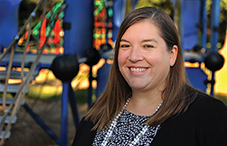 Her budding enthusiasm for this work prompted her to apply for the American Psychological Foundation Jacquelin Goldman Congressional Fellowship in 2010, which became a stepping stone to positions with Reps. Pete Stark (D-Calif.) and Louise Slaughter (D-N.Y.), and eventually to her current job: director of the U.S. Department of Health and Human Services' children and youth policy division. In this position, she oversees evidence-based research reviews that guide federal youth programming and helps make policy decisions for early childhood programs including Head Start.
"You don't get your foot in the door at the level I have been able to without the boost the fellowship program gave me," she says.
Hoffman's experience is just one example of the career opportunities that can unfold through research-related policy fellowships available through APA and other organizations.
"Fellowships open doors to opportunities you wouldn't get otherwise," says Roberta Downing, PhD, an APA Congressional Fellow from 2004–05 in the office of Sen. Ted Kennedy (D-Mass.), and now a senior policy advisor for the District of Columbia's Department of Human Services. "It's very hard to get a job on Capitol Hill, to break in," Downing says. "The fellowship paved the way."
A tantalizing array
So, what are these fellowship opportunities and where can psychologists find them? At APA, the most well-known include the:
APA Congressional Fellowship, which enables psychologists to spend a year working as a special aide to a member of the U.S. House or Senate or a congressional committee.
APA Executive Branch Science Fellowship, which enables psychologists to work at a federal agency with a scientific portfolio, with placements tailored to the fellow's expertise and interests.
American Psychological Foundation's Jacquelin Goldman Congressional Fellowship, available to psychologists with backgrounds in child development or clinical psychology and experience with children.
For graduate students, APA also funds two APA Public Interest Policy Scholars who spend one year working on policy issues on the staff of APA's Public Interest Government Relations Office. These scholarships offer a way to gain valuable policy experience during graduate school, which can aid in securing a more advanced policy fellowship later in one's career.
In addition, two other psychological organizations—APA's Div. 9, the Society for the Psychological Study of Social Issues, or SPSSI, and the Society for Research in Child Development or SRCD—offer a variety of such fellowships. SPSSI places a fellow on Capitol Hill and offers a summer fellowship for students of color, and SRCD offers fellowships both on the Hill and in executive branch agencies.
All of these fellowships for psychologists are part of the American Association for the Advancement of Science (AAAS) Science and Technology Policy Fellowship program, which helps train and place approximately 300 science and engineering fellows on Capitol Hill and in executive branch agencies each year. (The APA and SPSSI graduate student fellowships are an exception; they're not affiliated with AAAS.)
Other top-notch research and policy fellowships are available through government entities, universities and philanthropic organizations, including the Robert Wood Johnson Foundation (see In-the-trenches fellowships).
While the APA fellowships expect you to meet certain criteria—such as demonstrating competence in scientific or professional psychology—you needn't be at a certain career stage to apply, says Gabe Twose, PhD, who co-directs APA's Congressional Fellowship Program.
"One of our recent fellows just finished grad school and another just finished a postdoc," he says. "We've also had more senior professors who are taking sabbatical years, and professors emeriti who have finished their teaching careers and are now interested in doing something different."
Those who do apply are often motivated by wanting to make a bigger impact with their work, Twose adds. "For many psychologists, there is a sense they want to do something with their research, to effect social change," he says. "These fellowships are a wonderful way to do that."
A notable example is Paul Eckert, PhD, a 1997 APA Congressional Fellow whose economic development work for Sen. John Breaux (D-La.) gave him the experience to land jobs at NASA, at the U.S. Department of Commerce and in The Boeing Company's space exploration division. Eckert is now at the Federal Aviation Administration, where he is manager of strategic planning, playing a key role in maintaining and improving the safety and efficiency of commercial aviation and space transportation. "It's an exciting way to continue my commitment to enhancing the quality of life for all Americans," Eckert says.
Connections and growth
Fellowships provide psychologists with another essential career-building tool, as well: a network of mentors, job contacts, like-minded colleagues and friends.
"You're part of this broader family," says Kimberly J. Montgomery, PhD, an APA Executive Branch Fellow at the National Science Foundation from 2009–10. That experience led to a job in the office of then-Rep. Rush Holt (D-N.J.), a former AAAS Fellow. "To have a year to see what science policy could be, and to get to know a large number of people who are doing that in Washington, is an incredible experience," she says.
In fact, during her fellowship year she met her husband, then an American Institute of Physics Fellow. The two now work in Vienna, Austria, at an international scientific institute and the U.S. State Department.
The fellowships have another big advantage: They provide a much larger view of government, society and psychology than you had before, says Kimberlyn Leary, PhD, who spent a year working as an advisor to the White House Council on Women and Girls as a Robert Wood Johnson Health Policy Fellow. "You begin to look at health care as just one—and not necessarily the most important—component of health," she says. This fall, Leary started a position as the "Enabling Change" program director at the Harvard Chan School of Public Health. Her fellowship enabled her to see that "the infrastructure, education, nutrition—all of these things are relevant when you are trying to address the health status of a population."