Getting even
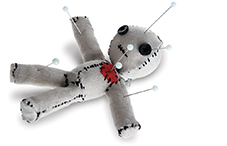 Revenge is indeed sweet, at least according to research published in the Journal of Personality and Social Psychologyopens in new window. Researchers asked 156 participants to write a personal essay and then swap the essays with a fictitious virtual partner to get "feedback" from peers. One group received made-up, unkind feedback like, "this is one of the worst essays that I have EVER read." Afterward, the participants were allowed to stick pins in a virtual voodoo doll that represented the unkind reader. Researchers measured participants' moods before and after they used the voodoo doll, and found that using the voodoo doll significantly improved participants' moods. In fact, after getting this "revenge," participants who received the nasty feedback were in no worse mood than those who received kind feedback.
Emotions linger
Emotional experiences can induce brain states that linger even after the experience has passed, affecting memory during that time period, finds research in Nature Neuroscienceopens in new window. Researchers used fMRI to measure brain activity as participants viewed a series of emotionally affecting pictures and then, about 10 to 30 minutes later, a series of nonemotional images. A different group of participants viewed the nonemotional images first, then the emotional ones. When, six hours later, the participants took a memory test, those who saw the emotional images first remembered the neutral images better. The fMRI data also suggested that brain areas linked to emotion remained active as much as 30 minutes after patients saw the emotional pictures.
Pot-smoking trends
 Marijuana use went up among teens in Washington after the state legalized the drug, finds a study in JAMA Pediatricsopens in new window, even as teen marijuana use declined nationwide during that time. Researchers looked at data collected between 2010 and 2015 from 253,902 teens in Washington and Colorado, as part of the national Monitoring the Future study. Among eighth- and 10th-graders in Washington, marijuana use increased 2 percent from 2010 to 2012 and 4.1 percent from 2013 to 2015. In Colorado, however, teen use did not increase significantly after legalization. The researchers posit that might be because Colorado had a larger medical marijuana dispensery system and more advertising even before recreational use was legalized.
Resting brain
Small areas of the brain cycle in and out of a sleep-like, low-activity state all the time, even when we are awake, suggests research in Scienceopens in new window. Scientists used electrodes to measure activity in small, targeted areas of neurons in a monkey's visual cortex as the monkey watched for changes in portions of its visual field. When the monkey was paying attention to one particular spot, neurons in the area associated with that portion of the visual field began spending more time in the "awake" state, and when the monkey's attention shifted elsewhere, the neurons spent more time in the "sleep" state. Such cycling could allow neurons in areas we are not using to conserve energy, the researchers hypothesize.
Dangerous traffic
 Living near a major road increases a person's risk of developing dementia, finds a study in The Lancetopens in new window. Researchers examined medical records from 6.5 million Ontario residents ages 20 to 85. They found that people who lived less than 50 meters from a high-traffic road were 7 percent more likely to develop dementia than those who lived more than 300 meters away. People who lived 50 to 100 meters away were 4 percent more likely, and people who lived 101 to 200 meters away were 2 percent more likely. The researchers examined and found no correlation between living near a major road and either Parkinson's disease or multiple sclerosis.
Out of tune
About 3 percent to 5 percent of people have a condition called specific musical anhedonia, in which they don't get any pleasure from music. Now, research published in Proceedings of the National Academy of Sciencesopens in new window suggests one explanation: a reduced link between the auditory and reward centers in the brain. Researchers using fMRI found that when people with specific musical anhedonia listened to music, the nucleus accumbens (a key structure in the reward network) was less active than in normal listeners. The structure was equally active, however, when anhedonics and normal listeners played a gambling game, which suggests that the anhedonics' reward network functioned normally otherwise. The researchers also found reduced functional connectivity between the nucleus accumbens and the right auditory cortex in the participants with musical anhedonia.
Skipping grades
Gifted students can benefit from skipping grades ("acceleration") and from being grouped with peers with similar skills ("ability grouping"), finds a meta-analysis in the Review of Educational Researchopens in new window. Researchers reviewed 125 studies on acceleration and 172 on ability grouping, spanning 100 years of research. They found that gifted students who skipped a grade outperformed their nonaccelerated peers. Gifted students also benefited from most types of ability grouping: Within-class grouping helped them (breaking one classroom into smaller work groups based on ability), as did cross-grade subject grouping (grouping students from different grade levels together to learn a particular subject). However, between-class grouping (assigning students into high-, average- or low-ability classrooms) did not provide a benefit.
Fit parents, fit kids
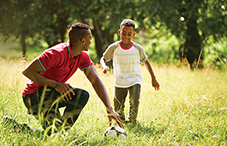 Parents in underserved communities who are more physically active have preschool children who move more too, suggests research in the American Journal of Preventive Medicineopens in new window. Researchers fitted 1,000 low-income, mostly Latino and African-American parent/child pairs with accelerometers to measure their levels of physical activity for 12 hours a day for one week. The researchers found that there was a positive association between the amounts of time that parents and their children spent doing moderate to vigorous physical activity each day, and the time their children spent. However, this association held only up to 40 minutes per day of activity by the parents; if parents' activity was greater than that, their children's activity actually appeared to decline.
Personality change
Psychotherapeutic interventions and medications can change a patient's personality, finds a meta-analysis in Psychological Bulletinopens in new window. Researchers analyzed 207 studies with more than 20,000 patients that tracked changes in personality traits during these interventions. They found that over an average time span of 24 weeks, patients became significantly less neurotic and, to a lesser degree, more extraverted than they were before the interventions.
Paint patterns
 It's possible to detect early dementia in artists by analyzing changes in their work, finds a study in Neuropsychologyopens in new window. Researchers used a mathematical method called fractal analysis to examine paintings by seven famous artists. They found that in two who developed Parkinson's disease (Salvador Dali and Norval Morrisseau), and in two who developed Alzheimer's disease (Willem De Kooning and James Brooks), brushstroke patterns changed as the artists aged. However, in three artists who did not develop any neurodegenerative disease (Marc Chagall, Pablo Picasso and Claude Monet), the patterns remained the same over the course of their lives.
Autism and stress
Many children with autism also suffer from gastrointestinal symptoms, such as constipation and stomach pain. Now, research in Brain, Behavior, and Immunityopens in new window suggests that a heightened stress response may be partly to blame. Researchers studied 120 children with autism—51 who had gastrointestinal symptoms and 69 who did not. They measured the children's cortisol levels before and after a 30-second stress test, such as holding one's hand in icy water, and found that children with gastrointestinal symptoms had a greater cortisol response to the stressor than those without gastrointestinal symptoms.
A dog's life
 Dogs pay attention to what their owners can see and adjust their behavior accordingly—but some breeds are more skilled at this than others, finds a study in the Journal of Comparative Psychologyopens in new window. Researchers tested 187 dogs from 56 different breeds. First, owners trained the dogs to not eat a dog biscuit left on top of a plastic box. Then, the dogs and owners stood at opposite ends of an enclosure, arranged so that the dogs could see two dog biscuits, and could also see that their owner could only see one of the biscuits (the other was blocked by a barrier screen on the owner's side). The researchers found that ancient and hunting breeds were more likely to try to eat the biscuit that the owner couldn't see, suggesting that they were paying attention to their owner's perception. Shepherds and mastiffs, meanwhile, chose randomly.
'Fess up
Children's attitudes toward lying change as they age, and older children are more likely than younger children to view confessing to a misdeed as the right thing to do, finds a study in the Journal of Experimental Child Psychologyopens in new window. Researchers asked 48 children, ages 4 to 9, to read vignettes in which children did something wrong, then either lied or confessed about the transgression. Then, the researchers asked the children how they would feel in that situation. The 4- and 5-year-olds were more likely to feel positively about lying and negatively about confession—they focused on the gains associated with lying, like avoiding punishment. The 7- to 9-year-olds focused more on negative emotions associated with lying, such as guilt, and felt better about confession.
Fetal alcohol syndrome
 About 119,000 babies are born with fetal alcohol syndrome (FAS) each year, according to a study in The Lancet Global Healthopens in new window that provided a worldwide estimate for the first time. Researchers conducted a comprehensive literature review of research on the prevalence of FAS and drinking during pregnancy, then used statistical modeling to estimate prevalence in countries with no empirical studies. Worldwide, 9.8 percent of women drink alcohol during pregnancy, the researchers found—but the rate varied greatly by country and region. In Europe, the region with the highest rate, about 25 percent of women drink during pregnancy, while in the Middle East only 0.2 percent do.
Talking fast and slow
Speedy talkers might rattle off more words per minute than slow ones, but they don't convey any more information in that time, finds a study in Cognitionopens in new window. Researchers analyzed recordings of 2,400 phone conversations and 40 longer interviews. Fast talkers tended to use simpler syntax and more common words, while slow talkers used more complex syntax and rarer words that conveyed more information per word.
Improving MOOCs
 A brief psychological intervention could help online learners in developing countries improve their coursework, suggests a study in Scienceopens in new window. Previous research found that 39 percent of students in massive open online courses (MOOCs) come from less-developed countries, but that they are less likely to complete the classes than students from developed countries. In the new study, researchers posited that could be due to "social identity threat"—the students' sense that they don't belong in the class. They found that two brief interventions that increased the students' sense of belonging could eliminate that achievement gap: In one, students heard testimonials from previous students who had worried about belonging at first but felt more comfortable over time; in another, the students wrote about how taking the course reflected their values.
Baby's brain
The visual cortex of young infants is organized similarly to that of adults, according to research in Nature Communications. In the past it has been difficult to use fMRI to study babies because the machines are loud and require participants to stay still for long periods of time. The researchers adapted the fMRI device to make it more comfortable for infants by making the machine quieter and allowing the baby to recline in a car-seat-like contraption. They then scanned nine 4- to 6-month-old babies' brains as the babies watched videos of faces, natural scenes, scrambled scenes, human bodies and objects. They found that regions of the visual cortex responded preferentially to faces and scenes, with a spatial organization similar to adult brains.