Supersize it
 People are not as good at estimating portion increases ("supersizing") as they are at spotting downsizing, finds research in the Journal of Experimental Psychology: Generalopens in new window. Researchers found that, on average, when a portion was doubled, people judged it was 72 percent larger than the original—a significant underestimation. However, a portion that was halved appeared to be 53 percent smaller—a fairly accurate judgment. The researchers hypothesize that this is because portions cannot be smaller than zero, so there is a natural "lower bound" for judgments, whereas there is no corresponding natural "upper bound." In a follow-up experiment, they found that providing an upper bound—for example, telling people that a jar could hold up to 600 M&Ms—erased the difference in "supersizing" and "downsizing" accuracy.
Education and pain
Poorer and less educated older Americans are more likely to suffer chronic pain—particularly severe chronic pain—than wealthier, more educated ones are, according to a study in Pain. Researchers examined 12 years of data from more than 19,000 participants in the Health and Retirement Study. Overall, they found that 36.6 percent of participants experienced chronic pain over the course of the study. People with the least education were 80 percent more likely to experience chronic pain than those with the most, and participants with less than a high school education were 370 percent more likely to experience severe chronic pain than those with graduate degrees.
Preemie risks
 Premature babies born at an extremely low birth weight (less than 2.2 pounds) have an increased risk of mental health problems throughout childhood, adolescence and even into adulthood, finds a meta-analysis in Psychological Bulletinopens in new window. Researchers examined 41 studies that followed 2,712 extremely low-birth-weight babies and 11,127 controls over 26 years. They found that children born with extremely low birth weight were significantly more likely to have attention deficit/hyperactivity disorder (ADHD), and as teens they were at greater risk for ADHD and social problems. Adults born with extremely low birth weight had higher levels of anxiety, depression and shyness.
Therapy works
Psychotherapy may cause structural changes related to self-control and emotion regulation in the brains of people with social anxiety disorder, finds research in Molecular Psychiatryopens in new window. Researchers used MRI to examine the brains of 33 patients before and after a 10-week course of cognitive behavioral therapy. After treatment, participants showed reduced cortical volume in the left inferior parietal cortex, and patients whose treatment had been more successful had correspondingly larger reductions in volume. The researchers also found an increase in structural connectivity in a front to limbic network, an area involved in processing emotion.
Immigration status
 Almost two-thirds of undocumented Latino/a immigrants feel that their experiences in the United States are significantly different from their documented peers, according to a study of 140 undocumented immigrants in Arkansas and Texas, published in the Journal of Counseling Psychologyopens in new window. Researchers asked participants to complete questionnaires about their well-being, how warmly they felt received and their experiences of discrimination in the United States. Undocumented immigrants who felt that their lives were different from their documented peers reported lower global and psychological well-being, restricted social mobility and more experiences of discrimination.
Marriage benefit
 Married people have lower levels of the stress hormone cortisol than single people do, on average, finds research in Psychoneuroendocrinologyopens in new window. Researchers collected multiple saliva samples over three nonconsecutive days from 572 adults, ages 21 to 55, and found that married participants had significantly lower cortisol levels than their never-married or previously married peers. The researchers also tracked each person's daily cortisol rhythm. Cortisol levels are generally highest when a person wakes up and decline during the day. In the study, married participants showed a faster decline, which previous research has associated with health benefits such as lower rates of heart disease and longer cancer survival rates.
Overprescribing?
The number of older Americans prescribed three or more psychotropic medicines more than doubled in a decade, according to research in JAMA Internal Medicineopens in new window. Researchers analyzed data from the National Ambulatory Medical Care Survey, an annual survey of office-based physicians. They found that between 2004 and 2013, the number of visits at which patients 65 and older were prescribed three or more psychotropic medications rose from 1.50 million (0.6 percent of visits) to 3.68 million (1.4 percent of visits). Multiple prescriptions were most common for patients with anxiety, insomnia or depression, but increased the most for patients with pain, the researchers found.
Surgical complications
 Surgery patients with depression and anxiety are at increased risk for postsurgical wound complications, finds a study in the British Journal of Surgeryopens in new window. Researchers analyzed data from 176,827 British patients undergoing hip replacements, knee replacements, hernia repairs and varicose vein operations between 2009 and 2011. They found that patients with moderate anxiety or depression were 1.2 times more likely to be readmitted for a wound complication and had a significantly longer overall hospital stay.
Lie detection
It takes a bit longer to come up with a lie than to tell the truth, a finding that could be used to develop lie detection tests, according to a meta-analysis in Psychological Bulletinopens in new window. Researchers analyzed 114 studies, with 3,307 total participants, which used computerized reaction-time paradigms. Across the various paradigms, participants took an average of 115 milliseconds longer to produce a lie than to tell the truth.
Tell me again…
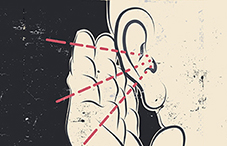 You might think that listening to someone talk about a video you've already seen would be dull. But a study in Psychological Scienceopens in new window suggests that listeners enjoy hearing familiar stories more than novel ones. Researchers assigned 90 participants to groups of three: one speaker and two listeners. Each speaker watched one of two TED-talk-like videos and then tried to describe it to the listeners, who had either seen the same video or a different one. Though the speakers predicted that the listeners would enjoy the stories more when they hadn't seen the same video, listeners actually responded more positively when they had seen the same video. In a follow-up experiment, the researchers found evidence that listeners enjoy familiar stories more because they are able to draw upon their own knowledge to fill in information that the speaker might leave out.
Naptime
Taking a nap can help preschoolers cement new knowledge, suggests a study in Child Developmentopens in new window. Researchers taught 39 3- and 4-year-olds new made-up verbs ("blicking" and "rooping"), by showing them a video in which actors performed actions corresponding with each new word. Immediately after watching the videos, half of the children were allowed to nap for at least half an hour, while the other half were kept awake. The next day, the children were shown videos of two new actors performing the same actions and were asked which person was "blicking" and which was "rooping." Children who had napped performed better than those who hadn't, regardless of whether they regularly napped at home.
Contagious personality
 Preschool children become more similar to their closest playmates over time, finds a study in the Journal of Personality and Social Psychologyopens in new window. Researchers observed 53 3- and 4-year-olds over the course of a school year, analyzing social networks and personality traits in the children. They found that the children were more likely to play with classmates with similar levels of sociability and positive emotions. They also found that over the year, the children's levels of positive emotionality and effortful control (a measure of behavioral and attentional regulation) adjusted to become more similar to those of their closest playmates.
Witnessing violence
Among criminal offenders, those who witnessed domestic violence as children are more likely to show psychopathic traits, even if they were not victims of the violence themselves, suggests a study of 127 male prison inmates published in Law and Human Behavior. Participants completed two in-person interviews as well as questionnaires to assess personality, substance use, intelligence, psychological functioning, and history of witnessing and/or experiencing abuse. Participants who witnessed domestic violence as children scored significantly higher on a measure of psychopathy than those who didn't—and the relationship was particularly strong for interpersonal aspects of psychopathy, such as pathological lying and manipulation.
Air pollution
 Older women who live in areas with high levels of particulate air pollution—the type that mainly comes from vehicles and power plants—are at increased risk for cognitive decline and dementia, finds research in Nature Translational Medicineopens in new window. The researchers examined data from 3,647 65- to 79-year-old women in 48 states who participated in the Women's Health Initiative Memory Study. None had dementia when the study began. After controlling for race or ethnic background, geographic region, education, socioeconomic status, lifestyle and medical conditions, the researchers found that women who lived in places with fine particulate matter exceeding the U.S. Environmental Protection Agency's standard were 81 percent more likely to develop global cognitive decline and 92 percent more likely to develop dementia, including Alzheimer's disease.
Prescription decision
Physicians are more likely to prescribe antibiotics when they believe their patients expect it, even if they think the patient's infection is unlikely to be bacterial, according to a study in Health Psychologyopens in new window. Researchers asked 436 family physicians to read a vignette about a 15-year-old swimmer who is on her third day of ear infection symptoms but has no ear perforation or discharge. Medical guidelines suggest the doctor could wait to prescribe antibiotics in this case. But in the study, physicians who read a vignette in which the patient's mother insisted that the physician help her recover quickly so she could participate in a swim meet were more likely to prescribe antibiotics than those who read a vignette in which swim season was over—even though the physicians were equally likely to believe the infection wasn't bacterial in both cases.
It gets better
 States that legalized same-sex marriage over the past 15 years saw a drop in teen suicide rates, finds a study in JAMA Pediatricsopens in new window. Researchers analyzed data collected between 1999 and 2015 from more than 700,000 teens in 47 states as part of the Youth Risk Behavior Surveillance System survey. In the 32 states that passed same-sex marriage laws during those years, suicide attempts dropped 7 percent among all students and 14 percent among those who identified as gay, lesbian or bisexual. There was no significant change in suicide-attempt rates during that time in states that didn't pass same-sex marriage laws.
Get moving
 Previous research has found that physically active adults have fewer symptoms of depression than sedentary ones. Now, a study in Pediatricsopens in new window suggests that the same holds true for children. Researchers followed 795 children for four years, checking in with them at ages 6, 8 and 10. For one week each time, the children wore an accelerometer to measure physical activity. At each age, the children and their parents also completed an assessment of depression symptoms. Children who engaged in more moderate-to-vigorous physical activity at ages 6 and 8 were less likely to have symptoms of depression at age 10.