

For the second year in a row, the number of psychology internship positions (3,849) exceeded the number of psychology students (3,655) who participated in Phase I of the match, according to the Association of Psychology Postdoctoral and Internship Centers (APPIC), which oversees the process.
The number of positions exceeded the number of participating applicants by 194 (compared with 75 last year) once 266 applicants withdrew from the match (on average, at least 200 applicants withdraw prior to the match each year). In all, 458 applicants were not matched to an internship during the first phase of the two-round process and 652 internship positions were left vacant.
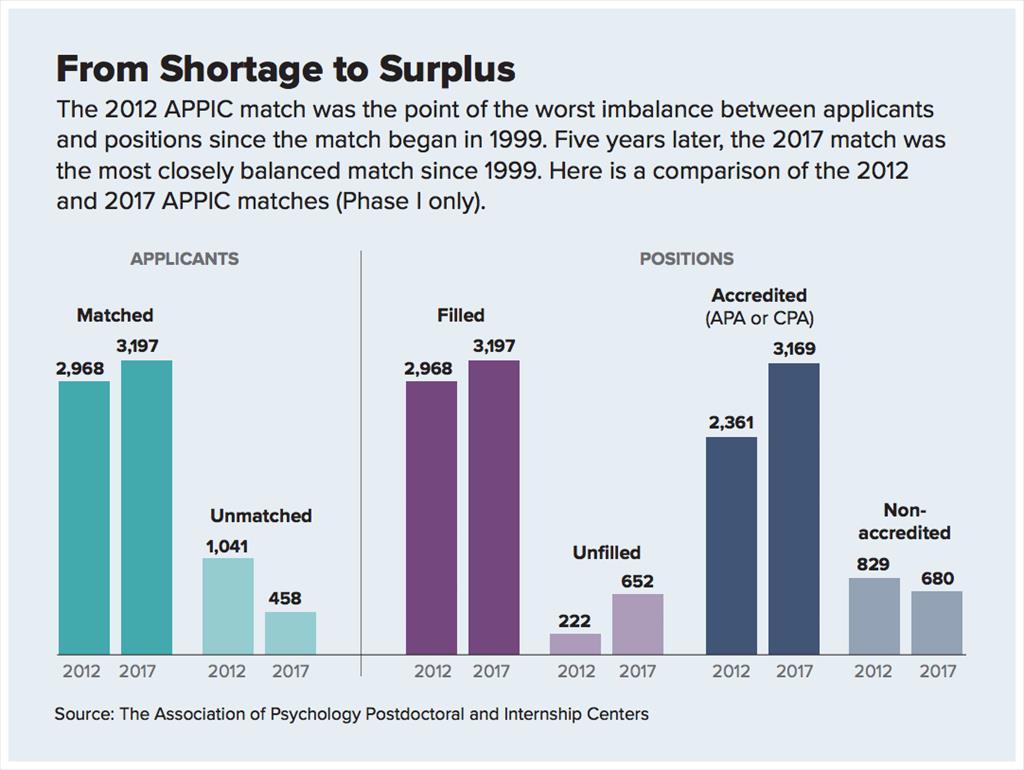 In addition, more than half of applicants (52 percent) matched to their first choice of internship, and 86 percent matched to one of their top three choices.
This year's match also saw an increase of 190 in the number of APA-accredited and Canadian Psychological Association-accredited internships. Despite that improvement, the number of participating applicants exceeded the number of accredited positions by 486.
The numbers continue to improve for students entering the internship match, says American Psychological Association of Graduate Students (APAGS) Chair Ian Gutierrez. "Things are shifting from a landlord's market to a renter's market," he says, noting that programs may now need to work harder to attract students. It could even lead to increased stipends for interns, he says.
An increase in accredited internship positions was the aim of APA's internship stimulus package, approved in 2012 by APA's Council of Representatives. It set aside a $3 million pool over three years to help qualified, nonaccredited internship programs take all the steps necessary to become APA-accredited. The grants were used to pay for application and site visit fees, program consultation, administrative and supervisor support, intern stipends and benefits, and other costs of seeking accreditation.
The funding appears to be working. As of November, APA had awarded 139 stimulus grants and 58 programs had earned accreditation, adding 270 accredited internship slots. An additional 33 programs funded by the package are under accreditation review.
Despite that success, there is more to do to close the gap between APA-accredited internship slots and applicants from APA-accredited doctoral programs, says APA's Executive Director for Education Jaime Diaz-Granados, PhD. "Psychology's social contract to serve the public as a health provider requires oversight of education and training, and accountability for the effectiveness of the educational effort in producing psychologists with the competencies required to meet the public need," he says.
And, while it is better to have too many than too few internships for students, it could hamper efforts to increase the number of accredited positions in future years, says APPIC's Greg Keilin, PhD. He estimates that even after the second phase of the match, 100 or more internship positions may remain unfilled this year, many of which will be at nonaccredited internship sites that are working to gain accreditation. Without interns on site this year, non-accredited positions will have difficulty working toward that accreditation, Keilin says.
"APA and APPIC are going to have to be thoughtful and creative in continuing to help these nonaccredited programs move toward accreditation in this environment," he adds.