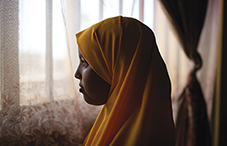

Despite reassurances from gynecologists, the patient wasn't convinced that her vagina was intact, telling clinical psychologist Lih-Mei Liao, PhD, of University College Hospital in London, that she thought it had been damaged or removed during genital cutting in her childhood. Now married, the woman was finding sexual intercourse with her husband impossible.
After determining that the patient wasn't being coerced and had a strong desire to experience vaginal intercourse, Liao engaged the patient in an adapted systematic desensitization program to prepare her for intercourse despite her clitoridectomy and other genital damage. Liao began by teaching the patient relaxation techniques as a nurse helped her insert the smallest-size tampon. The patient then graduated to using dilators she managed herself. The patient was incredibly pleased to finally realize that she had an intact vagina and a chance to experience sexual intercourse, says Liao, the lead clinician at the hospital's Women's Health Psychological Services.
The patient was one of the more than 200 million women and girls alive today who have undergone partial or total removal of the external genitalia or similar procedures for non-medical reasons, according to the World Health Organization (WHO). Female genital cutting, also known as female genital mutilation and female circumcision, has been practiced for centuries in parts of Africa, Asia and the Middle East. Some cultures believe that cutting girls lessens their sexual desire, thereby preventing premarital and extramarital sex. Others see the ritual as an initiation into womanhood. Still others believe—falsely—that their religion requires it.
Female genital cutting isn't just a human rights violation, says WHO. It's also a public health issue. Cutting can result in physical problems such as infection, infertility and painful sex and childbirth, and psychological problems such as anxiety, depression and post-traumatic stress disorder (PTSD).
And female genital cutting isn't just an issue for psychologists and other health-care providers in the countries where the practice continues.
"People are moving, and when they move, they bring their cultures with them," says Adeyinka Akinsulure-Smith, PhD, an associate professor of psychology at the City College of New York and the Graduate Center at the City University of New York, and senior supervising psychologist at the Bellevue/New York University Program for Survivors of Torture, who has researched the practice. Refugees and immigrants may have undergone the procedure and may send their daughters back to their home countries to undergo it, too—a practice known as "vacation cutting."
"Not everyone who has had this experience has been traumatized, but enough women and girls have had struggles that we as mental health professionals really need to be cognizant of this issue and how to address it," Akinsulure-Smith says.
In a 2016 study in Public Health Report, researchers from the U.S. Centers for Disease Control and Prevention (CDC) estimated that more than half a million women and girls in the United States were at risk of female genital cutting and its consequences in 2012. That is more than triple the number when the CDC last investigated the issue in 1997, the year after Congress passed a law making cutting illegal in the United States. According to the researchers, this increase is the result of the rapid growth in the number of immigrants from countries that practice cutting.
Psychological consequences
While much of the literature on female genital cutting comes from physicians, nurses and anthropologists, a few psychologists have started to explore the practice's psychological consequences in small studies. Their findings have been mixed. In a study of 68 West African immigrants living in New York, for example, Akinsulure-Smith and Tracy Chu, PhD, an associate professor of health and nutrition sciences at Brooklyn College of the City University of New York, found that while those who had undergone female genital cutting reported more vaginal pain and less sexual arousal, there were no significance differences in psychological outcomes (Journal of Aggression, Maltreatment & Trauma, 2015).
Other research has identified psychological problems among women who have been cut, while underscoring the need for nuance when examining outcomes. Researchers led by Jeroen Knipscheer, PhD, an assistant professor of clinical and health psychology at Utrecht University, for example, studied the mental health of 66 African immigrants in the Netherlands and found that a third of the women had depression or anxiety, while a sixth had PTSD (BJPsych Bulletin, 2015).
Certain factors increased women's risk of psychological problems, the Dutch researchers found. The women with the most extreme form of cutting—excising the clitoris and labia and suturing the vulva's edges together—were more likely to have problems, for example, as were women with particularly vivid memories of the procedure, those who were not employed and those with an "avoidant" coping style focused on substance misuse.
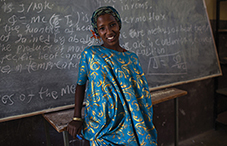 There were also hints of national or cultural differences that need further exploration. One factor seemed to have a protective effect: a Somali origin. The Somali women in the study may have just felt uncomfortable talking openly about something as intimate as female genital cutting, the researchers speculated. "Another explanation may be that Somali women assess the event less negatively than women from other countries," the researchers write.
In addition to psychological and sexual problems, Liao says, survivors can face other consequences, such as complicated relationships with their parents.
‘"The effects are so variable," she says. "One young woman said the worst thing about female genital mutilation is that it destroyed her relationship with her mother. Another said that it actually has helped bring her closer to her mother because both experienced the same thing unwillingly." Many say they forgive their parents, acknowledging that the parents believed they were acting in their children's best interests or simply didn't know any better.
Immigrant women may have an additional set of psychological complications: cultural bereavement and a sense of alienation in the new country, says Liao. "Some women have come with horrific adult life experiences unrelated to female genital cutting," she says.
Treating survivors
How best to help women traumatized by female genital cutting is still an open question, says Liao. "Although we've known about this issue for a long time, in terms of psychotherapeutic interventions it has really been off the radar," she says. "There's a lack of knowledge about it, but that doesn't mean we're going to do nothing and wait 20 years until the research comes out." In the meantime, she says, psychologists can adapt standard psychological approaches to treat anxiety, depression, PTSD and other psychological problems. Liao leans toward mindfulness- based approaches. "They're less wordy and interpretative, which may suit people less used to self-narratives," she says.
In a 2016 paper in Professional Psychology: Research and Practice, Akinsulure-Smith and co-author Evangeline I. Sicalides, PhD, a practitioner in New York, offer additional suggestions for clinicians. They emphasize the importance of learning about the physical, psychological and social implications of cutting. "You can see this as a horrible, violent act," says Akinsulure-Smith. "But in many cultures, it's a rite of passage, an act of mother love, something a mother does to her daughter because she cares about her."
There are political implications, too. In some contexts, she says, "girls and women who haven't been through it aren't seen as adults and are not part of society." If the procedure takes place very early in girls' lives, she adds, "girls may not even realize something is missing."
Psychologists should ask about cutting during intake, suggests Akinsulure-Smith, and should avoid reacting with horror, suppressing personal opinions for the good of patients. They should also use neutral language or follow the patient's lead in what to call the procedure. "Language is loaded," says Akinsulure-Smith. "It's important to know and understand what the woman or girl calls it and how they're seeing it."
Psychologists must also be aware of laws addressing cutting as well as mandated reporting statutes. Federal law prohibits the act for girls under 18 and criminalizes the transporting of girls for female genital cutting. The United States also recognizes cutting as a form of gender-based persecution and allows it as a basis for asylum. State laws vary.
Psychologists also have a role to play in helping gynecologists, midwives and other health-care professionals respond appropriately when working with survivors. In a 2016 paper in Sexual and Relationship Therapy, for example, Liao and co-authors found that a 90-minute training session improved psychosexual therapists' knowledge about female genital cutting and their confidence in treating survivors.
Finally, social psychology research can also inform interventions to reduce the practice's prevalence, says Amy Abdelshahid, who as a psychology graduate student at the London School of Economics researched parents' motivations in rural areas of Egypt, where the practice is common. In a 2015 paper in the Journal of Community & Applied Social Psychology, Abdelshahid, now research manager at Kantar Public in London, and Catherine Campbell, PhD, a professor of psychological and behavioral science at the London School of Economics, argue that Western efforts to end female genital cutting often overlook the complexity and diversity of parents' motivations. In interviews with parents, Abdelshahid discovered that parents feel uncomfortable about the practice. Mothers often hated the idea of inflicting pain on their daughters, while fathers were worried that their daughters would experience sexual problems with their future husbands. "These parents aren't ignorant and just doing what society dictates them to do," says Abdelshahid. "Parents may fear that no one will marry their daughters unless they are circumcised or that their daughters may be scrutinized by the community. It is also not uncommon for parents to decide secretly not to circumcise their daughters."
Most advocacy efforts to stop the practice simply tell parents they're wrong, says Abdelshahid. Instead, she says, facilitated community conversations could help parents explore the nuances of their views with others and figure out how to challenge the practice. "Parents do not always speak about the subject openly with other community members," says Abdelshahid. "Community discussion might be the way forward."
By the numbers
- 200 million+
Number of women and girls alive today who have been cut - 3 million+
Number of girls at risk each year - 30
Number of countries where female genital cutting is practiced
Source: World Health Organization