
Psychology’s voice was in full force earlier this year when the administration began separating immigrant children from parents at the U.S.-Mexico border. Armed with decades of their research, psychologists spoke out about the harms of the policy, sought to assist children and families, and expressed their shock in mainstream mediaopens in new window and social media, among other actions.
"That’s our mission—taking care of the psychological health of folks, not just on an individual client basis but in our communities and society as well," says Jeff R. Temple, PhD, a board member of the Texas Psychological Association who has urged his colleagues to fight against family separation. (See right for APA action on the issue.)
Activism by psychologists has moved into a higher gear, especially when it comes to the most vulnerable populations, says Kevin L. Nadal, PhD, a psychology professor at John Jay College of Criminal Justice in New York.
"Since the 2016 election, I’ve seen an increase in psychologists’ activism—from organizations releasing policy statements to social media engagement to participation in protests and rallies," says Nadal. "The more that seasoned psychologists engage in activism, the more that early career psychologists and students will know that activism is acceptable and even encouraged."
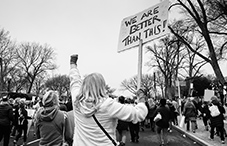 Of course, such activism is not new to psychologists. Their research was key to buttressing the landmark Supreme Court decision on school desegregation in 1954, the removal of homosexuality as a psychiatric disorder from the Diagnostic and Statistical Manual of Mental Disorders in 1973 and the Supreme Court decision on marriage equality in 2015, points out Nadal in American Psychologistopens in new window (Vol. 72, No. 9, 2017).
Today, top on psychologists’ list of public interest advocacy priorities is advocating for the nation’s most vulnerable people, such as immigrants and refugees. "Family separation is not a liberal or conservative issue," says Temple, who helped push the Texas Psychological Association to issue a statementopens in new window condemning family separation. "It’s a humanitarian issue." The Arizona Psychological Association also issued a statementopens in new window strongly opposing the "atrocity" of family separation and noting that the policy’s termination does nothing to alleviate the suffering already caused.
Others are ensuring that psychologists are prepared to assist undocumented immigrants. One leader in the area is Elizabeth Hernandez, PhD, who co-chairs the California Psychological Association’s Immigration Task Force. The task force has developed recommendationsopens in new window for psychologists working with undocumented immigrants and their families and has created a database of culturally competent psychologists willing to provide low- or no-fee services to immigrants.
In a similar vein, psychologists are working with refugees through the Refugee Mental Health Resource Network (www.refugeementalhealthnet.orgopens in new window). Initiated in 2016 by several APA divisions, the network’s interactive database of volunteer psychologists and mental health professionals is aimed at filling the need for evaluations, psychosocial support services, training and research concerning this underserved population worldwide. "This growing pro bono APA project exemplifies innovative outreach to benefit society," says Elizabeth Carll, PhD, chair of the network. The project was funded in part by a grant from the Committee on Division/APA Relations.
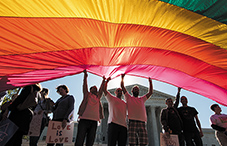 Another priority for psychologists is keeping front-line activists safe. St. Louis University associate professor of psychology Kira Hudson Banks, PhD, for example, offers therapy to burned-out activists and uses de-escalation strategies to help defuse conflict, calm tempers and prevent violence at Movement for Black Lives protests. She has served as a consultant to the Ferguson Commission, a group brought together by Missouri’s governor to study the issues brought to light by the death of Michael Brown and recommend ways of making the St. Louis area a better, fairer place. And she testified in a lawsuit that resulted in police being required to give protesters adequate warning before using tear gas during peaceful protest.
Psychologists are also making sure their peers have the cultural competence they need. In 2017, for example, APA released updated Multicultural Guidelinesopens in new window, which urge psychologists in all settings to consider individuals’ multiple intersecting identities and to understand the roles of power, privilege and oppression in their relationships with clients and in their clients’ lives.
To complement these "umbrella" guidelines for overall cultural competence, an APA task force is now developing a companion document with guidelines focused on race and ethnicity.
"Since the original Multi-cultural Guidelines were developed in 2002, there has been an enormous amount of scholarship on race and ethnicity," says University of Massachusetts Boston psychology professor Karen L. Suyemoto, PhD, who chairs the task force for the race and ethnicity guidelines. A draft for public review should be out shortly and then will be considered by APA’s Council of Representatives in February. Going beyond the one-on-one level of therapy, these guidelines urge psychologists to consider the systemic bias of institutions and society and how that bias may hinder well-being and access to treatment.
"You can’t just pay attention to differences," Suyemoto adds. "You have to pay attention to the meaning of those differences in relation to things like access and equity."
To get involved in APA’s advocacy efforts, visit www.apaservices.org/advocacy .
To learn more about APA’s Multicultural Guidelines, go to www.apa.org/about/policy/multicultural-guidelines .