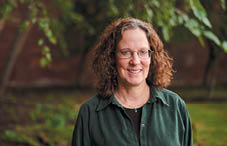

Working in geropsychology allows you to have such a wide range of interests," says Michele Karel, PhD, national director of geriatric mental health in the Department of Veterans Affairs (VA) Office of Mental Health and Suicide Prevention. "If you’re interested in health psychology, neuropsychology, life span development, family systems or just the amazing resilience of human beings in the face of many challenges, it’s an incredible field to work in."
Karel works on a wide range of initiatives and projects to improve how the VA meets the complex mental health needs of aging military veterans. More than half of Veterans Health Administration (VHA) users are 65 years or older. While generally very resilient, aging veterans may struggle with multiple medical and mental health concerns. They receive team-based care across the continuum, including primary care, home-based primary care, palliative care, and care at mental health clinics and nursing homes.
The Monitor spoke to Karel about her evolving role at the VA and why she’s passionate about working with older adults.
What does your job entail?
Broadly, my role is to help VHA think about how we can improve our efforts to meet the mental health needs of aging veterans, particularly those who have complex and interacting medical and behavioral concerns, across the continuum of care.
I joined Central Office in 2011 as program coordinator for the Home Based Primary Care (HBPC) mental health initiative, supporting the integration of mental health services into home-based care. HBPC is a program that provides comprehensive primary care by an interdisciplinary team in the homes of veterans with complex chronic disabling disease for whom routine clinic-based care is not effective.
It was an exciting opportunity because the VA had introduced just a few years before a requirement that psychologists or psychiatrists be included on every VA HBPC team.
My job has since expanded to include supporting the integration of mental health services into VA Community Living Centers (CLCs; nursing homes and rehabilitation care) and other geriatric care programs. I help to develop training and resources for psychologists working in these settings, and I’m involved with related projects and workgroups that identify promising models of care and consider how we can disseminate those models.
Tell us about some projects you’re working on.
For the past five years I’ve coordinated the STAR-VA training program that helps CLC teams understand and manage challenging behaviors that are common among people with dementia. It’s based on Dr. Linda Teri’s STAR (Staff Training in Assisted-Living Residences) program. We train psychologists and nurse leaders to train the entire team, including nursing staff, social workers, physicians and others. Overall, the VA is all about team-based care, which is a big part of why I love working here.
We have also established communities of practice among those who are interested in geriatric mental health care in the VA. We do this via an online forum called VA Pulse, which is like a Facebook for the VA. We share clinical resources and discuss issues of concern.
We’re also working to address suicide risk among veterans of all ages, including older veterans. We have a potentially high-risk population of aging veterans dealing with medical illness and related disability, which are risk factors for suicide in late life. I collaborate with the suicide prevention program to develop late-life suicide prevention resources and guidance for teams.
Recently we’ve been working on an exciting interagency partnership that includes the Substance Abuse and Mental Health Services Administration, the Administration for Community Living and the Centers for Medicare and Medicaid Services to collaborate on better serving older veterans outside the VA setting. Only about one in three veterans uses the VA health-care system, so we’re interested in making sure we meet the needs of all veterans, not just those who choose to use the VA. It’s been wonderful to see the positive response from the United States aging services and mental health services communities, and their interest in making sure they know whether the older adults they’re serving happen to be veterans, and then making sure they understand benefits that veterans may be eligible for.
What inspired you to focus your career on geropsychology?
My interest was sparked early on as a psychology major at Princeton. I noticed that while I was learning a lot about child and adolescent development, I didn’t hear much about what happens later in life. At the time my family was dealing with caregiving issues for my grandmother, who had Alzheimer’s disease. This inspired me to research and write my senior thesis on family caregiving.
After college, I worked in the business sector for a couple of years before deciding clinical psychology was the best match for my interests. I wanted to work with an underserved population, and on a personal level I’d always loved talking to and learning from older people. I looked for clinical psychology graduate programs that focused on aging and was fortunate to then go to the University of Southern California, which has a well-known school of gerontology and a clinical geropsychology program.
How did you get from there to your current role at the VA Central Office?
Right after I completed my geropsychology postdoctoral fellowship in 1995, I landed a job at the Brockton VA Medical Center, which is now part of the VA Boston Healthcare System. I worked in an outpatient geriatric mental health clinic, coordinated geropsychology internship and postdoctoral fellowship training, supervised students and did collaborative research.
In 2011, I learned about the opening at Central Office. I was excited by the idea of a new challenge and the chance to work on models of integrated team-based health care. I’d never done home-based primary care, but I’d established myself at that point with accomplishments in the field of geropsychology. I interviewed for the position and was very fortunate to be chosen.
What would you say to psychologists who may not have considered geropsychology as a career path?
There are so many great opportunities and potential settings to work in this field, from private practice to hospitals to the VA to academia. We struggle to get people interested for complicated reasons, including a sense of "working with old people must be depressing." But it’s so meaningful to help people wrap up their lives in a peaceful way, and you learn a lot from people who have lived seven, eight or nine decades. It’s wonderful when you see someone in their 80s connect with a psychologist who helps them find some peace around something they’d struggled with for years. Working with the medical, neurocognitive, psychosocial and life span issues of our diverse older population is both complex and fascinating.