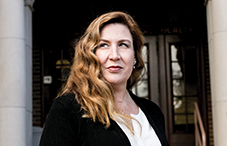

Burdened with a six-figure student loan debt from her doctoral program at Pepperdine University in Malibu, California, Jolie von Suhr, PsyD, was excited to sign up for the Public Service Loan Forgiveness (PSLF) program in 2008. The deal? Work in a public service job for 10 years, make 120 payments and have the remainder of her federal student loan debt erased as a thank-you from the government.
“Without the program, I’d be paying loans off until I die,” says von Suhr, a clinical psychologist at Western State Hospital in Lakewood, Washington, where she serves a population she describes as “people with the most problems and least resources.”
In 2013, however, von Suhr discovered that six years’ worth of payments might not count toward the 10 years she needs for the PSLF program. Her loan servicer—one of the companies the federal government hires to manage billing and advise borrowers on repayment, loan consolidation and other matters related to federal student loansopens in new window—had steered her into an ineligible repayment plan.
“In 2013, I got wind that I might be in the wrong repayment plan and absolutely panicked,” she says. “I got different information every time I called.”
As von Suhr waits to see if the government will make good on its promise to her via a temporary government PSLF relief fund for borrowers in her situation, she wonders if she should have taken advantage of more lucrative job offers. “I’ve just been paralyzed with anxiety,” she says.
Failures and confusion
Von Suhr isn’t the only PSLF participant who’s anxious. As the first wave of participants became eligible for loan forgiveness in September 2017, it became clear that confusion about which employers qualify, what type of loan payments are eligible and other program requirements was rampant among both borrowers and the loan servicers advising them. In a reportopens in new window released in September, the U.S. Government Accountability Office (GAO) determined that the U.S. Department of Education has failed to give appropriate guidance to both borrowers and loan servicers.
The investigation found that the department has provided only “piecemeal guidance” to FedLoan, the servicer that the government contracts with to process PSLF loan applications. Because guidance and instructions are scattered across hundreds of emails and other documents, FedLoan staff sometimes don’t know about key policy clarifications. The GAO also found that the Department of Education has failed to provide both FedLoan and borrowers with definitive information about which employers qualify.
The department has also failed to ensure that FedLoan receives consistent information from the eight other federal loan servicers, which could lead to miscounts of qualifying payments. GAO called on the department to develop a timeline for providing comprehensive guidance to FedLoan, among other changes.
There has also been confusion at best or malfeasance at worst among the loan servicers that borrowers must use to manage their loans, prompting lawsuits from borrowers who received incorrect information about their PSLF eligibility.
The result of all this mismanagement has been alarming. In September 2018, the Department of Education issued a reportopens in new window revealing that 99 percent of applications from borrowers who had spent the last decade expecting the balance of their loans to be paid off in 2017 had been rejected. Of the 29,000 applications processed, the government rejected more than 70 percent for not meeting program requirements. Another 28 percent were rejected for having missing information. Only 96 borrowers had their loans repaid.
As part of a coalition of more than 50 organizations, APA has called upon the Department of Education to do a better job managing the PSLF program.
“The PSLF program is one of many programs the department administers and is not likely more or less complex than many others,” says Jennifer Smulson, senior legislative and federal affairs officer for APA’s Education Government Relations Office. “It is incumbent on the Department of Education to manage this program with integrity and provide beneficiaries with a path that puts them on track to receive this benefit, because this program is truly vital to the well-being of our communities.”
The PSLF program’s requirements are straightforward. To qualify for forgiveness of their loan balances, borrowers must meet four basic criteria: They must work full time for a government organization or eligible nonprofit. They must have loans received through the federal direct loan program or combine nonqualifying loans into what’s called a direct consolidation loan. They must be in an income-driven repayment plan. And they must make 120 payments.
But many participants have received incorrect information about their eligibility from FedLoan or the loan servicers that can steer them into the PSLF program.
Neuropsychologist Brian Kelley, PsyD, is one borrower who’s convinced loan servicers are intentionally deceiving borrowers—a theory shared by the student loan ombudsman at the Consumer Financial Protection Bureau, who recently resigned in disgust over the administration’s prioritizing of financial companies over student borrowers.
When Kelley signed up for PSLF in 2013, a loan servicer called Navient steered him into a graduated payment plan, which he later discovered was ineligible. As a result, he had to start the clock over again when it came to the 10-year period of repayment the PSLF program requires. “It was a real shocker,” says Kelley, who manages the Homeless Patient Aligned Care Team at the VA Pacific Islands Health Care System in Leeward Oahu, Hawaii.
“Being duped” has damaged Kelley’s confidence in the program. Facing 13 years of payments instead of the expected 10 has been a huge stressor. And he worries about his clients, both current and future. “If the PSLF path to loan forgiveness continues to be marred by dishonesty and deceit, many psychologists considering public service may steer their careers in other directions, with our nation’s most vulnerable and underserved populations paying the ultimate price.”
Psychologist Amanda Lawson-Ross, PhD, a clinical assistant professor at the University of Florida’s Counseling and Wellness Center, is in similar straits. “The PSLF program was created right when I started graduate school, so I pretty much planned my whole career around it,” she says.
Checking in frequently with her loan servicer, Great Lakes Educational Loan Services, Lawson-Ross began noticing that the company’s answers to her questions changed depending on who answered the phone. After she’d paid into the program for four years, a sympathetic agent told her most of her loans didn’t qualify. “I’ve basically started the 10 years all over again,” says Lawson-Ross, who consolidated her loans. “It’s distressing.” She’s also suing Great Lakes for giving incorrect information.
She’s not the only one with PSLF-related litigation. In October 2018, borrowers launched a class-action suit against Navient. The suit argues that the company boosted its profits by misleading borrowers to keep them from enrolling in the PSLF program, which entails shifting loans to FedLoan. The American Bar Association also has an ongoing lawsuit focused on the government’s decision to retroactively deem certain employers ineligible despite previously certifying them as qualified. FedLoan is facing a lawsuit of its own.
In the meantime, Congress has created a Temporary Expanded PSLFopens in new window program to help borrowers who would have qualified for forgiveness if they hadn’t received bad information. “There’s now $700 million available,” says Smulson. “The program does have very strict criteria and is available on a first come, first served basis.”
To qualify, borrowers must—among other requirements—have been denied loan forgiveness because at least some of their payments were made under a nonqualifying repayment plan.
But as with the PSLF program itself, there’s a lot of confusion about the temporary program. One paragraph on the website says borrowers must be denied forgiveness before they’re eligible for the temporary fund, while the next paragraph says they don’t have to wait, von Suhr points out. (A Department of Education spokesperson clarifies that borrowers can apply for the temporary and original PSLF programs simultaneously as a way of saving their place in line for the limited temporary funding.) “I’m just crossing my fingers and hoping I’m doing everything right,” says von Suhr.
Advocacy efforts
There have also been concerns that the PSLF program could be terminated altogether, with President Donald Trump calling for its elimination in his budget, for example.
Neonatal psychologist Tiffany Willis, PsyD, of Children’s Mercy Kansas City, is only half a dozen or so payments into her PSLF participation, but she’s worried the program will disappear. The result would be reduced access to services for the most underserved, decreased workforce diversity and fewer opportunities to give back without facing lifetime debt, she says. It has been important for Willis to spread the word about PSLF’s significance. She has advocated for the program in her personal time by writing an op-ed for her local newspaper and posting on social media.
Post-midterm elections, with Democrats controlling the U.S. House of Representatives, there’s less chance that the PSLF program will be eliminated, says Smulson. While some threats still remain, she says, she predicts that there will be a new focus on increased oversight of the Department of Education’s management of the program.
Plus, a bill called the Aim Higher Act introduced by Democratic lawmakers in the 115th Congress will now form the basis of a comprehensive overhaul of the Higher Education Act, says Smulson, adding that the Aim Higher Act would not only maintain the PSLF program but strengthen it.
To help sustain and improve the PSLF program, Smulson urges borrowers to let APA and Congress know about the hurdles they are facing. “We can’t fix what we don’t know,” she says.
According to Sara M. Pollock, PsyD, the real victims of all this turmoil could be the vulnerable populations that psychologists in the PSLF program serve.
The problems could scare psychologists from public service, says Pollock, a staff psychologist and clinical supervisor in the training program at WestCoast Children’s Clinic in Oakland, California, a nonprofit community mental health agency that serves low-income families. Pollock herself is wondering whether she should scale up her private practice and scale down her work at the clinic.
“I’ll be OK personally,” says Pollock. “I worry most about our clients.”