Imagine this scenario: You’re a spy for the resistance. You are in a crowded town square awaiting a rendezvous and an approaching man catches your eye. As he reaches into his coat, a series of questions races through your mind: “Does this man match the description I’ve been given of my source?” “Is he pulling out the thumb drive of intel I’ve been waiting for or is it a gun?” “Should I hold out my hand for the drop or should I run?” The answers could determine not only your fate but the lives of hundreds of others. As you churn through various possible outcomes and try to get a better look, time’s running out and you need to act. Now.
While most decisions are not nearly so dramatic, many important ones, such as which job offer to accept or which medical treatment to choose, are similarly defined by uncertainties. In each case, the question is: Given all of the available background knowledge and the evidence at hand, what is the best decision?
Wei Ji Ma, PhD, an associate professor of neural science and psychology at New York University (NYU), and the members of his lab create computer models that calculate optimal responses to similar quandaries. Then they compare the models’ decisions with what humans actually do in order to better understand how we process information and use this information to guide our behavior.
“There are many blind spots in human cognition that aren’t fully mapped out, and we think it’s important to learn about the heuristics and shortcuts that people take in order to perceive their world and act accordingly,” says Will Adler, PhD, a former graduate student in Ma’s lab.
The lab uses puzzles, games and a variety of perceptual and cognitive measures, including eye tracking and response times, to assess human perception and task performance. Ma and his team also collaborate with physiologists to figure out how neural circuits in the brain may implement both optimal and suboptimal decision-making algorithms.
Most of the lab’s early work focused on how people perform in low-level perceptual tasks such as visually searching for a target among distractors and engaging in simple memory exercises. But as Ma and his colleagues have refined their models over the years, they’ve branched out to more complex cognitive tasks such as drawing conclusions about the cause of an event, determining whether it’s a coincidence when events occur at the same time and explaining how misinformation can spread in social networks. They’ve even been using their models to figure out better diagnostic tests for conditions such as attention-deficit hyperactivity disorder (ADHD).
“Using mathematical models and computer simulations, we can reach a much deeper understanding of perceptual and cognitive processes than using experiments alone,” Ma says.
A humbling transition
 Growing up in the Netherlands, Ma was something of a prodigy. He finished high school at age 14 and college three years later. He earned his doctorate in physics from the University of Groningen.
Despite his aptitude for the subject, in his third year of graduate school, Ma became disenchanted with his research. His studies, in string theory, had become increasingly abstract. “At some point it became, ‘Who could do the most complicated math in the shortest amount of time?’ and that didn’t appeal to me anymore,” he recalls. Then, through university seminars and popular books, he was drawn toward the many unanswered questions about the human brain.
In some ways, Ma says, the transition to psychology and neuroscience was easy because former physicists are highly sought out for their quantitative skills. In other ways, he explains, switching fields was hard. “I came at it with the complete misconception that physics could easily solve all problems, including understanding the nature of consciousness,” he says.
Ma went on to a postdoctoral research position at Caltech with neuroscientist Christof Koch, PhD, himself a former physicist. There, Ma published his first significant paper (Journal of Vision, Vol. 4, No. 12, 2004opens in new window), which demonstrated that people performing a working memory task can independently encode multiple visual stimuli at the same time, but that the quality of each memory drops off as the number of stimuli increases. In other words, the decline in memory performance is due to “noise” in the brain’s representation of the stimuli rather than an absolute limit on storage capacity. “Our research suggested a new way of thinking about visual working memory that has become fairly influential in the field,” Ma says of the highly cited paper.
Following his time in Koch’s lab, Ma had a second postdoctoral position with Alex Pouget, PhD, at the University of Rochester in New York, where he began exploring how populations of neurons can implement “Bayesian inference.” This refers to the concept, named after a theorem by mathematician Thomas Bayes, that the brain calculates the probabilities of events by combining prior beliefs with incoming evidence. Despite its simplicity, the theorem is powerful, which is why it is now used in a wide variety of applications, including in self-driving cars, medical diagnoses, and separating spam from email.
In one notable paper, Ma, Pouget and colleagues argued that neural circuits in the brain could theoretically implement Bayesian computations (Nature Neuroscience, Vol. 9, No. 11, 2006opens in new window). In another paper, Ma and Pouget teamed up with neurophysiologists to show that Bayesian ideas could help interpret the accumulation of sensory evidence in a brain region called the parietal cortex, in conjunction with a monkey’s performance on a behavioral task (Neuron, Vol. 60, No. 6, 2008opens in new window). After four years in Pouget’s lab, Ma was hired in the department of neuroscience at Baylor College of Medicine in Texas. There, using related computational models, Ma and his team further investigated the limitations of visual short-term memory (Proceedings of the National Academy of Sciences, Vol. 109, No. 22, 2012opens in new window). In other work, they found that, when faced with noisy sensory input, humans were near optimal at categorizing stimuli (Proceedings of the National Academy of Sciences, Vol. 110, No. 50, 2013opens in new window).
'Plethora of possibilities'
In 2013, Ma joined the faculty of New York University, in part to move closer to his wife, a physician who was doing a residency in Philadelphia, and in part to be surrounded by colleagues with a deep interest in computational neuroscience.
Ma has continued to develop numerous collaborations with physiologists. When his team uncovers evidence for new principles of neural computations using behavioral tasks, he works with these collaborators to test the ideas with animal and human subjects, using tools for assessing neural activity such as electrophysiology and fMRI.
Today, Ma’s lab—funded primarily by the National Institutes of Health and the National Science Foundation—consists of two postdocs, five doctoral students, three undergraduate students, and one high school student. Much of Ma’s recent work involves taking the computational approaches that have been so successful in explaining low-level phenomena, such as visual search and working memory, and applying them to cognitive tasks. “No topic is out of bounds,” says doctoral student Jenn Laura Lee, “which is why he ends up with dozens of disparate projects, all connected by the underlying thread of modeling some aspect of cognition or behavior.”
One focus of the lab’s recent work has been strategy games. “Playing games is actually a very natural behavior that people have done for thousands of years,” Ma says.
Even relatively simple games like tic-tac-toe require a sequence of decisions. In Ma’s lab, subjects play tic-tac-toe on a four by nine board, where planning out all the possibilities is impossible. “Such combinatorial games are fundamentally interesting because they raise the question, ‘How does the human brain deal with this plethora of possibilities?’” Ma says. The lab uses computational models of this game to investigate the cognitive processes underlying sequential planning. Their findings suggest that people explore the tree of possible outcomes less when under time pressure, and that players search this tree more quickly as their play improves (Cognitive Science Societyopens in new window, 2017).
Ma’s lab has also begun exploring social decision- making. In one study, he and his team studied how misinformation could theoretically spread in a social network. A person hearing the same piece of information from two friends will tend to believe it more than if it comes from just one friend. But if both friends heard it from the same source, the person may overestimate the reliability of the information (Journal of Complex Networksopens in new window, Vol. 6, No. 3, 2018opens in new window). In other ongoing studies, the researchers are testing how people build trusting relationships, how race affects the perception of emotions and how altruism can be characterized.
In addition to explaining how we perceive and navigate the world, a recent study in the lab led by Andra Mihali, PhD, used a simple perceptual and cognitive task to identify behavioral markers of ADHD. She and her co-authors asked subjects to discriminate lines based on either their color or orientation. They found that subjects with ADHD had a harder time keeping track of which feature to pay attention to from trial to trial (Computational Psychiatryopens in new window, Vol. 2, 2018opens in new window). Such behavioral markers might help clinicians better diagnose ADHD without having to rely on more subjective reports.
Outreach, advocacy and policy
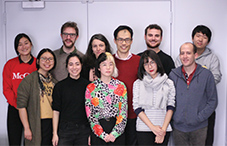 Ma and his lab members have also launched two outreach projects to apply their personal experiences and scientific knowledge to benefit fellow scientists and society at large. One such endeavor is Growing Up in Science, an unconventional mentoring project that Ma helped start with NYU neuroscientist Cristina Alberini, PhD, to give scientists a platform to reveal their struggles, failures, doubts and detours (Science, Vol. 357, No. 6354, 2017opens in new window). The project was inspired by more than a decade of mentoring dozens of students and postdocs, many of whom shared their personal struggles with him. Ma realized his trainees could benefit from hearing about the problems he faced early in his career. “There’s a large gap between trainees and professors, in part because we faculty project ourselves as infallible,” Ma says.
During his own Growing Up talk, Ma recounted the dread he felt after leaving physics to pursue psychology and the crippling sense of impostor syndrome he felt during his academic training. More than two dozen psychologists and neuroscientists, mostly from the NYU community, have participated in the series.
Two years after launching Growing Up, Ma and Adler helped start the Scientist Action and Advocacy Network (ScAAN), a grassroots advocacy group that provides volunteer data analysis, literature reviews and other expertise to social justice and environmental organizations that aim to influence policy. ScAAN partners with nongovernmental organizations (NGOs) that understand the legislative process but need scientific expertise. “We take complicated figures from neuroscience or psychology papers and we simplify them into easy-to-read line graphs and bar plots,” says Adler, now a computational researcher at the Princeton Gerrymandering Project.
In 2016, ScAAN worked on Raise the Age NY, a project aimed at raising the age of criminal responsibility from 16 to 18 in New York state. ScAAN gathered neuroscientific evidence indicating that the developing adolescent brain is different from the adult brain both in its sensitivity to trauma and in its amenability to rehabilitation programs. Members of the Children’s Defense Fund presented the evidence to New York state legislators. The Raise the Age bill passed in 2017.
For another project, ScAAN teamed up with PlasticBagLaws.org, another NGO, to explain to New York Gov. Andrew Cuomo and state legislators the potential effect on consumers’ decision-making and behavior of a 5-cent mandatory fee on plastic bags. Lee, who serves as ScAAN’s president, says while a bag-fee bill has not yet passed, “our goal is to use behavioral psychology research to help bring about smarter policies.”
Such projects, Ma believes, underscore the positive influence strong science can have. “Unfortunately, scientists get incentivized for publishing papers and securing grants, and little else—not good teaching, not good mentorship, and not outreach, advocacy and policy,” he says. “I think that’s a total shame, because in the long run that’s where scientists can have the biggest impact.”
“Lab Work” illuminates the work psychologists are doing in research labs.