Not until the 1950s and ’60s did corporate America realize psychology had something to offer the workplace. It was during that time that groundbreaking research by psychologist Harry Levinson, PhD, demonstrated that companies have distinct cultures that can be linked to worker anxiety and depression. Based on his research, Levinson taught managers how to apply psychoanalytic theory and methods to motivate employees and increase productivity.
That, many say, was the birth of consulting psychology, a field that today is widely appreciated for its ability to help people achieve their best, not just in the workplace but also on the sports field, the performance stage and elsewhere.
Today, there are as many as 15,000 consulting psychologists practicing in the country for businesses, nonprofits, government agencies and many other groups, estimates Bill Berman, PhD, founder of Berman Leadership Development LLC in New York and president of APA Div. 13 (Society of Consulting Psychology).
There is no degree or track in consulting psychology, and given the diversity of the work, there’s no single road map for pursuing a career in this field. Most consultants begin as doctoral psychologists and build on that education and training according to their area of interest, whether it’s to coach, screen employees, assess organizations or perform other consulting services.
Consulting psychologists also have choices about the nature of their practice. Some opt to consult full time for one organization or company, while others work within an independent or solo practice that serves multiple clients. Some psychologists also create a specialty niche, such as consulting for schools, political campaigns or insurance companies needing risk analysis.
Here, we explore the career paths consulting psychologists can take and offer insight on how to get jobs in this growing field.
Corporate consulting
Every organization can benefit from the insightful observations and feedback of a psychologist who knows how to draw out the best in people, says Gregory Pennington, PhD, founder of the Pennpoint Consulting Group in the greater Atlanta area, which consults for many Fortune 500 companies. “What’s striking about consulting with large corporations is the scale and impact it has on the industry and communities it serves,” Pennington says.
Many consulting psychologists work with large corporations. Berman, for example, provides executive coaching and leadership development services to financial firms, technology firms, pharmaceutical companies and others. His goals can range from helping increase a company’s executive-hire success rate to helping clients achieve their goals faster with rapid business planning, better communication planning and sharper operational focus.
Corporate consulting is “happy work,” notes Randall White, PhD, founding partner of the Executive Development Group in Greensboro, North Carolina, about the perks. “I work with high performers who want to learn, grow and change.”
Pennington has helped companies develop more leaders who are women or people of color through executive coaching and conducting accelerated leadership development programs. “Whatever an organization’s or corporation’s mission is, it will have a higher probability of achieving its mission and sustaining its performance if they are capable of leveraging diversity and inclusion,” he says. “The challenge and the opportunity for us as psychologists is to help people and organizations manage that complexity with minimal complications.”
Pennington also provides support and guidance to clients going through complex mergers and acquisitions. He helps them align and integrate senior leadership teams before and after transformations. “Psychologists with business backgrounds add value because they have both an evidence-based foundation and an experience-based one,” he says.
Working on the inside
Some consulting psychologists opt to work full time for one company, organization or government agency rather than contract with ever-changing clients. These internal consulting jobs typically require psychologists to assume a broader range of responsibilities, and their roles may combine coaching, business strategy, workshops and assessments, among other functions, within a human resources or strategy division.
The advantage of being an internal consultant is “not having to learn new jargon, players and politics for every job,” says Dee Ramsel, PhD, MBA, who worked for the Department of Veterans Affairs (VA) from 1986 to the spring of 2019, including 11 years as a consultant for the Veterans Health Administration (VHA). Ramsel and her group were the go-to staff for team-building efforts, data-driven assessments and employee engagement concerns. At the VA, she was also executive director of the National Center for Organization Development, a group of 50 employees that provided executive coaching and management support for employees throughout the organization.
In her consulting psychologist position, Amy Owen Nieberding, PhD, works to improve organizational culture in a variety of ways. As director of leadership and organization development for Vanderbilt University Medical Center in Nashville, Nieberding partners with an external provider to administer an employee culture survey every year to compare employee engagement scores with those of other academic medical centers. Armed with the survey results, Nieberding then works with senior executives to address any concerns, such as collaboration across teams. She also helps leaders respond to employees’ concerns, whether they are about career opportunities or the quality of one-on-one meetings.
The best strategies to address workplace problems often require building cross-disciplinary teams, Nieberding has found. “It’s hard to connect people with different paradigms, but it’s important to get things done.”
Finding a niche
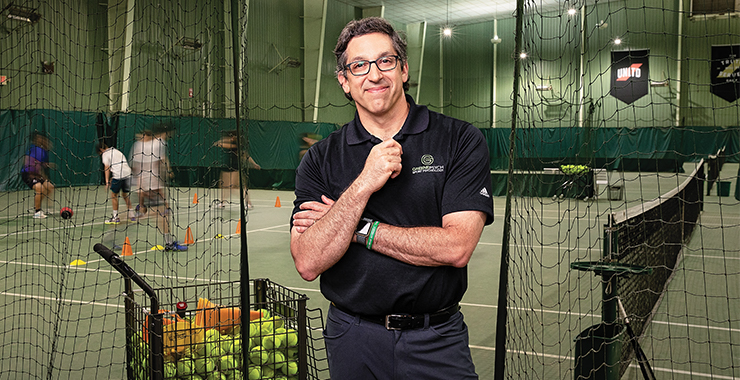
Other consulting psychologists focus on particular populations. Helping athletes achieve their personal bests is the focus of Mitchell Greene, PhD. After years in psychotherapy practice, he established Greenepsych Clinical & Sport Psychology in Haverford, Pennsylvania, to work with individual athletes—from marathon runners to professional squash players to college golfers—as well as schools and sports organizations. He also counsels parents of young athletes on how to manage the pressures to perform that can ruin the joy of playing for a child or teen.

“It’s not just about scoring more baskets or performing better,” he says of sport psychology. “It’s often about helping people not be so hard on themselves.”
Ellen Ostrow, PhD, found a legal niche: She coaches attorneys on management and career issues and has developed an expertise in helping female lawyers trying to advance their careers in a traditionally male profession.
“You have to be bilingual—fluent in the language of psychology and then able to translate it into the language of your client.”
“Being a great lawyer doesn’t mean you’re an effective manager and leader,” says Ostrow, a founding principal of Lawyers Life Coach LLC, based in Washington, D.C. “Lawyers are not taught to embrace their emotions, which may work well in the courtroom but doesn’t work well for navigating a career or other people.”
In addition, Ostrow consults on broader matters with law firms, legal departments, the judiciary and organizations where lawyers work. She may provide advice on how to retain talent, create mentoring programs, improve attorney-client communication or increase the diversity of lawyers and partners, for example.
Consulting psychologist Ellen Kirschman, PhD, works with another population: law enforcement. She became interested in police consulting while working as a clinical social worker providing family therapy for police families at a California hospital. “I was impressed by how much and how often the stress of the job strained not just officers but their family relations.” Today, based in Redwood City, California, Kirschman has consulted for police departments in 22 states and four countries, providing such services as conducting stress-management workshops for police spouses, consulting with first responders who suffer from post-traumatic stress disorder and teaching police officers how to offer one another peer support. Other consulting psychologists in the field provide pre-employment screening and fitness-for-duty evaluations, she adds.
The biggest challenge in police work is building a trusting relationship, according to Kirschman. “Therapists are often trained to be nondirect, but that makes cops uncomfortable. You have to be direct and transparent about who you are.”
Getting started
To launch a career in consulting psychology, “you need a good knowledge of psychology and an interest in translating that into real-world applications,” says Berman. He advises anyone entering the field to join Div. 13 to learn about consulting frameworks and to seek advice from seasoned members. (See "The home for consulting psychologists".)
For training and education, look to APA’s Guidelines for Education and Training at the Doctoral and Postdoctoral Level in Consulting Psychology (CP)/Organizational Consulting Psychologyopens in new window (OCP). Familiarity with organizational theory and practice ethics would be applicable for most trainees, as would assessment and intervention skills.
Consulting psychologists also advise that those looking for careers in the field:
Self-educate. Understanding the business or area you are working with is essential. Nieberding, whose background is in counseling, taught herself about business and finance and learned about the politics and dynamics of organizations through reading, on-the-job experience and mentoring received from Div. 13 colleagues.
Particularly if you choose to specialize, you need to learn about the issues important to your client. “Consulting requires both big-system and detailed thinking,” says Barry J. Jacobs, PsyD, of Health Management Associates, a national health-care consulting firm headquartered in Lansing, Michigan. To make the career transition from clinician-educator to consulting at age 60, the Philadelphia-based psychologist put himself through a crash course of books, articles and webinars on consulting, leadership, team-based care and telehealth. Jacobs also took advantage of tutelage from co-workers at his company and shadowed other consultants interacting with clients.
Take a course in a coaching program. Consultants are often expected to give advice in a more assertive and direct way than clinical psychologists are accustomed to. “Coach training helped me differentiate between psychotherapy and coaching,” says Ostrow. “You are asking different questions.” She recommends that any psychologist trying to break into consulting enroll in a coach training program. “I attended the MentorCoach program, which I highly recommend because the CEO is a psychologist and it’s grounded in empirical psychological science with an emphasis on positive psychology,” she says.
Develop cultural competence. Understanding the client’s culture and communicating in their language is vital to a consultant’s success, says Pennington. “You have to be bilingual—fluent in the language of psychology and then able to translate it into the language of your client.” If you’re working with corporate executives, for instance, reading The Wall Street Journal or Harvard Business Review regularly can help you understand how they see their world and define the issues that concern them, Pennington suggests.
White found that teaching a class for executives early in his career helped him learn how to frame psychological information in a way that was practical for business leaders.
To understand police culture, Kirschman recommends face-to-face contact and “any contribution that allows you to hang out with them.”
She suggests inviting a police officer to lunch, taking a ride-along to observe an officer at work or volunteering to teach a class for the department on suicide prevention or stress management, for instance.
Put yourself out there. Speaking engagements helped Ostrow learn more about the “pain points” experienced by female lawyers. “People in the audience would come up to me afterward,” she says, “and those exchanges taught me what resonated with them.” Websites, newsletters, writing articles and participating in women’s groups are other vehicles she has used to reach out to potential clients.
Greene found that consulting required a big leap and a different business model and mindset than his psychotherapy practice. Since weekly sessions are not the norm in sport consulting, he discovered he needed twice as many clients than he had when he was in private practice, which meant being more proactive in his marketing efforts.
“All of a sudden, I have a logo, golf shirt and website,” he says. He recalls it took him three years and “a lot of hand-shaking, free talks, marketing and putting myself out there” to gather a steady clientele of athletes and sports organizations.