The 3.7 million American Indians and Alaska Natives in the United States have a higher mortality rate than other Americans, from causes including cirrhosis of the liver, opioid overdose, diabetes, injury, homicide and suicide—all conditions with a significant behavioral component—according to data from the Centers for Disease Control and Prevention (CDC). They also die 5.5 years younger on average than Americans of all races combined.
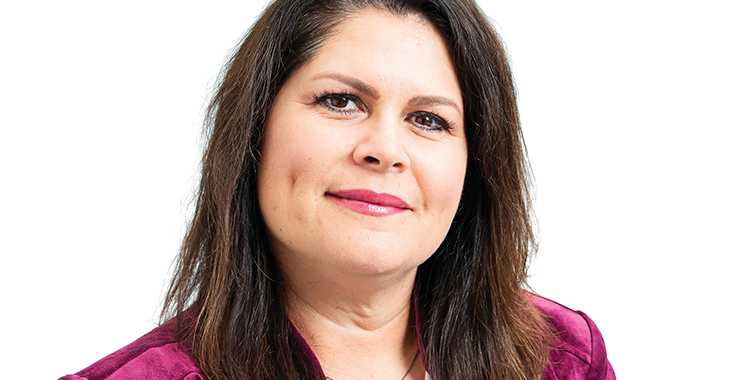
Psychologist Marcella “Marcy” Ronyak, PhD, wants to change those statistics. As director of the division of clinical and community services for the federal Indian Health Service (IHS) agency, housed within the agency’s Office of Clinical and Preventive Services in Rockville, Maryland, Ronyak oversees a national program aimed at addressing Native Americans’ health-care needs, including maternal and child health, medication, managing and treating HIV/AIDS and hepatitis C, diabetes care, opioid addiction treatment and more. Prevention, education and cultural awareness are key parts of the division’s strategy, which uses a public health framework to choose and craft interventions and recognizes the importance of addressing the structural inequalities that may lead to poor health conditions.
Ronyak, who is a member of the Confederated Tribes of the Colville Reservation in Washington state, came to the IHS in 2013, after working as a tribal psychologist and then an independent consultant on the Colville reservation. There, she provided clinical services to families, couples and individuals, and partnered with other tribal, state and federal stakeholders and experts to design and implement culturally appropriate services. Those experiences inform her work at the IHS, whose mission is to raise the physical, mental, social and spiritual health of American Indians and Alaska Natives to the highest possible level. “It is a very comprehensive approach to looking at a person,” Ronyak says—one equally compatible with her training as a psychologist and her cultural background.
How are you working to address the physical health and mental health needs of Native communities?
Many of the public health issues faced by tribal communities are driven by socioeconomic determinants such as poverty and lack of education. As the principal federal health-care provider and health advocate for Indian people, the IHS aims to address these challenges through a comprehensive health-care system delivered by more than 15,000 staff and health-care providers to 2.6 million American Indians and Alaska Natives in 37 states, through a network of 24 hospitals, 50 health centers and 24 health stations.
A good example of our comprehensive care strategy is the Family Spirit Programopens in new window, an evidence-based, culturally tailored intervention program delivered by Native American paraprofessionals, who are often members of the communities. The core strategy is to support young Native parents by giving them additional knowledge and skills to promote their children’s healthy development during the preschool years.
Our paraprofessionals provide this care by visiting people in their homes, which is especially important because Native people often face significant barriers to seeking treatment, such as travel and transportation. They also have difficulty trusting providers, so delivering personal, one-on-one care can make a huge difference in helping them learn new parenting strategies and recognizing it’s OK to see doctors if something is wrong.
Evidence from randomized controlled trials conducted by the Johns Hopkins Centeropens in new window for American Indian Health has shown a number of positive outcomes from this program, including increased parental self-efficacy and reduced stress, decreased maternal depression and substance use, fewer behavior problems in young children and decreased risk of substance use and behavioral health problems over the life course.
How do you work with tribes to find out what they need?
For mental and behavioral health issues, the IHS formed the National Tribal Advisory Committee (NTAC) on Behavioral Health in 2008. The NTAC serves as an advisory body to the division of behavioral health and to the director of the IHS to discuss tribes’ behavioral health needs and provide guidance and recommendations on programmatic issues that affect the delivery of care for American Indian and Alaska Natives. The committee includes a federal and a tribal co-chair, as well as a tribal representative and an alternative from each of the 12 IHS areas.
Which aspects of your work do you think have the best chances of improving the overall health of Native communities?
I am particularly hopeful about our Eliminating Hepatitis C and HIV/AIDS in Indian Country Initiativeopens in new window, which uses four key strategies shown by research to be particularly effective in stemming the rate of HIV/AIDS: early diagnosis, rapid and effective treatment, prevention and rapid response to new HIV clusters.
One site implementing a version of these strategies is the Claremore Indian Hospital, an IHS facility in Claremore, Oklahoma. The hospital decided to expand on recommendations by the CDC to screen all baby boomers for HIV and hepatitis C so that it now screens all patients over age 18. The idea is to promote prevention, reduce stigma and improve treatment by making HIV screening part of the clinical package received by everyone who enters treatment.
By using this framework and working with our tribal communities, I honestly believe that we can end the HIV epidemic in Indian country by strategically focusing our efforts on the communities that are most impacted. Knowing that I can be a part of that is just phenomenal.