Last year, the International Psychology Network for LGBTI Issues (IPsyNet) released a mental health statement advocating for inclusive treatment for LGBTQ patients around the world. Since then, the statement has been endorsed by 28 national psychology organizations representing all regions of the globe.
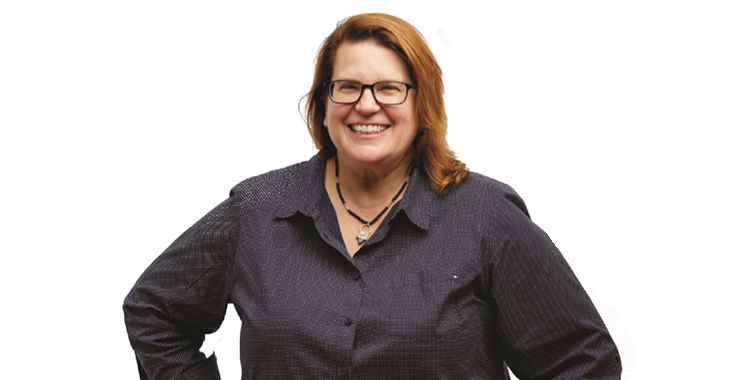
Helping to lead that effort is Sharon G. Horne, PhD, a professor and director of the PhD program in counseling psychology at the University of Massachusetts, Boston, who is also an APA representative to IPsyNet and chair of the committee that drafted the statement. Horne, who has long focused on improving LGBTQ mental health worldwide, is now using a Fulbright Global Scholar Award to study LGBTQ mental health in Colombia, South Africa and the Philippines in addition to conducting work in former Soviet countries.
The Monitor talked with Horne about what she’s been seeing abroad and how she plans to use her findings.
What is the IPsyNet international mental health statement and why is it important?
The IPsyNet statement represents an international recognition of the need to develop and support affirmative and inclusive treatment for the LGBTQ population. Our goal with the statement was to capture shared transnational LGBTQ values related to psychology, such as an understanding of the role of psychology in addressing its past harms to LGBTQ individuals and families, respect for sexual and gender diversity, and support for indigenous approaches to sexual orientation and gender identity. It is the only example of which I’m aware of international psychology organizations making a commitment to a set of values related to a psychological mental health concern. This is a model that might work for other global issues such as refugee concerns, child abuse and more.
How does this relate to your Fulbright research in Colombia, South Africa and the Philippines?
I am interested in how LGBTQ psychology is taking shape globally in this divided and polarized time. Specifically, I am interested in the application of affirmative psychotherapies in which clinicians address and validate the needs of LGBTQ clients. Here in the United States, we have developed practice guidelines for treating LGBTQ clients, but my research focuses on whether practitioners around the world are using them, or adapted versions, or if they have their own approaches to affirmative practice.
I also want to better understand the experiences of LGBTQ clients who seek out therapists in places where affirmative practice may not be expected and where negative influences from anti-LGBTQ institutions may be harmful. Traveling to these countries during my Fulbright is allowing me to survey and interview both clinicians and clients about their experiences.
Why did you select these three countries to study?
I chose Colombia, South Africa and the Philippines because of their important influence in their respective regions and for their affirming approaches to sexual orientation and gender identity concerns. For example, Colombia’s primary psychological association, Colegio Colombiano de Psicólogos, is a leader in South America in affirming LGBTQ concerns. The Psychological Society of South Africa has developed its own Africa-centered guidelines on working with sexually and gender-diverse people and is providing trainings for clinicians on affirmative treatment throughout the country. The Psychological Association of the Philippines has its own LGBT Psychology Special Interest Group and LGBT section. LGBTQ psychology in the Philippines is also supported within the indigenous psychological community at Pambansang Samahan sa Sikolohiyang Pilipino, which issued its own policy in 2014 for LGBTQ-affirmative nondiscrimination written in Filipino and drawing from indigenous Filipino decolonizing frameworks. These countries have their own challenges with respect to LGBTQ concerns, as do we, but I believe we have a lot to learn from how they are shaping and contributing to LGBTQ psychology.
What are some of those challenges?
This is a question I’m still grappling with. Cultural factors, particularly religion, play a significant role in people’s mental health in Colombia, South Africa and the Philippines because they affect whether institutions—such as universities, government entities and nongovernmental organizations—are comfortable with LGBTQ-affirmative practice. Therapy continues to be accessible primarily for people with means in these countries. Participants from these countries have shared their frustration with finding therapists who can truly understand the intersectionality of their experiences. In South Africa, for example, there are far too few black LGBTQ-identified psychologists to meet the needs for support in many communities.
How does this research compare with your typical research at home?
Most of my research here is focused on the intersection of policies and mental health for LGBTQ people, such as anti-LGBTQ ballot measures related to marriage equality, parenting rights and public access. For example, last year our research team explored the impact on the mental health of LGBTQ people during a statewide referendum in Massachusetts to remove rights to housing and public services for transgender people. We found greater stress and depression leading up to the election for transgender people compared with cisgender people.
Where would you like to see your research go next?
During my travels, I have been looking at each society separately, but after I finish traveling, I’ll be analyzing what I have seen across different countries and regions to gain a larger context and understanding of the trends that are occurring for LGBTQ psychology. That will probably take me a while, and as part of that, I’m working on a book to provide a deeper analysis of those trends.
We are developing exercises for our online platform, which is geared toward helping people, here and around the world, struggling with LGBTQ-related stigma, discrimination and other concerns. We are currently working on making our platform available to Spanish-speaking participants and have plans to develop it for other languages. Our goal is to provide interventions that will be culturally relevant and that can be accessed anywhere.