Four out of five Americans own a smartphone—and many now use these ubiquitous devices not just for communication and endless distraction but as tools for improving their mental health.
There are up to 20,000 apps for mental health on the market, and many of the most popular have millions of users. Headspace, for example, a mindfulness and sleep app that leads users through a series of guided meditations and has been studied as a treatment for stress-based chronic diseases, reached 1 million paying users in 2018; a free version of the app has been downloaded by nearly 60 million people.
The bottom line: Whether through consumer apps or telehealth services, consumers are turning smartphones into pocket therapists. Experts hope that digital mental health will increase access to mental health care, but that outcome is by no means guaranteed: The field is still grappling with complex issues of usability, efficacy and data privacy.
“One of the main trends we see is that there is very little relationship between credibility and the user experience,” says Stephen Schueller, PhD, a psychologist at the University of California, Irvine. “Apps with good credibility often have bad user experience, and apps that have good user experience often have little credibility.”
Schueller is the executive director of the website PsyberGuide (https://onemindpsyberguide.org/), a project of the nonprofit organization One Mind, which rates mental health apps on scientific credibility, user experience and transparency of datahandling. The rankings reveal a gulf between academics researching effective treatments and designers who know their way around creating a pleasing interface, Schueller says. “We as researchers need to work better with people who can help us build good experiences, and companies that develop these apps with good experiences should do better work to get some support behind their apps,” he says.
Digital mental health applications need to keep users engaged to be effective, says Megan Jones Bell, PsyD, the chief scientific officer at Headspace and an adjunct clinical assistant professor at Stanford University—and in the consumer world, there’s no one checking up on users to make sure they’re adhering to treatment. This means that companies must not only base their apps on evidence-based strategies, they also must test that their specific vehicle of delivery works.
“You could have the best therapy in the world, but if people don’t actually get a meaningful dose, it doesn’t matter,” she says. “You need to invest in that extra step of third-party validation.”
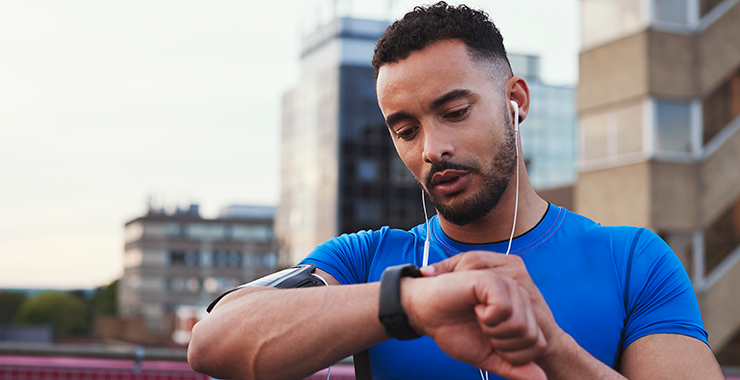
Mental health technology also shows huge promise not just for treatment, but for data collection and assessment as well, says Matthew Carper, PhD, a psychologist and postdoctoral researcher at Brown University’s Warren Alpert Medical School. And many apps are designed to be used in conjunction with traditional mental health care. In particular, Carper says, wearables and sensors are continually improving and can provide granular, long-term data on sleep, exercise, social contact and other lifestyle factors. Apps that prompt users to enter information about their moods several times a day can be particularly useful for clinicians, Carper says. “It basically allows us to assess things in a more accurate way as they’re happening and reduces that retrospective recall bias that we deal with in self-reports.”
“Ideally, the goal of these apps is to extend our reach, potentially reduce burden on practicing clinicians and allow some of the work to be done outside of session.”
Population disparities
Evidence is starting to drive quality among mental health technologies, Schueller says, and more health-care systems are diving in. Headspace’s subsidiary Headspace Health is now working with health-care systems and insurance companies to develop apps for treating stress-based chronic diseases. But there are population disparities in the development of this tech, Schueller and his colleagues have found (Current Treatment Options in Psychiatryopens in new window, Vol. 6, No. 3, 2019). The most common users, he says, are middle-aged white women—the same group most likely to use traditional therapy.
“A lot of these apps are still designed for white people, who are the majority,” he says. “It would be nice to see more development of apps for specific underserved marginalized populations that are traditionally left out of mental health services.”
As digital mental health expands, privacy, data-handling and regulation are becoming major issues. A study of the 36 top-ranked apps for depression and smoking cessation led by Kit Huckvale, PhD, a mobile health researcher at Australia’s nonprofit Black Dog Institute, found that more than three-quarters of them transmitted data to Facebook or Google. Only 12 revealed this fact in their privacy policies (JAMA Network Openopens in new window, Vol. 2, No. 4, 2019). (For more on psychologists’ work on privacy, see “Pioneering New Ways to Protect Privacy”.)
The U.S. Food and Drug Administration (FDA) has moved into regulating a subset of medical apps that it deems potentially risky, and it approved its first mental health app in 2018. The app, reSET, was designed by Pear Therapeutics to improve retention in outpatient substance use treatment. However, mental health tech remains largely unregulated. Clinicians hoping to use technology in their practices should seek out apps and tools that have been vetted in peer-reviewed journals, Carper says. The journal Cognitive and Behavioral Practice runs a series of multimedia “field tests” of mental health apps that can be helpful, he says. APA Services Inc.’s Good Practice magazine and Practice Update newsletter also recently launched columns evaluating mental health apps. Finally, clinicians should strive to understand the apps their patients might be using and be willing to recommend high-quality options.
“Ideally,” Carper says, “the goal of these apps is to extend our reach, potentially reduce burden on practicing clinicians and allow some of the work to be done outside of session.”
New telehealth opportunities
While technology has not yet brought about a revolution in access to mental health care, more medical systems are signing on to telehealth in hopes of reaching populations who can’t easily access care. According to the American Hospital Association, 76% of hospitals now connect with patients via telehealth, up from 35% in 2010. For mental health professionals, 2019 ushered in one of the most far-reaching developments that will increase the use of telepsychology: Twelve states signed on to the Psychology Interjurisdictional Compact (PSYPACT), an agreement that allows licensed psychologists to deliver telepsychology services across state lines in participating states. Those states are Arizona, Colorado, Delaware, Georgia, Illinois, Missouri, Nebraska, Nevada, New Hampshire, Oklahoma, Texas and Utah.
As more states sign on to PSYPACT, it could be a huge boon for patients in need of specialty services, says Kimberly Anderson, PhD, the director of psychology at The Center for Eating Disorders at Sheppard Pratt in Towson, Maryland. Teletherapy allows practitioners to virtually participate in family meals and meal preparation in the client’s home environment. “We can be in their kitchen, in their dining room, and it’s so much easier and convenient for everyone,” she says.
A review of research by Anderson and her colleague Laura Sproch, PhD, found that for eating disorders, telehealth’s efficacy, therapeutic alliance, satisfaction and safety are similar to those provided by in-person therapy (Psychiatric Clinicsopens in new window, Vol. 42, No. 2, 2019). More comparisons of telehealth and in-person therapy are needed to understand when telehealth works and with whom, Anderson says, but that research is happening as telehealth grows. “I honestly think everyone is going to be doing it soon,” she says.