Brendan O’Connell was born into a very different Ireland than the one he lives in today. “I was born in 1977, and until I was 16, it was essentially illegal to be me,” says O’Connell, a past president of the Psychological Society of Ireland (PSI), explaining that Ireland didn’t decriminalize homosexuality until 1993. Divorce was also illegal in 1977, as was abortion, even in cases of rape and incest. The Irish Constitution even included a ban on blasphemy.
Since those days, the Republic of Ireland has changed dramatically. In 1995, the nation made divorce legal, with voters in 2019 opting to liberalize the law by decreasing the required predivorce separation period from four to two years. In 2015, voters legalized same-sex marriage—the first nation to do so by popular vote. And in 2018, Irish voters repealed the constitutional amendment outlawing abortion.
“Ireland is now seen as being one of the most socially liberal countries,” says Terri Morrissey, who served as PSI’s chief executive officer from 2015 to mid-2019—a huge change from just 30 years ago when the country was one of Europe’s most conservative.
While the waning influence of the Catholic Church explains much of this revolutionary social change, psychologists have also played a role by promoting psychological science on key issues, says Ian O’Grady, PSI’s 2019 president. “These issues have to be put forth from a scientific basis as opposed to an opinion basis,” says O’Grady.
A change of attitude
Clinical psychology is a relative newcomer to Ireland and started out closely tied to the Catholic Church, according to a history by Alan Carr, PhD, a psychology professor at University College Dublin. A priest established the country’s first psychology diploma program in 1958, a program Carr says was distinguished by its “Catholic ethos.” That ethos prevailed in the voluntary organizations that provided services to those with mental health problems and intellectual disabilities as well as in state-run facilities. The first clinical psychological service opened in 1955 at the Saint John of God Child Guidance Clinic, and accredited professional training programs opened in the late 1970s. Since then, says Carr, psychology has flourished.
But as psychology has grown, the influence of the church has waned, says Vincent McDarby, PhD, PSI’s honorary secretary and a private practitioner in Dublin. Waves of scandals—including sexual abuse and its cover-up and the discovery of mass graves of babies at former homes for unwed mothers—have lessened the church’s authority over both the Irish government and the Irish people. “There was a big turn against the church from a lot of society,” says McDarby. Over the past few decades, the percentage of regular massgoers has plummeted from 80% to 30%.
The decline of the Catholic Church isn’t the only reason for Ireland’s transformation, says Tom Inglis, a professor emeritus of the School of Sociology at University College Dublin. While the church’s scandals acted as a catalyst that increased the rate of change, he says, that change would have happened even without them. Television, the internet and social media have also contributed, as have increased travel and migration. “It was the media that became the first dent in the dam that the church had built to prevent secularization from sweeping into Ireland,” he says.
One sign of the nation’s secularization: In 2018, the Irish overwhelmingly voted to remove the blasphemy ban from their constitution following a 2015 kerfuffle over comedian Stephen Fry’s description of God as “stupid” and “mean-minded.” While that repeal has had no real-life impact, since no one was ever prosecuted under the law, the nation’s ever-increasing secularism has also led to dramatic changes that have had a big impact on people’s daily lives.
Take abortion rights. Abortion had been illegal in Ireland since 1861. In 1983, voters moved to ensure its continued illegality by adding an Eighth Amendment to the constitution to give equal rights to life to pregnant women and fetuses. “People were very fearful even about saying the word ‘abortion’ until the last couple of years,” says Barbara Western, former chair of PSI’s Special Interest Group in Perinatal and Infant Mental Health.
But in 2018, Irish voters repealed the Eighth Amendment, with PSI taking a public stand in favor of that move—spurred by its Science and Public Policy Committee, chaired by Morrissey. “We felt it was very important that psychologists bring robust, valid evidence to the debate,” says Western, explaining that in the absence of Irish research the group drew heavily on the 2008 Report of the APA Task Force on Mental Health and Abortionopens in new window and other research from abroad.
The group produced a discussion paper dispelling myths about abortion, then boiled it down into a five-item fact sheet to make the research more easily publishable in local newspapers. The main message—that abortion does not harm women’s mental health, with the overwhelming majority expressing relief post-abortion—appeared in The Irish Times, Irish Examiner and other outlets. Abortion is now legal up to 12 weeks into pregnancy and even later in cases of fatal fetal problems or threats to a woman’s health or life.
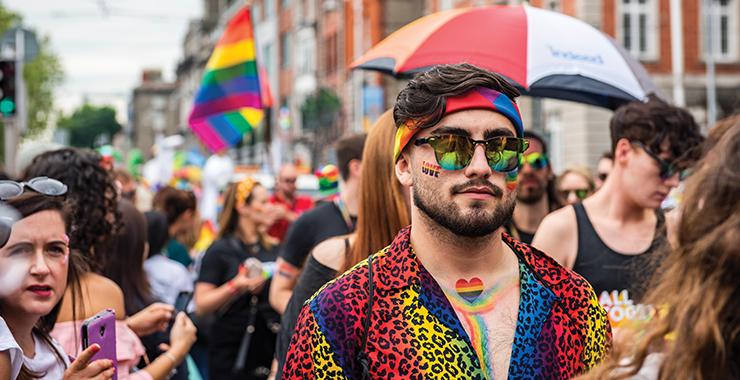
Psychologists have also helped transform the rights of sexual and gender minorities in Ireland. In this case, PSI had to counter inaccurate research about the impact of same-sex parenting on children disseminated by the Alliance for the Defence of the Family and Marriage, an Irish initiative that aims to “promote and defend the traditional family.” The alliance claimed that same-sex parenting damages children emotionally, sets them back educationally and renders them much more vulnerable to sexual abuse. As with the abortion referendum, PSI disseminated psychological evidence to inform the marriage equality debate that culminated in the legalization of same-sex marriage in 2015.
In the debate, PSI pointed to its guidelines, which note that empirical studies have not found reliable differences between the children of same-sex and heterosexual parents. PSI also drew on APA’s work, citing a 2012 statement emphasizing that there is no scientific evidence showing a relationship between sexual orientation and parenting effectiveness. The society also proffered scientific evidence when it came to a 2019 debate about sexual orientation conversion interventions. “One of our politicians had suggested that conversion therapy was an OK practice, so we launched quite a strong media campaign to refute that,” says O’Grady.
In addition to providing a factual basis for public debate, psychologists are ensuring that their peers are prepared to deal with social change in their own consulting rooms. In 2015, PSI released its first “Guidelines for Good Practice With Lesbian, Gay and Bisexual Clients.” While the guidelines need to be updated to include transgender patients and other issues—a task that’s on the society’s agenda—their very existence sends a strong message to sexual and gender minorities and the society at large, says O’Connell. The guidelines’ incorporation into PSI’s ethics code also gives patients recourse if they encounter homophobia by psychologists.
PSI is also training practitioners to work with gender-variant clients. At PSI’s annual conference, for instance, Dublin psychologist Anne Kehoe, PhD, DClinPsych, and colleagues offered a full-day workshop to help psychologists learn practical skills for working with gender-variant youth. In 2015, Ireland became one of the few countries to allow adults to change their official gender on legal documents simply by declaring themselves a different gender, without need for medical or state intervention. “The fact that they can do that for themselves is very powerful,” says Kehoe, who says increasing numbers of psychologists want help understanding the evolving research base and terminology as they help patients explore their identities.
Remaining challenges
Despite these radical transformations, many challenges remain in Ireland. Coping with the turmoil next door—the United Kingdom’s withdrawal from the European Union, or Brexit—is one. “When your neighbors burn their house down, now your house is at risk,” says Brian Hughes, PhD, a psychology professor at the National University of Ireland, Galway, who has studied the impact of Brexit.
Brexit could result in more than just what Hughes calls a “reboot of Irish national identity” as the island’s one community becomes two nations. It could also lead to a renewal of conflict in the north, he predicts, explaining that it was the imposition of a border that sparked the Irish Troubles. “Border checks, watchtowers, military outposts at the border—these were the first targets for what went on to be full-blown paramilitary terrorism,” says Hughes. “And if troubles were to flare up, it would affect everyone on the island.”
In addition to the threat of violence, there could also be enormous disruptions to day-to-day life and shortages of food and other products, says Hughes, explaining that a customs barrier would present huge logistical difficulties.
Meanwhile, Ireland is still suffering the aftereffects of years-long economic whiplash. As recently as the 1990s, it was one of the poorest countries in Western Europe. In the early 2000s, however, foreign investment fueled an economic boom and earned the nation the nickname “Celtic Tiger,” with its gross domestic product per person jumping from 69% of the European Union average in 1987 to 136% by 2003. Then, between 2008 and 2014, the country suffered a severe economic downturn.
“It’s like we had no adolescence as a country,” says Jennifer Twyford-Hynes, DClinPsych, a chartered psychologist in Dublin. “We went from poor—not having much infrastructure or jobs—to being affluent. The culture had to kind of catch up, and then there was the big drop-off.” As a result, Twyford-Hynes says she’s hearing increasing reports of couples who want to divorce but have to keep living with each other for financial reasons. And economic stress can lead to unhealthy coping strategies, she adds, noting that Ireland has one of the world’s highest rates of binge drinking among young women, for example.
Other pressing societal issues include homelessness and asylum seekers, says O’Connell, adding that psychologists must play an advocacy role in bringing the psychological science to bear no matter the issue.
Even in the arena of the rights of sexual and gender minorities, where so much progress has been made, work remains to be done, he says. Under current law, only parents who are biologically related to their children can put their names on their children’s birth certificates. Forthcoming regulations will allow same-sex couples who conceived via sperm donors from Irish fertility clinics to be deemed legal parents, but loopholes leave behind many parents—such as gay couples who use egg donors to have their babies.
“It’s easy to bask in the glory of our recent wins and significant change,” says O’Connell, “but that needs to be tempered, too. There is no inclusion until all are included.”