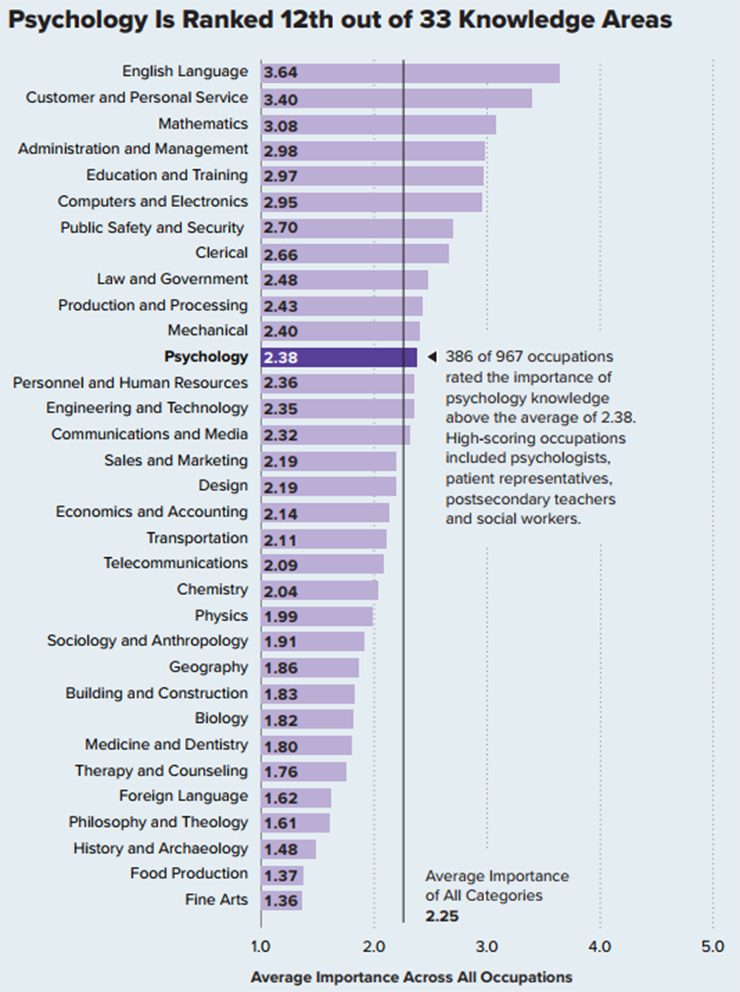
- It’s not only psychologists who use psychology at work. In a survey of U.S. workers and occupational experts across 967 occupations, respondents evaluated the importance of 33 knowledge areas (such as English language, mathematics and clerical knowledge) to their job performance. When these scores were averaged across occupations, psychology ranked 12th in importance when compared with all other knowledge areas.1,2
- Psychology knowledge was defined as “knowledge of human behavior and performance; individual differences in ability, personality and interests; learning and motivation; psychological research methods; and the assessment and treatment of behavioral and affective disorders.” It was important in a variety of occupations, including, for example, among social workers (importance: 4.6 out of 5.0), counselors (4.0), postsecondary teachers (3.1), business intelligence analysts (2.4) and risk-management specialists (2.4).
Want more information? See CWS’s interactive data tools: or contact APA’s Center for Workforce Studies.