Despite open questions about antidepressants, Read says, “these drugs do help some people.” Depression is a debilitating illness, and there is evidence that the medications can relieve major depressive disorder. A systematic review of 522 trials showed that each of the 21 antidepressants tested was more effective than placebo (Cipriani, A., The Lancetopens in new window, Vol. 391, No. 10128, 2018). But another analysis, of 131 placebo--controlled crib sheet trials of antidepressants, concluded that the clinical significance of the medications was questionable, and may not outweigh the negative effects (Jakobsen, J.C., BMC Psychiatryopens in new window, Vol. 17, No. 58, 2017).
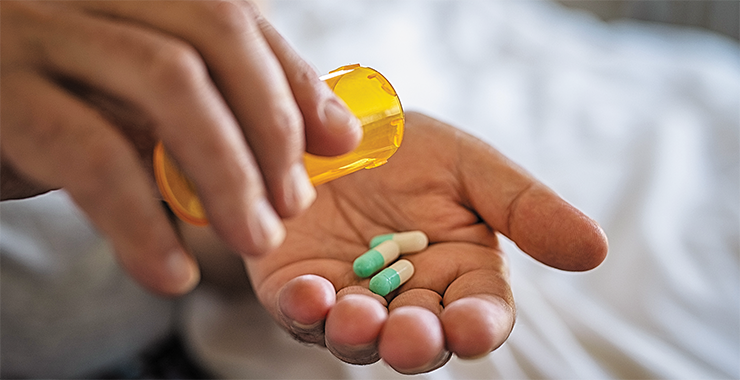
Antidepressants may be more effective when combined with psychotherapy. Steven Hollon, PhD, a professor of psychology at Vanderbilt University, and colleagues have found, for example, antidepressant medication combined with cognitive-behavioral therapy (CBT) was more beneficial than medication alone for people with severe, nonchronic depression (JAMA Psychiatryopens in new window, Vol. 71, No. 10, 2014). (The APA depression guideline panel recommends medication, psychotherapy or the combination of medication and CBT or interpersonal therapy as first-line treatments for adults with major depressive disorder.)
But as more research finds people developing progressive resistance to antidepressants, Hollon says, experts might want to consider whether psychotherapy alone is the more prudent first-line option. “It could be that the medications end up setting you up for relapse down the line,” he says. Still, he adds, it’s probable that some patients are more likely than others to benefit from antidepressant medication. Psychologist Robert DeRubeis, PhD, at the University of Pennsylvania, and colleagues developed a computer model that could predict which patients were more likely to respond to drugs versus psychotherapy based on five variables: marital status, employment status, life events, comorbid personality disorder and prior medication trials. The results provide some guidance for individualizing the approach to depression treatment (PLOS ONEopens in new window, Vol. 9, No. 1, 2014).
Meanwhile, patients who benefit from antidepressants may not need to stay on them long term. Some may want to quit because of side effects such as loss of sexual desire or decreased arousal. In other cases, their prescribers may recommend they stop taking the medications. The American Psychiatric Association guidelines, for example, indicate that patients should continue the drugs for four to nine months after treatment for the acute phase of major depression before tapering to discontinuation, and that only those with chronic or recurrent depression should consider continuing the drugs to prevent relapse. Yet the most recent data from the National Center for Health Statistics show that more than two-thirds of people on antidepressants in the United States have been taking them for at least two years, while a quarter have been on them for more than 10.
Many may not have ever discussed coming off the drugs. In a survey of antidepressant users in the United Kingdom, Read and colleagues found 65% had never discussed stopping the medications with their prescriber (Addictive Behaviorsopens in new window, Vol. 88, No. 1, 2019). One study of patients in Scotland who had taken the drugs for at least two years found the longer they’d been on them, the less likely prescribers were to adequately monitor a patient to review whether they were taking the right dose, or if they should continue the medication at all (Sinclair, J., Family Practiceopens in new window, Vol. 31, No. 4, 2014).
Others might be afraid to quit, or may experience withdrawal effects that make it hard to do so. In a small randomized trial, researchers in the Netherlands studied 146 patients whose primary-care doctor had recommended that they discontinue taking antidepressants. Just 51% agreed to follow that advice. Of those who tried, only 6% were successful (Eveleigh, R., BJGP Openopens in new window, Vol. 1, No. 4, 2018).