"Magnification." That’s the word that surfaces again and again when psychologists who specialize in health inequalities discuss the coronavirus epidemic. The virus and the resulting economic shutdown are exacerbating long-standing inequities in American society, widening economic gaps and health disparities. And the impacts—both physical and psychological—are likely to be long-lasting.
Still-limited state data on infections by race and ethnicity show that the coronavirus has so far disproportionately infected and killed black and Hispanic Americans. Native American communities are also facing outbreaks, without the benefit of nearby medical capacity. People with disabilities and older adults report shortages of critical medications and struggles accessing care. Meanwhile, people who live on limited incomes can’t afford to stockpile food and supplies, and many in service industries have lost their jobs. Working from home is a privilege afforded to only a segment of society.
And of course, these groups overlap: People with disabilities are disproportionately represented in communities of color, and long-standing economic inequalities affect people of color disproportionately as well. Unemployment and underemployment are also high among people with disabilities, creating systemic challenges for them from several directions. And membership in any of these groups is compounded by age when it comes to COVID-19 impacts, with older adults most likely to lack resources and to need health care and community services.
Psychologists alone can’t solve these problems, but they can help bring attention to, address and ameliorate the virus’s disproportionate impacts. “It is so structural,” says Sherry Wang, PhD, a psychologist at Santa Clara University who researches cultural factors behind ethnic-minority health disparities. “This isn’t an individual-level thing that one person or two people can fix. But do I think there is agency in...us coming together and speaking up? I really think we need to.”
Fear and discrimination
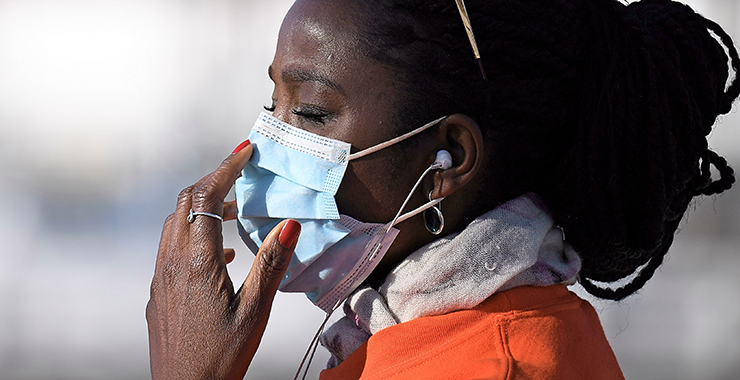
With the president and other politicians repeatedly referring to SARS-CoV-2 as the “Chinese virus,” Asian Americans are facing a surge in xenophobia and violence, reporting discrimination and physical attacks around the country. According to the Wall Street Journalopens in new window, there were 248 reports of coronavirus discrimination to New York’s Commission on Human Rights between Feb. 1 and mid-April, and 42% of those incidents were anti-Asian. Between March 19 and April 23, the Asian Pacific Policy & Planning Council’s Stop AAPI Hate websiteopens in new window recorded 1,497 reports of shaming, assault and harassment against Asian Americans.
“For Asian Americans, it’s a very, very lonely time right now, and it’s a time of being very scared,” Wang says. The Asian community itself may not feel safe or united, she adds, as discrimination against people of Chinese descent can also come from people with other national origins within Asia.
Wang and her colleagues are pushing back through outreach such as webinars and speaking to media about the problem of anti-Asian xenophobia. They are also making plans to implement bystander interventions so that the burden of speaking out doesn’t fall to Asian Americans alone.
At the same time, other minority groups are facing their own burdens. Data suggest that black and Hispanic Americans are being disproportionately infected and killed by the coronavirus. This is true in urban areas like New York City, where health department dataopens in new window as of April 21 showed that Hispanics accounted for 34% of deaths despite making up 29% of the population, and black people accounted for 28% of deaths but just 22% of the population. The disparities also hold true in more rural states like Utahopens in new window, where Hispanics make up more than a third of cases but only 14% of the population.
Long-standing disparities in health, owing to socioeconomic factors and racism, are contributing to those disproportionate numbers, says community health psychologist Jameta Barlow, PhD, MPH, of The George Washington University. Hispanic and black Americans are more likely than whites to live in food deserts, face discrimination and lack access to regular health care, Barlow says. These factors, in turn, lead to higher rates of cardiometabolic symptoms, including heart disease, hypertension and diabetes—all risk factors for hospitalization and death if infected with the coronavirus.
“The narrative we’re typically hearing is people blaming black people for their problems, and that is an old narrative we have to eliminate,” Barlow says. “We can’t dismiss the role of institutionalized racism that’s created the circumstances for these diseases to flourish.”
Black and Hispanic people in America are also overrepresented in high-risk front-line jobs. For example, severe outbreaks have hit meatpacking plants such as the Smithfield Foods pork plant in Sioux Falls, South Dakota, and the JBS USA facility in Greeley, Colorado. Workers—predominately Hispanic and earning low pay—labored in close quarters and were given little leeway on staying home when sick even as the pandemic spread, according to state public health departments and media investigations.
Outbreaks in prisons and jails represent another danger to minorities, who are overrepresented in incarcerated populations. Ohio is a striking example. According to the Prison Policy Initiative, the rate of incarceration for black people in the state is 2,336 per 100,000, and the rate of incarceration for Hispanic Ohioans is 1,072 per 100,000, compared with 422 per 100,000 for whites. In mid-April, at least two of Ohio’s correctional facilities experienced major COVID-19 outbreaks, with 1,950 inmates testing positive as of April 20 at the Marion Correctional Institution and 1,163 testing positive at the Pickaway Correctional Institution.
Native communities
Race and socioeconomic status further intersect among American Indian and Alaska Native communities. The Navajo Nation, which sprawls across Arizona, Utah and New Mexico, had 1,540 coronavirus cases and 58 deaths as of late April. That’s 10 times the rate of Arizona per capita. American Indians have high rates of pre-existing conditions that put them at an elevated risk of COVID-19 complications, says Iva GreyWolf, PhD, a clinical psychologist who works in Oregon and Alaska. Meanwhile, remote villages in Alaska are seeing supply flights cut, she says. Many villages have passed council resolutions to avoid outbreaks, banning travel and limiting commerce in and out, because local village health-care systems lack doctors, nurses or hospitals. That means continued food insecurity for residents and difficulty accessing medical care—but less risk of the decimation of the population, as happened in the 1918 flu pandemic. Most villages rely on paraprofessional community health aides, who are now under extreme pressure, GreyWolf says. “I have colleagues talking about how they are stressed about their own families, and they are exhausted,” she says.
The Society of Indian Psychologists runs a weekly virtual circle of support to try to bolster the mental health of these Native providers. Virtual support has also become a source of resilience among Native communities, GreyWolf says. Kyle Hill, PhD, a clinical psychologist of Ojibwe, Dakota and Lakota origin, has started an indigenous storytelling Facebook page where elders from around the country share videos of themselves telling stories. The Social Distance Powwow Facebook groupopens in new window, which is public, allows for the sharing of dances, drumming and prayers. On TikTok, people are expanding on the “Pass the Brush” challenge, making videos showing themselves first in plain sweats and tees, then decked out in traditional attire. “I’m just in awe of the resilience of people in spite of all the odds,” GreyWolf says.
A socioeconomic divide
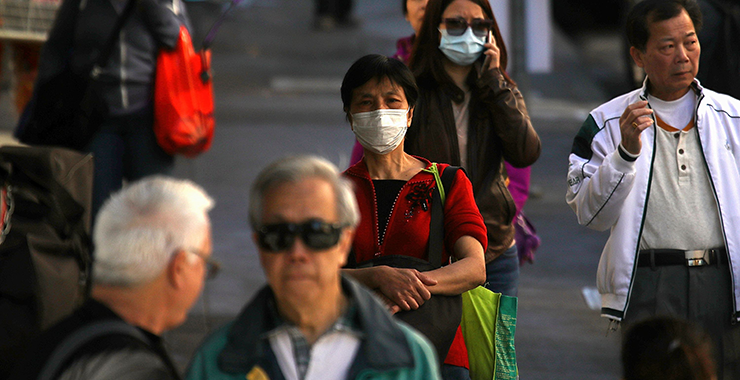
The pandemic has also magnified socioeconomic gaps, often putting out of work the people who can least afford it, such as those in the service industry. Evidence from the 2008 Great Recession suggests that those hit hardest financially will suffer mental health effects the longest. A study led by Miriam Forbes, PhD, of the Centre for Emotional Health at Macquarie University in Sydney, Australia, found that people who experienced financial, job or housing loss during the recession had elevated rates of panic attacks, excessive worry, depression and problematic substance use as late as 2013 (Clinical Psychological Science, Vol. 7, No. 5, 2019opens in new window).
But going back to work can be physically and mentally dangerous as well. People with jobs deemed necessary, such as grocery store workers, risk infection daily. As state economies gradually reopen, sending some people back into offices and stores, health disparities between those who can work safely at home and those who cannot may widen.
Avoiding contact is a particular concern for people with disabilities and older adults, many of whom may be at high risk of complications from coronavirus infection and rely on direct-care workers. For those who need assistance with daily living, interactions with these caregivers have become suddenly fraught, says Anjali Forber-Pratt, PhD, an assistant professor of human and organizational development at Vanderbilt University. Meanwhile, the nondisabled population is availing itself of the adaptions people with disabilities have long depended on. “Now that everyone else is using grocery home delivery, there have been cancellations and delays in orders,” Forber-Pratt says.
People with disabilities and older adults are also likely to feel the impacts of state stay-at-home orders more intensely than younger and nondisabled groups. As some states begin to reopen businesses and relax social distancing, most plans call for at-risk groups and adults over the age of 60 to continue to stay home and avoid contact.
People with chronic conditions are also having difficulty accessing medical care. For example, a run on hydroxychloroquine, a medication that President Donald Trump repeatedly touted as a potential treatment for COVID-19, has left patients with lupus and rheumatic arthritis scrambling to get their regular doses. (Hydroxychloroquine is being studied as a COVID-19 treatment, but there is not yet evidence to show that it works, and some studies suggest it may be harmful.)
People with disabilities may also be particularly nervous about contracting the coronavirus since triage policies in several states have suggested that they may be discriminated against if doctors must allocate a limited supply of ventilators or other medical care. The U.S. Department of Health and Human Services Office for Civil Rights announced in late March that it would open investigations in several states after disability advocates filed complaints, but the psychological impact is damaging to the disability community regardless of legal outcomes. “When I think about history and other things that have impacted marginalized segments of our community over time, those have lasting effects,” Forber-Pratt says. “I think we’re going to see the same here.”
Along with Kathleen Bogart, PhD, a psychologist at Oregon State University specializing in ableism, Forber-Pratt is working on a grant proposal to study outcomes of the COVID-19 crisis in people with disabilities. The plan is to document experiences such as increased social isolation or lack of access to health care and then study the psychological and health outcomes of those impacts, says Bogart.
It’s an effort that will need to be repeated for other groups for whom the coronavirus is magnifying disparity and inequality.
“The most important thing I think I can do as a psychology researcher is identify the challenges and the points of resilience and be sure these challenges are addressed in future policy and these resiliencies are capitalized on,” Bogart says.