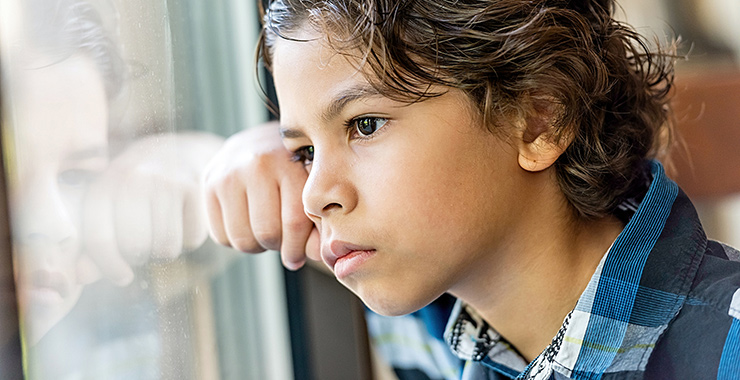
For years, untreated mental and behavioral health disorders have been a simmering problem in our nation’s schools. Each year, an estimated 1 in 5 U.S. children experience a mental, emotional or behavioral disorder, including anxiety, depression, attention-deficit hyperactivity disorder and disruptive behavioral disorders. Yet only about 20% of them receive care from a specialized mental health provider, according to the U.S. Centers for Disease Control and Prevention (CDC).
And that was before COVID-19.
“If you look at the prevalence of kids who have school adjustment difficulties and mental health problems, it was too high before the pandemic—and it’s going to be higher now,” says Roger Weissberg, PhD, a distinguished professor emeritus of psychology at the University of Illinois at Chicago and chief knowledge officer of the Collaborative for Academic, Social, and Emotional Learning (CASEL).
School closures and emergency distance-learning plans have turned young people’s routines and peer interactions upside down. At the same time, many families are facing new or worsening financial hardship in the wake of the pandemic. “Based on prior community crises, we can reasonably anticipate increases in anxiety, depression and trauma, and it goes without saying there will be significant grief and loss issues,” says Sharon Hoover, PhD, co-director of the National Center for School Mental Health at the University of Maryland School of Medicine. “Given the increased economic stress facing families, we can also anticipate increases in child abuse and neglect.”
As schools begin to reopen brick-and-mortar spaces, even kids without mental health challenges will face a tough readjustment period. “Kids and teachers have been out of school for months, and some may be emotionally dysregulated. We’ll need to figure out how to instill a sense of hope and optimism and wellness as they return,” Hoover says.
Of course, while the scale of the problems may have changed in the past six months, schools have been facing such challenges for a long time. “Schools are actually the place where most young people receive mental health care, if they receive it at all,” Hoover says. In the last decade or so, many states and school districts have gotten more serious about investing in students’ (and teachers’) mental health.
Now, those investments may point the way toward increasing support for students and school staff reeling from the effects of the coronavirus pandemic. Indeed, one silver lining of this global crisis may be that schools and policymakers can no longer ignore students’ mental health, some experts say. “The pandemic is definitely going to be a game changer,” says Weissberg. “The question now is, what kind of game are we going to change to?”
Staving off future problems
Pre-2020, there was already evidence that mental health problems in young people were on the rise. The 12-month prevalence of major depressive disorder in U.S. adolescents increased from 8.7% in 2005 to 11.3% in 2014 (Mojtabai, R., et al., Pediatricsopens in new window, Vol. 138, No. 6, 2016). Suicide rates have also increased among people ages 10 to 24, from 6.8 per 100,000 people in 2007 to 10.6 per 100,000 in 2017, according to the CDC.
In light of such trends, more than half of U.S. states have passed laws or enacted policies requiring schools to have a mental health curriculum or include mental health in their health or education standards. Many such frameworks have been developed just within the last five years, says Hoover. “We’re seeing increased awareness of the value of bringing mental health into schools, which is step one.”
Supporting children now will have big payoffs later, adds Enedina Vázquez, PhD, a professor of school psychology at New Mexico State University and president of APA’s Div. 16 (School Psychology). “If we don’t attend to children’s mental health problems when they’re young, those problems are going to follow them as adults. It will make for an even worse situation later on.”
With more than 50 million U.S. children receiving public education, schools are the obvious place to reach at-risk youth. But there is no consistency in how schools take action. “We have around 100,000 public schools and 14,000 districts. Part of what’s so difficult is that there is such variability district by district,” says Olga Acosta Price, PhD, director of the Center for Health and Health Care in Schools at the Milken Institute School of Public Health at The George Washington University.
School psychologists are part of the puzzle, but their duties vary widely. In many schools, their primary role is in psychological assessment and testing and administering individual education programs (IEPs) for students in need of special education. In some places, they provide mental health support, along with other in-school professionals such as school counselors and social workers.
Yet public schools are notoriously underfunded, and many districts have only a handful of such professionals for the entire student body. To meet the need for mental health treatment, models such as the multitiered system of support framework are growing in popularity. In this tiered system, all students receive academic and behavioral instruction and support, which includes learning about wellness and coping skills that can prevent mental health problems. Students with mild or emerging mental health problems receive targeted second-tier intervention, often from school-based counselors or school psychologists in small-group settings. With parents’ permission, children with more serious mental and behavioral health problems receive more intensive third-tier interventions, which can be provided by school-based practitioners or community-based mental health providers.
The tiered approach appears to be an effective way to address a variety of problems. One review found that more than three-quarters of the programs were effective at preventing and treating depression in students at each of the three tiers (Arora, P.G., et al., School Mental Healthopens in new window, Vol. 11, No. 2, 2019).
Partnering with community mental health providers, including psychologists, social workers and licensed counselors, helps prevent children from falling through the cracks. “Schools are seeing that they don’t have to bear the burden of student mental health alone,” Hoover says. “And increasingly, these services are based right there in the school building.”
A school-based mental health project in Texas, launched by clinical psychologist Elizabeth Minne, PhD, is a shining example of how such collaborative solutions can work. Known as Vida Clinic, the program is offered in more than 50 Texas schools, where onsite mental health providers offer year-round services to students as well as teachers, administrators and any other adult school staff. Unlike school-employed psychologists, Minne and her team are community providers funded through a combination of grants and billing to students’ Medicaid or private insurance.
“We try to fit seamlessly into the other tiered supports schools have in place,” she says. “We coordinate our care with the goal of working as a team with the school and family in order to surround the child with a whole system of support.”
Social and emotional learning
Minne isn’t alone in taking a big-picture approach to student mental health. Across the nation, school administrators have been focusing on the importance of infusing mental health literacy and social and emotional well-being into schools at every level, from students to superintendents.
“The most important thing that’s happened in this field in the last five or 10 years is the recognition that to build competencies of the kids, you also have to build the strengths and capacities of the adults, including parents, teachers and school mental health providers,” says CASEL’s Weissberg. His group works with schools in all 50 states, and 38 states are partnering with CASEL in the Collaborating States Initiative, which works on systemic approaches to integrate social and emotional learning not just into classroom curricula but into a school’s overall philosophy.
In action, that means lessons on setting goals, managing feelings, social interactions and coping skills are intertwined with academics. Language arts teachers model and discuss emotional intelligence when they read stories aloud, and math teachers go beyond algebra and geometry to help students manage math anxiety, says research psychologist Marc Brackett, PhD, director of the Yale Center for Emotional Intelligence at Yale University and a CASEL board member. His evidence-based approach to social and emotional learning, called RULER, is used in 2,500 pre-K–12 schools in the United States (Educational Psychologistopens in new window, Vol. 54, No. 3, 2019).
“Social and emotional learning is about infusing these principles into the immune system of the school,” he says. “To do the best possible work, we have to think systemically.”
Such efforts benefit all children, not only those with mental health problems, Brackett adds. In a meta-analysis of 213 school-based social and emotional learning programs, Weissberg and colleagues found the programs improved students’ social and emotional skills, attitudes, and behavior. What’s more, participants showed improvements in academic performance, reflecting an overall 11-percentile-point gain in achievement (Durlak, J.A., et al., Child Developmentopens in new window, Vol. 82, No. 1, 2011).
The social and emotional benefits are likely to be especially valuable in times of crisis such as the coronavirus pandemic, Brackett says. In a survey that he and colleagues conducted in the first months of the pandemic, the team found that parents, educators and school leaders were struggling to manage their anxiety (see Classroom connections). Social and emotional learning tools can help them cope, Brackett says.
“We must create learning environments that give adults and children permission to feel their anxiety, stress and fear, and also teach them evidence-based strategies to regulate those emotions,” he says.
COVID challenges
Yet as U.S. schools hastily launched distance-learning plans in response to the coronavirus, even some who previously embraced social and emotional learning let those efforts fall by the wayside. “I’ve seen a lot of reverting back to a singular focus on academics, rather than figuring out how to connect with kids emotionally,” Price says. “It suggests to me that we still have work to do in considering how we’re addressing the whole child and the whole family.”
Understandably, schools have had major hurdles to jump as they figure out how to operate in crisis mode. In many districts, large numbers of students were without internet access or reliable devices. Students who receive free and reduced-price meals at school were at risk of going hungry. “It’s reasonable that districts and leaders were first concerned with identifying basic needs and taking care of the most vulnerable,” Price says.
But now as schools start a new school year, administrators won’t be able to ignore mental health, Price adds. “We need to think about the opportunities for prevention and early intervention because everyone is impacted by this.”
CASEL has published guidance for schools to draw on social and emotional learning as they dust off their desks and reopen their doors (An Initial Guide to Leveraging the Power of Social and Emotional Learning as You Prepare to Reopen and Renew Your School Communityopens in new window, 2020). That plan includes providing equitable learning opportunities for teachers and other adults, as well as students, to reconnect, heal and develop their own social and emotional capacities.
Indeed, a key question for school districts should be how they will support educators’ mental health in the months to come, Hoover says. “How do we best equip educators, not only to support their own well-being but also so they’ll have the skills they need to identify and support students with mental health concerns?” she says.
Meanwhile, services for students with existing and emerging mental and behavioral health problems will be more important than ever. When schools shut down suddenly in the spring, they had to find ways to quickly pivot to provide teletherapy and other remote services to students and staff. In some places, there have been benefits to doing business remotely, says Vida Clinic’s Minne. “We’ve been able to cast our net a bit wider and serve more people,” than they could serve in face-to-face settings before the pandemic, she says.
Of course, not everything translates so easily to the digital world. Although many schools have made an effort to provide children with laptops or tablets, many children still lack reliable access to devices and internet access. And children who are abused or neglected may be more likely to fall through the cracks without the watchful eyes of their teachers, Vázquez says. Schools must find better ways to remotely identify kids at risk and screen them for mental health problems, she adds. While companies that create clinical and classroom assessments have begun modifying their products to allow more testing to be done remotely, a number of assessments—such as testing for autism—have traditionally relied on in-person tasks.
Still, Vázquez says she is optimistic that school psychologists will be able to adapt. “This pandemic is teaching us to move faster into providing these services with technology. This is a place for school psychologists to step up,” she says.
Reimagining the future
In fact, several educational psychologists say they’re hopeful that the pandemic could bring about positive change in our schools.
“A hopeful outcome of this pandemic may be that our nation’s education system realizes that social and emotional learning is the foundation for learning and well-being, and that our nation creates the system to ensure every child gets the education they deserve,” Brackett says.
One silver lining might be the increased awareness of how much teachers do for their students every day. “When school is disrupted, it becomes apparent how critical school really is,” says Hoover. “Maybe this crisis will lead to the recognition that educators are part of the front-line mental health workforce.”
Similarly, says Price, this experience may highlight the importance of school-based mental health providers. Schools often invest too little in professionals such as school psychologists, social workers and school counselors. And when there’s a budget shortfall, those positions are often among the most vulnerable to cutbacks. “Maybe this will be a turning point and the light bulb will go off that these are essential personnel,” Price says.
Whatever new normal emerges in the months and years to come, psychologists of all stripes—school psychologists, community psychologists, research psychologists and more—should be part of the solution, Minne adds. “The whole world is adapting right now, and we’re equipped to take the psychological science and apply it,” she says. “We’re trained to be leaders in this way, and we as psychologists should encourage each other to step up and lean in to improve our society.”