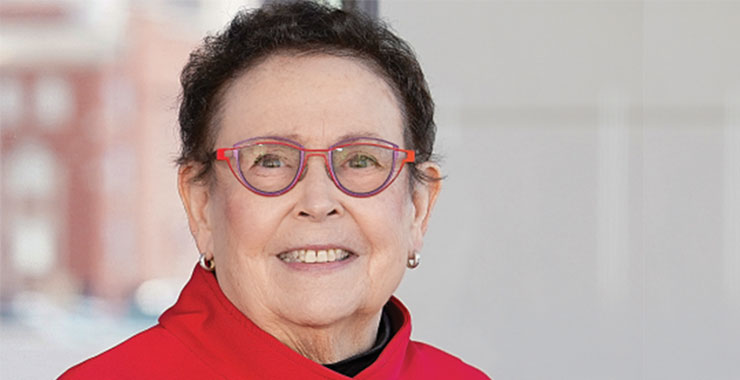
As many of you know, I’m a big fan of win-win and collaborative approaches. But as I observe our nation’s COVID-19 response, our heightened reactions to systemic racism and other forms of inequality, and some of the conflicts within psychology, I am struck by the zero-sum ways that we have learned to tackle challenges and conflicts, where one side’s victory means the other’s loss.
In some ways it reminds me of growing up as an only child in the Philadelphia housing projects. Blood was thicker than anything else, so I often found myself on the edge or outside of many groups. I had to learn to build alliances, intersect with places and people I might not easily fit with and become an astute observer of what was happening and what was not.
I’ve experienced some of that same sense of being on the edge in our field. Despite psychology’s breadth and our mission to generate knowledge and serve others, constituencies are often focused almost exclusively on their own agendas and ways of doing things. Given that, the fact that I don’t fit squarely into any one camp has led some to perceive that I’m not science enough, lesbian enough, Jewish enough, feminist enough or clinical enough. While this tendency has its drawbacks—it can be solitary and seen as lacking depth—it has also allowed me to view things with a broader lens, to learn from people who don’t always fit neatly into existing boxes and to see the potential in celebrating each other’s differences and in working together.
And, I believe that a perspective that comes from being on the edge, whether by choice or not, can be especially useful during these turbulent times. The pandemic and our country’s heightened focus on systemic racism provide psychology with a golden opportunity to step out of our niches and work more fully with those from other disciplines, with collaborative population health models and with communities and people outside our typical comfort zones.
In short, seeing things from the edge and embracing intersectional space at all levels can help free us from historic structures, systems and approaches that have kept us from reaching our full potential. Can we tap these abilities and make psychology a broader, more inclusive discipline with greater impact?