Would you eat a bucket of popcorn without salt and butter? What if it were stale? Sounds unappetizing, but you’re much more likely to chow down without thinking about the taste if the environmental context is just right for popcorn munching, say in a darkened movie theater (Personality and Social Psychology Bulletin, Vol. 37, No. 11, 2011). The critical role of context is just one of the many facets of habitual behavior that Wendy Wood, PhD, a psychologist at the University of Southern California (USC), has illuminated throughout her decades-long career exploring how and why people fall back into old habits, how good patterns help people meet goals and how to change unwanted habits.
Many of the actions people engage in daily—such as shopping, exercising (or not) and communicating with others—are habitual, and thus can be difficult to change. Among Wood’s findings is that a stunning 43% of everyday actions are enacted habitually while people are thinking about something else (Journal of Personality and Social Psychology, Vol. 83, No. 6, 2002).
“We think we do most things because we make decisions or we’re asserting willpower, but instead our research shows that a lot of human behavior is repeated often enough in the same context to form habits,” Wood says.
In addition to investigating the foundations of habit formation in the lab and in real-life situations, Wood and the members of the Wood Habit Lab at USC have advised the National Academy of Sciences on how to encourage health-protective behaviors during the COVID-19 pandemic, worked with the World Bank on a project to change centuries-old bathroom habits to improve public health and counseled Fortune 500 companies on the best practices for changing consumers’ purchasing habits.
“The work in Wendy’s lab sits in a sweet spot between rigorous experimental lab work and more applied field studies that allow you to see how people’s unconscious processes actually play out in the real world in very concrete ways,” says David Neal, PhD, a former postdoctoral researcher in Wood’s lab and one of several Habit Lab members who have gone on to work in the private sector.
Ultimately, the goal of the lab is understanding how to harness the power of repeated actions.
“The cognitive revolution led people to focus on motivation, goals, cognitive practices, how people think,” Wood says. “But we’re finally seeing the limits of thoughts and feelings, and we’re starting, as a discipline, to realize that how people actually act day in, day out is also quite important.”
The role of context
Wood got her start studying habits in an indirect way—she was initially studying attitude change and how to influence people to adopt new views of the world under the supervision of psychologist Alice Eagly, PhD, at the University of Massachusetts Amherst. Wood’s early work with Eagly on attitude change would give rise to her interest in why people’s behavior seems to have a different logic than what people say, believe and feel. “I became fascinated by why changing attitudes doesn’t always lead to a change in behavior,” Wood says. “One answer is habits—how they keep us persisting in old actions—and how people underestimate the role of habits in their daily lives.”
During her time as a faculty member at Texas A&M University, Wood and her former graduate student Judith Ouellette conducted a meta-analysis of research on habits and intentions that was both formative for Wood’s later research and easily her most highly cited article to date. They demonstrated that when a person repeats a behavior often enough, the behavior becomes habitual and their intentions really don’t matter all that much (Psychological Bulletin, Vol. 124, No. 1, 1998). People can intend to do all kinds of things—exercise and eat lots of fruits and vegetables—but in the end, their behavior primarily is cued by performance contexts and therefore has a different causal source than their thoughts, intentions and beliefs. “That study suggested a split between the processes that guide our attitudes and the ones that guide our behaviors,” Wood says.
At Duke University, Wood and her students observed that habits are learned associations between responses and aspects of the context under which the responses are performed, such as the physical location and preceding actions (Journal of Experimental Social Psychology, Vol 48. No. 2, 2012opens in new window). Wood and her team have also noticed that habits are not readily changed by changing minds, as evidenced by failures of information campaigns such as the food pyramid and daily ozone warnings to change people’s habits around eating or spending time outdoors, respectively (Journal of Public Policy & Marketing, Vol. 25, No. 1, 2006). Instead, habits can be broken by controlling the cues that trigger behavior. For example, changes to one’s circumstances (e.g., taking a different route to work) can change context cues and lead to disruption of habits (e.g., stopping for a daily iced coffee fix on the way to the office) (Journal of Personality and Social Psychology, Vol. 88, No. 6, 2005).
Wood and her team have also found that familiar cues in performance contexts direct behavior when people are too distracted or too tired to think of an appropriate response (Journal of Personality and Social Psychology, Vol. 104, No. 6, 2013). “When people are maxed out, they don’t have a lot of willpower left over to make effortful decisions and they resort to acting out of habit, often in response to context cues,” Neal says. This isn’t always a bad thing, Neal points out, because during times of low resources, people turn to both bad (e.g., stress eating) and good (e.g., daily exercise routines) habits.
A critical context cue is location, and the more often a behavior occurs within a certain location, the stronger a habit can become. In one Habit Lab study, led by graduate student Asaf Mazar, Wood and her students interviewed diners at the USC dining commons, and in some conditions the interviewer drank a lot of water, and in other conditions they drank very little. They found that diners who reported regularly drinking water in the commons did so regardless of what the interviewer did. But people who didn’t have a strong habit to drink water in the dining commons were very influenced by how much the interviewer drank. “This observation shows that habits can persist regardless of social influences when you’re in the context that you’ve performed the habit before,” Wood says of the soon-to-be-published study.
Mazar is also exploring ways to disrupt social media use habits by creating friction on the automatic behavior of flipping through a smartphone by moving around the icons to launch certain apps or requiring passwords to use those apps.
Putting research into action
Wood has been working with government agencies, nonprofits and industry to apply her knowledge of habits to help shape people’s behavior, whether it’s to benefit public health or to help companies improve their marketing strategies.
Wood has worked with Procter & Gamble to leverage insight about consumers’ habits to encourage them to use a new product. “One of the challenges in introducing new products is not that people don’t like them,” Wood says. “It’s just that they already have habits for using competing products.”
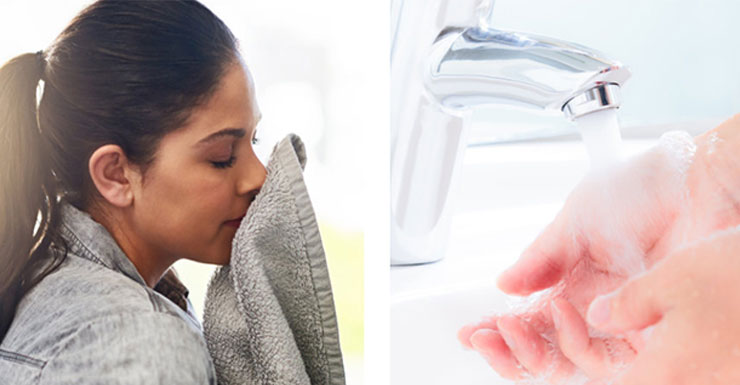
Wood, Neal and their colleagues found that old habits could be overcome if the new products were designed to be integrated into those old habits (Journal of the Academy of Marketing Science, Vol. 45, 2017). One example from their study involved getting participants to incorporate a “fabric refresher” into their laundry routines by using a sniff test to determine if their clothes were smelly, but instead of just re-wearing or washing as was their usual habit, they followed a plan to use the refresher.
“Working on this project was my first exposure to the idea that you could run rigorous academic studies published in collaboration with a company funding the research,” says Neal, who cites the experience as the stepping-stone for launching a psychological science consulting business.
Other members of the Habit Lab have also gone on to work in industry, including at an environmental science firm, a hand sanitizer manufacturer and a digital media player manufacturer. “A number of my students take jobs in industry simply because there’s a great deal of interest in habit; for example, how to get consumers to form habits and what kinds of products are habit-forming,” Wood says.
As another example of applied research, the World Bank asked Wood and Neal to help encourage home toilet and community latrine usage in India, where open defecation is still a major health concern. “The World Bank engineers built the toilets and latrines, but when they left, no one wanted to use them,” Wood says. “They just didn’t have a bathroom habit and they continued to defecate in their fields.”
Wood, Neal and others delivered a white paper (“Nudging and Habit Change for Open Defecation: New Tactics From Behavioral Science,” World Bank, 2016) consisting of a framework of eight principles to support the use of toilets or latrines. The principles highlighted the value of nudges and other tactics that bypass rational thinking, such as the “No Toilet, No Bride” media campaign. “The idea was that having a toilet is almost part of the dowry,” Neal says.
Researchers in the Habit Lab are also working with the Centers for Disease Control and Prevention to increase people’s participation in pre-diabetes control programs. Wood also recently wrote a brief and appeared in a webinar for the National Academies of Science, Engineering, and Medicine, advising communities on how to encourage COVID-19-prevention behaviors such as wearing a mask and practicing social distancing.
Research for the public
After years of being asked for advice—from friends, family, colleagues and strangers—about how to break bad habits or maintain new ones, Wood recently began looking for ways to more widely communicate her decades of research on how habits shape our lives to help people help themselves. The early results were op-eds in The New York Times about keeping New Year’s resolutions and in The Washington Post about the top habit myths, and near-daily tweets that describe recent habit research in terms laypeople can understand and act on.
In addition, Wood has been making the rounds on a variety of behavioral science podcasts— including The Happiness Lab, The Hidden Brain, and Choiceology—to pull back the curtain on habitual behaviors and encourage more researchers to pursue this topic.
She also wrote a popular press book, “Good Habits, Bad Habits: The Science of Making Positive Changes That Stick,” to give readers evidence-based guidance on how to form good habits.
“Everyone is interested in habits in their own lives, but I hadn’t seen habit research getting out there into the public realm,” Wood says. “The science of habit is finally beginning to reveal why we have been unable to change our own behavior and, even better, the discoveries we are making are helping people craft plans that bring lasting change to their lives.”