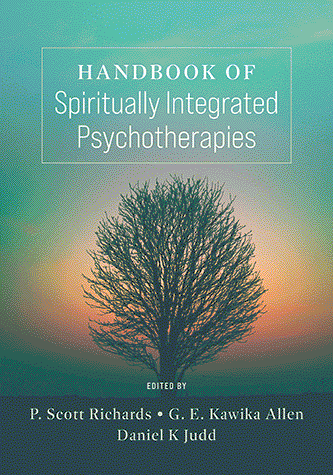
Handbook of Spiritually Integrated Psychotherapies
ISBN: 978-1-4338-3592-6Available formats
Also available from
Spirituality—our relationship with the sacred—is expressed through our beliefs, practices, emotions, values, and relationships. Spirituality can play a vital role in understanding the problems clients face and the solutions they seek in psychotherapy.
This volume brings together top scholars who show how therapists can ethically and competently integrate spiritual perspectives and interventions into their practices and thereby more effectively treat clients from diverse religious, spiritual, racial, and cultural backgrounds.
The chapters present research, clinical guidance, and case studies representing a wide variety of approaches and settings, including community mental health centers, private practice offices, hospitals and medical clinics, universities, and prisons.
Given the important role that spirituality plays in many people’s lives, this book will help practitioners bring attention, sensitivity, and evidence-based knowledge about the spiritual dimension into their psychotherapy practice.
- Chapter 1: Introduction: Bringing Spiritually Integrated Psychotherapies Into the Health Care Mainstream
Part I. General Approaches for Spiritually Integrated Psychotherapy
- Chapter 2: Culturally Informed Therapy: An Intervention that Addresses the Psychological Needs of Religious Individuals of Diverse Identities
- Chapter 3: Providing a Secure Base: Facilitating a Secure Attachment to God in Psychotherapy
- Chapter 4: Relational Spirituality Model in Psychotherapy: Overview and Case Application
- Chapter 5: Postsecular, Spiritually Integrated Gestalt Therapy
- Chapter 6: Shaken to the Core: Understanding and Addressing Spiritual Struggles in Psychotherapy
- Chapter 7: A Spiritually Inclusive Theistic Approach to Psychotherapy in Inpatient, Residential, and Outpatient Settings
- Chapter 8: SPIRIT: Spiritual Psychotherapy for Inpatient, Residential, and Intensive Treatment
- Chapter 9: Religiously Accommodative and Integrative Rational Emotive Behavior Therapy
- Chapter 10: Theoretical Foundations and Clinical Applications of Traditional Islamically Integrated Psychotherapy
- Chapter 11: Gospel-Centered Integrative Framework for Therapy: Foundation, Description, Research Findings, and Application
- Chapter 12: Gestalt Pastoral Care: An Opening to Grace
- Chapter 13: Spiritually Integrated Psychotherapy Among Catholics: A Practice-Based International Investigation
- Chapter 14: Jewish Forms of Spiritually Integrated Psychotherapy in Israel
- Chapter 15: Sufi Psychology: A Heart-Centered Paradigm
- Chapter 16: Christian-Based Spiritually Integrated Psychotherapy for East Asian Canadians and Findings From the CSPEARIT Study
- Chapter 17: A Polynesian Perspective for Navigating the Spiritual Connections in Psychotherapy Practice
Part III. Spiritually Integrated Psychotherapy for Specific Patient Populations
- Chapter 18: Spiritually Integrated Couple Therapy
- Chapter 19: REACH Forgiveness in Couple, Group, and Individual Psychotherapy
- Chapter 20: Search for Meaning: A Spiritually Integrated Approach for Treating Veterans with Posttraumatic Stress Disorder
- Chapter 21: Spiritually Focused, Multiculturally Oriented Psychotherapy in the Criminal Justice Detention System
Part IV. Mainstreaming Spiritually Integrated Psychotherapies
- Chapter 22: Training Opportunities and Resources for Spiritually Integrated Psychotherapists and Researchers
P. Scott Richards is the president/CEO of Bridges Psychotherapy Solutions, LLC. He is a retired professor of counseling psychology at Brigham Young University.
He is past president and fellow of the Psychology of Religion and Spirituality division of APA and a fellow of the Society for the Advancement of Psychotherapy of APA.
He is the author of six APA books about spirituality and psychotherapy. He was the principal investigator of a $3.57 million-dollar grant from the John Templeton Foundation about spiritual integrated psychotherapies, which was completed in 2020.
G. E. Kawika Allen is an assistant professor of counseling psychology at Brigham Young University.
He has published over 20 peer-reviewed research articles about Polynesian psychology and culture, psychology of religion, and spiritual aspects of diversity.
He is secretary of Division 45 of APA. He was a project co-director of the grant from the John Templeton Foundation.
Daniel K Judd is a retired professor and former dean of religious education at Brigham Young University. Dr. Judd has a doctorate degree in counseling psychology.
He is a researcher, educator, psychologist, and pastoral professional. He was project codirector of the grant from the John Templeton Foundation.
He is the author of several books and numerous journal articles about religion and mental health, including his recent book, Let's Talk About Religion and Mental Health(Deseret Book, 2021).
Helpful insights, and case study examples for those looking to integrate spiritual perspectives into their counseling in a competent and ethical way...Recommended.
—CHOICE, American Library Association (ALA)
Many therapists express a desire to move into a spiritually integrated treatment with clients but are unsure of the new territory, both in conceptualization and technique. This handbook presents a much-awaited clear, actionable guide for therapists. Cases and treatment approaches are drawn from clinical science as much as the wise experience of long-time spiritually integrated therapists. Increasingly, patients in deep suffering are looking to engage spiritually with their therapist. It’s time for us to embrace this expanded opportunity.
—Lisa Miller, PhD, Professor, Columbia University, New York, NY, and author of The Awakened Brain: The New Science of Spirituality and Our Quest for an Inspired Life
Authoritative, evidence-based, and a proven learning resource: What more could you ask for? I have no doubt that Handbook of Spiritually Integrated Psychotherapies will be the essential resource for educating the current and future generations of mental health professionals in integrating spiritual and religious issues in mental health practice.
—Len Sperry, MD, PhD, Professor, Florida Atlantic University, Boca Raton, FL, and author of Spirituality in Clinical Practice: Theory and Practice of Spiritually Oriented Psychotherapy, Second Edition
In Handbook of Spiritually Integrated Psychotherapies, we get a state-of-the-art, comprehensive, engaging, and scholarly yet practical book on the important area of spiritually integrated psychotherapies. It highlights multiple faith traditions, patient populations, and techniques, and it is multicultural in focus. Most of the contributors are superstars in this area, so the reader is learning from those who have shaped the field as well. The book should be on the desk of every mental health professional who is engaged with spiritually and religiously informed psychotherapies and will surely become a classic in the field. I’m sure that my copy will be well-worn rather soon.
—Thomas G. Plante, PhD, ABPP, Augustin Cardinal Bea, S.J. University Professor, Santa Clara University, Santa Clara, CA, and Adjunct Clinical Professor, Department of Psychiatry & Behavioral Sciences at Stanford University School of Medicine, Palo Alto, CA