skip to main content

Unique stressors American Indians are facing: 4 questions for Vicky Lomay

The Navajo community psychologist describes the unique stressors that American Indians are facing, how their resilience is playing into their response, and how psychologists can help

APA Style leaf logo Cite This Article in APA Style
Abramson, A. (2020, November 1). American Indians are facing unique stressors: 4 questions for Vicky Lomay. Monitor on Psychology, 51(8). https://www.apa.org/monitor/2020/11/conversation-lomay

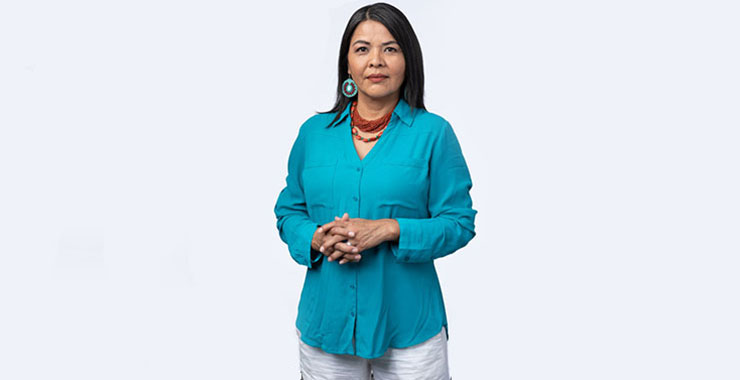
Dr. Lomay

As Covid-19 ravages the country, marginalized populations face another kind of distress: systemic barriers to their health and well-being. Particularly strained are American Indians, who have had to navigate the traumatic impact of their history being displaced from their land alongside lack of access to critical resources such as running water necessary to keep people safe and healthy during the pandemic.

Clinical psychologist Vicky Lomay, PhD, an enrolled member of the Navajo Nation, has spent 25 years working with Southwest American Indian populations and says the pandemic has increased stressors American Indians experience in their everyday lives.

“Tribal communities have experienced trauma and disparities for centuries, and those things are only magnified during the Covid-19 pandemic,” Lomay says. “Now, the resources these individuals need for well-being are even less accessible, which can cause significant distress.”

The Monitor spoke to Lomay about the Navajo Nation and what type of support tribal communities need most.


How has the COVID-19 pandemic intensified everyday stressors among tribal communities?

Many tribal communities are in rural, out-of-the-way areas. Some people have to drive 50 or 60 miles to the nearest grocery store, which was hard even before Covid-19. Now, people must drive that far with no guarantee the store will have the essential items they need. For some elderly folks who live on a fixed income, there’s no flexibility of being able to go to the store when everything is well-stocked. By the time they get there, the supplies they need may be gone.

Access to health care is also an issue on many reservations. Some of the smaller, satellite clinics people use to manage routine health issues are now closed, so it’s harder to get care for minor problems like colds or follow up with a medical provider about chronic illnesses. People are forced to go to urgent care or the emergency room, which comes with its own risks.

Unlike in urban communities, there’s not always access to telehealth due to low internet and phone service coverage.

Financial stressors have also been prevalent. In addition to American Indians being laid off or furloughed, many entrepreneurs can’t bring in a steady income. For example, in my region, many people depend on revenue from tourists at tribal parks, which are now closed. In other communities, people who sell crafts or artwork at markets have also lost their income.

Community plays a significant role in well-being. How has the isolation of Covid-19 impacted tribal communities?

Tribal ceremonies, some of which take place only during certain seasons, are a very important part of American Indians’ healing and well-being. Gathering at ceremonies is a time for people to come together, often with people they haven’t seen in a long time, to support one another and strengthen their family bonds. A lot of these ceremonies offer healing that alleviates stressors people might be going through.

For many tribes, certain ceremonies have been done without interruption for as long as we can remember. Now we can’t do them, or we can only do them in a very limited way—so in a time when people are struggling emotionally, mentally, or spiritually, they aren’t able to access this resource that would have been very helpful for coping. The isolation also means it’s harder to involve children and younger generations in continuing tribal practices.

What role has Native resilience played in American Indians’ response to the pandemic?

Tribal communities have been adapting for centuries, and often in creative ways. During the pandemic, many communities have found different ways to support one another. For example, there are grassroots efforts to get supplies like fresh water and food to families who wouldn’t otherwise be able to get them.

Many tribal members are also using this time to strengthen their culture. Since they can’t gather, some tribal members are also creatively using social media to share information. I have seen people sharing tribal dances or stories, teaching tribal languages, even demonstrating how to prepare traditional dishes.

And now that kids are home from school, parents are using this time to teach the tribal language and traditional practices. Some families finally have time to return to self-sustaining practices like farming, foraging, fishing, and hunting. Others are quarantining with multiple generations, so younger kids can learn traditional practices from grandparents or other relatives. It’s a time to strengthen those family bonds and reconnect with the culture.

What additional support can psychologists offer right now?

Tribal communities are different across the United States. What might be helpful here in Arizona may be different than Minnesota or Florida. But in general, psychologists, who are already at the forefront of antiracist work, can be supportive by being cognizant of our identity. Tribal communities have a colonial history, and no matter where you work in the United States, someone was displaced to make way for settlers.

I encourage psychologists to research whose land they occupy and challenge their own stereotypes and assumptions about American Indians. We’re often stuck in the “other” category. It’s important to support Indian communities without continuing that colonial history—without imposing beliefs about how psychology should be, especially in communities with their own healing methods.

Another thing to remember is that after this pandemic is over, tribal communities will still be here; most tribal communities will continue to struggle with the same issues they did before Covid-19—systemic issues that can’t be solved overnight. How will your donations and offers to help continue five years down the road? How will your support impact communities after the pandemic has been managed? No matter how you help, it’s important to examine your intentions, and think about the impact in the long term.

Recommended Reading

You may also like