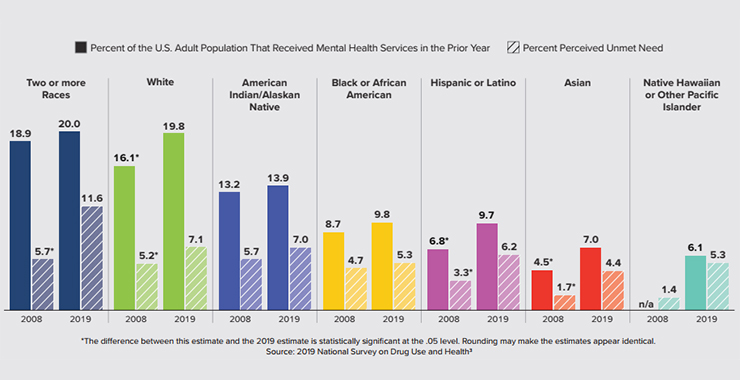
From 2008 through 2019, the percentage of U.S. adults who received mental health services in the prior year trended upward for all racial and ethnic groups.1 Despite upward trends in the receipt of mental health services, the percentage of adults with perceived unmet need for mental health services also trended upward across all racial and ethnic groups.2
- The greatest increases in receipt of care were among White (from 16.1% to 19.8%), Hispanic and Latino (6.8% to 9.7%), and Asian populations (4.5% to 7.0%).
- The greatest increase in perceived unmet need was among individuals of two or more races (5.9%) followed by Native Hawaiian and Other Pacific Islander (3.9%), Hispanic or Latino (2.9%), and Asian populations (2.7%).
- The percentage of Asian populations receiving health services is nearly the lowest of all of the racial and ethnic groups, and yet this group also reports the lowest perceived unmet need for these services.
- In 2019, the highest percentage of adults with perceived unmet need was among those who identify as being of two or more races (11.6%), followed by White (7.1%), American Indian and Alaskan Native (7.0%), and Hispanic or Latino populations (6.2%).
For more information, visit APA Center for Workforce Studies or contact CWS.