skip to main content
Feature

Raising anti-racist children

Psychologists are studying the processes by which young children learn about race—and how to prevent prejudice from taking root

APA Style leaf logo Cite This Article in APA Style
Weir, K. (2023, May 18). Raising anti-racist children. Monitor on Psychology, 52(4). https://www.apa.org/monitor/2021/06/anti-racist-children

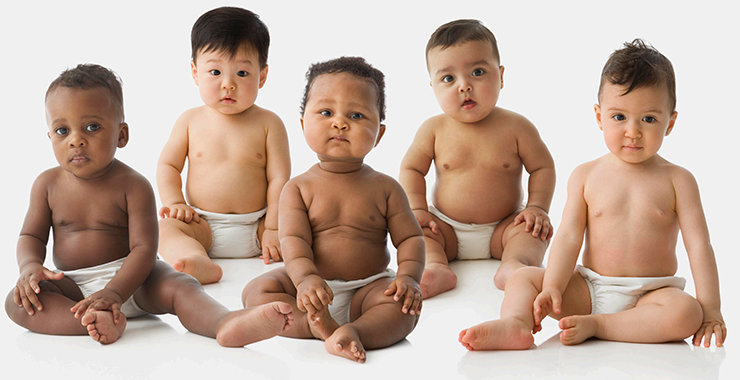
babies with different skin tones

Racism occurs across a spectrum. It lives within individuals and between them, within institutions and across society. And at every level, children are affected by discriminatory beliefs and practices, said Farzana Saleem, PhD, an assistant professor in the Graduate School of Education at Stanford University. “Racism is learned early on in development, and children receive many messages about race and racism from a young age.”

Kids pick up on what their parents and teachers say (and don’t say), who and what they see on TV, what their dolls look like, and how other people are treated in their schools and neighborhoods. “Humans are sponges for their social environment,” said Evan Apfelbaum, PhD, an associate professor of management and organizations at the Questrom School of Business at Boston University. Over decades, research has explored how children come to understand race—and how they learn racism. Yet the science is a long way from prescribing a formula for anti-racism. “There’s a whole host of factors that can affect kids’ holistic understanding of race—and so much research that needs to be done,” he said.

Psychologists are among those working to fill the knowledge gap, studying the processes and influences that lead children to develop ideas about race—and how to fight back against the biased messaging they might learn so early. Dismantling White supremacy and other forms of racism won’t be easy. But children can be taught to do better than their parents’ generations did. “We learn racism very easily through our society,” said Sarah Gaither, PhD, an assistant professor of psychology and neuroscience at Duke University. “But we are malleable. No one is born racist.”

Race in early childhood

When do children understand race? It’s not an easy question, in part because “race” isn’t the rigid construct it’s often made out to be. “It’s well established that there’s no biological basis for race,” said Diane Hughes, PhD, a professor of applied psychology at New York University. “Race has meaning because we give it meaning—especially in the U.S., where our history is largely structured to uphold these ‘racial differences,’” she said. “We assume that there are unobservable underlying personality traits that correlate to certain physical characteristics.”

Even infants have the perceptual abilities to see those physical differences and to start responding to them. International research led by psychologists at the University of Toronto showed that between 6 and 12 months of age, babies begin to show a preference for members of their own racial groups. At 7 months, babies in uncertain situations are more likely to follow the gaze of a member of their own race (Xiao, N. G., et al., Child Development, Vol. 89, No. 3, 2018opens in new window). And by 9 months, they associate faces from their own race with happy music and those from other racial groups with sad music (Xiao, N. G., et al., Developmental Science, Vol. 21, No. 2, 2018opens in new window). The researchers suggest these patterns may develop as a result of lack of exposure to other-race individuals during infancy—and that such implicit associations could pave the way to the development of other racial biases in early childhood and beyond.

Within the first years of life, children are bombarded with messages from their environment that shape their beliefs and judgments about other people. It doesn’t take long for such messages to stick. By preschool, children begin showing both implicit and explicit bias toward members of other races. Kristin Shutts, PhD, at the University of Wisconsin–Madison, found that at age 3, White children are equally likely to befriend Black or White children. But by age 4 or 5, White children are more likely to choose other White kids as friends (Child Development Perspectives, Vol. 9, No. 4, 2015opens in new window).

Some evidence suggests that bias might be related to the information young children have already gleaned about social status. In a series of studies, Yarrow Dunham, EdD, at Yale University, and colleagues found that by age 3 or 4, White American children were more likely to associate both Black and Asian faces with anger, while rating White faces as having more positive emotions. Black American children did not show this same ingroup preference. This suggests that ingroup bias isn’t implicit. Rather, from a very young age, children are picking up on the status hierarchy of the culture around them (Psychological Science, Vol. 24, No. 6, 2013opens in new window).

By age 5 or 6, an ingroup preference—and outgroup bias—is well established, Hughes said. And those early beliefs are reinforced by what children see around them. “When they see that Black boys are the ones who get sent to the principal’s office or that Black children tend to struggle more when reading aloud, they may attribute certain meanings to different racial groups,” Hughes said. “Kids are operating in this universe where they’re drawing a lot of conclusions about what they see.”

By middle childhood, children have a more sophisticated understanding not only of race but also of racism. Though the biases they learned in early childhood are still present, older kids begin to understand that race may be a taboo topic. “It’s around ages 9 to 11 when kids seem to really start understanding the social guidelines about what is and isn’t considered culturally sensitive and what constitutes discrimination,” said Apfelbaum. He, Kristin Pauker, PhD, an associate professor of psychology at the University of Hawai’i Mānoa, and colleagues showed this with an experiment modeled on the game Guess Who?, where kids ask yes or no questions to guess the person in an array of faces that their opponent has picked. In this version, about half of the faces were Black and half were White, so asking about race early on was an effective strategy to narrow down the field. But the researchers found that while 8- and 9-year-olds asked frequently about race, a majority of 10- and 11-year-olds avoided the question (Developmental Psychology, Vol. 44, No. 5, 2008opens in new window).

“Older kids begin to understand the race question as something more than just a way to win the game. They’re more concerned with how they’re viewed with respect to social conventions and cultural sensitivity,” Apfelbaum said. “It shows the age at which behavior starts to shift. And that suggests it’s one important time to think about interventions by educators and parents.”

Racial-ethnic socialization

As children grow and learn, messages about race come from all corners: news media and entertainment, teachers and peers, community interactions, and, of course, families. All children, including White children, learn about race through a process known as racial-ethnic socialization, and scholars say that addressing socialization more purposefully will be necessary for dismantling racism.

But for families of color, racial-ethnic socialization also serves the critical purpose of preparing children for the racism and discrimination they may encounter. “Racial socialization in non-White families occurs in the context of structural inequality and oppression. It’s proactive, but it also has protective goals,” Hughes said.

Researchers have most commonly studied four aspects of racial-ethnic socialization, based on a framework developed by Hughes and colleagues: 1) cultural socialization (messages about racial pride and heritage); 2) preparation for bias (discussions of discrimination and how to cope); 3) promotion of mistrust (teaching children to be wary of other racial groups or environments); and 4) egalitarianism (avoiding discussions of race and valuing individual qualities over racial group membership) (Developmental Psychology, Vol. 42, No. 5, 2006opens in new window). “Based on interviews and surveys with hundreds of parents over the course of more than 25 years, we find much of what parents and adolescents discuss in family conversations about race involve these four aspects,” Hughes said.

Of those four categories, cultural socialization has been shown to be most consistently associated with positive outcomes, according to a review of 259 studies by Adriana Umaña‐Taylor, PhD, a professor at the Harvard Graduate School of Education (Journal of Marriage and Family, Vol. 82, No. 1, 2020opens in new window). Research has shown cultural socialization linked to positive outcomes in children from a variety of backgrounds, including Black, Asian American, and Latinx, Umaña‐Taylor said. “There’s considerable evidence that cultural socialization is linked positively with mental health and academic outcomes.”

Preparation for bias can also be helpful, Umaña‐Taylor said, “likely because it prepares kids with coping strategies for the experiences of marginalization they might encounter.” But promotion of mistrust, while similar, is sometimes linked with youth maladjustment, she said. “That may be because while both approaches recognize the societal structures of racism and discrimination, promotion of mistrust isn’t accompanied by coping strategies.”

Families of all racial and ethnic backgrounds draw on these strategies when talking about race with their children, but some groups are more likely to choose one approach over another. “The racial-ethnic socialization strategy of egalitarianism—the idea that we’re all one big happy human race—is used most often by White families,” said Riana Elyse Anderson, PhD, an assistant professor of health behavior and health education at the University of Michigan. Black families, on the other hand, are more likely to blend messages of racial heritage and pride with preparation for bias, she added. And those messages can balance each other out in helpful ways. “By and large, if you combine pride messaging and preparation for bias, you see better psychological and academic outcomes in children,” she said. “Teaching pride without warning can cause children to run into challenges they’re unprepared for. But focusing only on bias and discrimination can drive anxiety or depression.”

Families of color are often well versed in having explicit conversations about race, Anderson said. Still, research points toward ways to make the discussion more productive. In a paper still in press, Anderson found that greater racial-ethnic socialization competency among Black parents was associated with better psychosocial outcomes in their adolescents. To improve competency, she and psychologist Howard C. Stevenson, PhD, an expert on racial stress and trauma at the University of Pennsylvania, developed the Engaging, Managing, and Bonding through Race (EMBRace) intervention. The five-session intervention blends trauma-focused cognitive behavioral therapy with racial socialization messages to help parents address their racial stress and trauma so they can better approach racial socialization with their children (Family Process, Vol. 58, No. 1, 2019opens in new window). “We want to address parents first, helping them unpack some of this before we help them think about what they might say or do differently as a parent,” Anderson said.

The problem with color blindness

White families, meanwhile, have the luxury of approaching discussions of race from their privileged position in U.S. society. “On average, White parents avoid talking about race with their kids at all,” Hughes said. “They don’t have to protect their children from oppression and racism.”

If they do bring up race, they often put off the conversation until kids are older. With Skidmore College psychologists Jessica Sullivan, PhD, and Leigh Wilton, PhD, Apfelbaum uncovered one reason why: Parents mistakenly don’t think their kids are ready. The researchers surveyed U.S. adults and found participants estimated that children develop the capacity to process and understand race at around age 5, though research suggests they’re capable of understanding the concept as toddlers. The belief that children weren’t developmentally ready was the strongest predictor of delaying discussions of race, the researchers found (Journal of Experimental Psychology: General, Vol. 150, No. 2, 2021opens in new window). “There are potentially years during which kids are starting to think about race and coming to their own impressions of what it means before parents broach the topic,” Apfelbaum said. “It’s a missed opportunity for parents to help frame that discussion in constructive ways.”

Children are exposed to race and systemic racism from an early age, Hughes said, and avoiding or delaying the conversation leaves kids to fill in the blanks on their own. “Kids see structural inequality all around them—in the media, in their neighborhoods, in school,” she said. Even when schools are integrated, kids see de facto segregation. They see kids of the same race sitting together at lunch or joining the same clubs and activities. “There are all of these things causing kids to attach meaning to race, and nobody is correcting their inferences,” Hughes said. “If they’re told everyone has equal opportunities but see these differences, they draw their own conclusions and attach deeper meaning to external appearance.”

Promoting a more egalitarian or “color-blind” view can have negative consequences for interracial interactions. Hughes has found that when parents teach color-blind attitudes, their children are less likely to report friendships with children of other races. “My guess is that teaching egalitarianism allows kids to maintain a sense of privilege. Kids might think if race doesn’t matter, they’d rather be with the group that has better outcomes,” she said.

Color blindness can also make people less sensitive to recognizing discrimination. Apfelbaum, Pauker, and colleagues introduced elementary school children to stories that taught either a color-blind mindset or a mindset that emphasized valuing diversity (Psychological Science, Vol. 21, No. 11, 2010opens in new window). “Children exposed to the value-diversity message were more likely to recognize discrimination when it occurred,” Pauker said. “And they were more likely to describe what they saw in a way that made teachers more likely to intervene.”

Although children begin learning about race from very young ages at home, schools are critical settings for teaching about race and discrimination. “It is clear that schools, like families, convey messages across multiple methods of expression. Images displayed in the classroom, curriculum choices, policies, and practices are just a few examples of how racial-ethnic socialization is transmitted within the school context,” said Saleem.

“Kids look to teachers to understand how to navigate racial norms and what’s appropriate to say and do,” Apfelbaum added. And what teachers don’t say is often as important as what they do say. Pauker and Elizabeth Brey, PhD, of the University of Hawai’i Mānoa, explored the role of teachers’ nonverbal behavior in a study in which they assigned children ages 5 to 8 to either orange or green groups. (Because students already have preconceived ideas about race, the researchers invented these groups as a proxy for social categories.) After observing how other kids from each group were treated by teachers, children answered questions about new students from each group. When asked who was smarter, they picked students who had been in the group that received positive nonverbal feedback from teachers, such as smiles and nods (Journal of Experimental Child Psychology, Vol. 188, 2019opens in new window). “When children have conflicting sources of information, they often rely on nonverbal behavior to provide them with information,” Pauker said. “They form stereotypes based on how the teacher is interacting with other students.”

Yet educators can certainly have positive impacts as well. “When the school climate is one where different cultures and backgrounds are celebrated and valued, students are better adjusted,” said Umaña‐Taylor. She developed an eight-session, teacher-led intervention called the Identity Project that provides adolescents with tools and strategies with which to consider their racial and ethnic backgrounds as they explore concepts of their own identity. The intervention was linked to improved psychosocial functioning one year later (Journal of Youth and Adolescence, Vol. 47, 2018opens in new window). “The intervention promotes positive identity development for all students, including White students and students of color,” she said. “That has significant implications for their own adjustment, and for society as a whole, since people who have a clearer sense of themselves are more willing to engage with those who are different from them.”


Teaching the value of diversity

For parents, teachers, and other adults who want to help children understand race and racism, awareness is a good start. White parents who are more aware of racial bias are more likely to discuss race with their children (Perry, S. P., et al., Journal of Social Issues, Vol. 75, No. 4, 2019opens in new window). But awareness is a first small step on a long journey.

Hughes runs community workshops to help parents learn to talk about race with their children, and she said that while most attendees are well intentioned, they’re often anxious about how and when to start the conversation. Her advice: Just start. “The fear of talking about race makes parents avoid talking about it at all. But you can’t just react to situations as they arise or wait for your kids to ask questions. You need to be intentional about what you want your kids to know about race,” she said. “If you can’t find exactly the right words, don’t worry. Childhood happens over a long period, and you get to keep practicing this conversation.”

Meaningful intergroup contact is also important for teaching acceptance, Gaither said. Yet it’s not enough to simply sit next to a Black man on a bus or chat with a Latinx grocery clerk. “It has to be meaningful, long-term contact. Being exposed to adults and kids from different backgrounds is one of the best tools psychology has to offer for developing positive attitudes about other groups,” she said.

In many communities, that’s challenging. “It can be effortful for parents to find opportunities for kids to see people who look different than they do,” Gaither said. Choosing diverse communities and schools, interacting with babysitters or teachers from other groups, even pen pal programs that connect children from different backgrounds can all be ways to start breaking down barriers, she added. Parents would also do well to look critically at their own interactions. “If you’re telling children you value diversity but you have no diversity in your friendships, kids pick up on that conflicting information,” Pauker said.

Teachers, too, should be having conversations about race with even very young students, Hughes said. But most teachers are White, and there’s a need for more tools to help them include race and diversity in their curricula. “Teachers need practice, and they need training on talking about racial issues in their classrooms,” she said.

Efforts are being made to meet that need. The Southern Poverty Law Center’s Learning for Justice project (formerly Teaching Tolerance) is in its 30th year working to eradicate hate by fighting intolerance in schools. The project, which provides free resources and guidance to help educators work against racial injustice and encourage student and community action, has plans to expand its reach to caregivers and other communities in 2021. Many other researchers are also tackling the problem. Among them is Umaña‐Taylor, whose team developed a teacher professional development program, Equipping Educators for Equity Through Ethnic-Racial Identity, that prepares educators to have discussions about race, ethnicity, and identity with their students.

“Professional development programs such as these will be essential to create equitable and just schools where all student can thrive,” she said.

Prejudice is malleable

Although it’s important to start teaching anti-bias messages as early as possible, it’s also valuable for children to understand that racist beliefs don’t have to be permanent. In a not-yet-published study, Pauker, Apfelbaum, and colleagues applied a growth mindset approach to the way children think about prejudice. “Just because you or someone you know said something prejudiced doesn’t mean you’ll be that way forever,” Apfelbaum said. “Our preliminary research suggests that seeing prejudice as something that can change gets kids to stay interested in interacting across racial lines because it lowers the stakes that any mistakes they make will be a blemish that stays there forever.”

While there’s been a recent uptick in parents and educators wanting to address racism, it’s unlikely there will ever be a universal curriculum for teaching children about race, Gaither said. “There’s no one-size-fits-all model. A lot of people want to create change, but we need data about what changes will work for a particular group or school.” Rushing to make changes that aren’t yet proven could end up doing more harm than good, which is why psychological research is so critical, she added.

Among the many outstanding questions is how best to help multiracial children process their beliefs and experiences with race and identity. A review of the literature on racial-ethnic socialization in multiracial families found most parents do not discuss multiracial identity with their children (Atkin, A. L., & Yoo, H. C., Developmental Review, Vol. 53, 2019opens in new window). Those conversations probably aren’t being addressed sufficiently at school, either. “They are the fastest-growing youth population in the U.S., yet we don’t exactly know how they fit into these curricula and interventions,” Gaither said.

Even as the research continues, adults must keep up the hard work of confronting their own biases and teaching their children to do the same, Anderson said. “People often have the intent, but they don’t sustain it. The books everyone purchased last summer [after George Floyd’s murder] are now dusty,” she said. To raise anti-racist children, parents, caregivers, teachers—and psychologists—have to work to keep the effort top of mind. “It starts with us as adults,” Anderson said. “As professional psychologists, we need to be consistently interrogating ourselves and those around us. There’s no way we’ll be competent providers if we haven’t first talked with ourselves.”

Recommended Reading

You may also like