The COVID-19 pandemic changed us inside and out. For many people, those outward changes weren’t especially welcome.
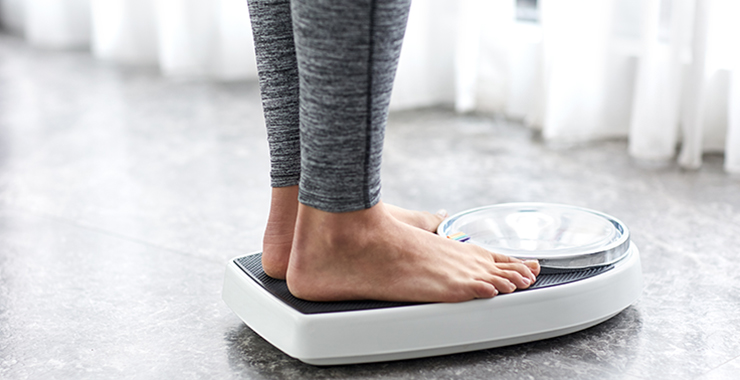
An APA Stress in America survey conducted in late February 2021 found 42% of U.S. adults reported undesired weight gain since the start of the pandemic, with an average gain of 29 pounds.
Weight changes have come with good reason, as people’s diets, activity levels, sleep habits, and daily routines have been turned upside down by the pandemic, said David Sarwer, PhD, director of the Center for Obesity Research and Education at the College of Public Health at Temple University. “The stress, isolation, and challenges of making life work over the past year have necessitated changes in our behavior,” he said. “For those of us in the obesity field, the weight changes aren’t surprising—but they are concerning.”
Obesity and obesity-related diseases were already a significant public health problem even before COVID-19 wreaked havoc on our routines. Amidst the pandemic, the concerns have only grown. “This is something that mental health professionals can and should address. The size and scope of this public health problem almost demands it,” Sarwer said.
Pandemic weight gain
The pandemic hasn’t affected all Americans equally. People from marginalized groups were more likely to become infected and die from COVID-19 and were also hardest hit by the economic difficulties it wrought. Obesity was already more prevalent in lower-income populations and in non-White groups such as Black, Hispanic, and Indigenous populations. Those groups have also seen greater weight gain during the past year, said Amy Walters, PhD, a clinical health psychologist and the director of Behavioral Health Services for St. Luke’s Humphreys Diabetes Center. “Those disparities have been amplified by the pandemic.”
People in marginalized groups are more likely to live in “food deserts” with limited access to fresh foods (Walker, R. E., et al., Health & Placeopens in new window, Vol. 16, No. 5, 2010). That lack of access to healthy food was even more challenging during lockdown orders. Compared with privileged groups, at-risk populations are less likely to have access to safe outdoor green space—and research has shown that the average body mass index of a community is lower in places with greater access to parks and public recreation lands (Ghimire, R., et al., Ecological Economicsopens in new window, Vol. 136, No. 1, 2017). Underserved groups are also more likely to work as essential workers. That puts them at greater risk of contracting COVID, but also of experiencing heightened stress as they juggled working outside the home, staying safe, and caring for family members with schools and daycares closed.
Children, too, have gained weight during the pandemic. In an analysis of more than 500,000 visits to the Children’s Hospital of Philadelphia Care Network in 2019 and 2020, researchers found the prevalence of pediatric obesity increased from 13.7% pre-pandemic to 15.4% during the pandemic. The increase was more pronounced among Hispanic, Black, lower-income, or publicly insured children. Prior to the pandemic, obesity rates were falling in children from more affluent households but increasing in other groups. The pandemic appeared to widen that disparity, the researchers found (Jenssen, B. P., et al., Pediatricsopens in new window, Vol. 147, No. 5, 2021).
Kids have encountered many of the same factors that caused their parents to gain weight, including a lot of time sitting in front of screens, poor sleep, and high stress that can boost hunger and cravings for snacks and comfort foods, said Stacy Ogbeide, PsyD, ABPP, a clinical health psychologist and board-certified specialist in obesity and weight management at the University of Texas Health Science Center who specializes in obesity and weight management in primary care. “The biggest factor has been the impact of virtual schooling,” she said. “Working with children at risk of overweight and obesity, we recommend two hours or less of screen time per day. It’s hard to deal with that number when they’re on a screen for 7 or 8 hours doing virtual school.”
The toll of weight stigma
Weight gain is about so much more than a number on the scale. “There’s a tremendous amount of guilt and shame,” Walters said. “As psychologists, we should help patients realize that weight gain is a normal reaction to an abnormal circumstance. So many of our coping strategies have been unavailable to us this year. It’s not a character flaw.”
It can help to remind people how many factors are stacked against them when it comes to maintaining one’s weight, Sarwer said. “People are so quick to personalize their weight and see themselves as being at fault. In fact, countless physical and environmental factors contribute to weight gain,” he said. “If you think about the way we interact with food in the U.S., where there is such an availability of high-calorie foods and beverages at relatively low cost, it’s easier to gain weight than it is to maintain or lose it.”
Still, weight stigma runs deep. “There are so many memes and jokes about COVID weight gain, and that shows a real insensitivity to the eating behavior challenges people are dealing with. It also puts pressure on people to emerge from the pandemic with an ideal body shape,” said Rebecca Puhl, PhD, a clinical psychologist at the Rudd Center for Food Policy & Obesity. During the pandemic, she and her colleagues followed up with 584 young adults who had participated in a longitudinal study of eating and activity behaviors from 2010 to 2018. They found those who had reported being stigmatized for their weight pre-pandemic experienced more stress, depressive symptoms, binge eating, and eating to cope with stress during the pandemic. That was true for males and females, regardless of their body weight (Annals of Behavioral Medicineopens in new window, Vol. 54, No. 10, 2020).
“Even before the pandemic, we’ve known that weight stigma contributes to depression and anxiety, emotional distress, and disordered eating,” Puhl said. “Weight stigma is an added stressor during an already stressful time.”
Weight stigma also has important implications for public health. People at higher weights are at increased risk of complications from COVID-19. Yet those who have experienced weight stigma in health care settings may be more likely to avoid or delay seeking care, even if they’re experiencing symptoms. “People with obesity face more weight stigma in the context of health care, and we don’t yet know how that might impact things like vaccination rates or health care outcomes,” Puhl said.
For people seeking help with overweight and obesity, addressing stigma and working through shame and self-blame is an important piece of the puzzle. “Patients often feel very alone in this,” Puhl said. “It’s important to normalize pandemic weight changes as a legitimate experience, help people cope with the distress of stigma, and work with them to lessen self-blame and self-recrimination.”
After the year we’ve had, we should all be giving ourselves a break, Ogbeide added. “Though the pandemic has hit some of us harder than others, we’ve all been impacted, and it’s important to give ourselves and each other some grace. Self-compassion is the No. 1 thing we should be focusing on now.”
Behavior change for weight loss
Self-compassion is step one. But for those who want to lose weight, psychologists can also help people adopt healthier habits. Obesity experts draw on behavior change research and share where to begin.
- Start with modest goals. “It’s important to start with sustainable and realistic targets for change,” Sarwer said. “If you have a habit of eating ice cream three nights a week, can you reduce that to once a week? Can you eliminate some of the cream and sugar from your daily coffee?” When people make small changes, they’re more likely to succeed. Those successes give people the confidence to set more goals. What’s more, small changes themselves can have a positive effect on health, Sarwer added. “A 5% weight loss—a 200-pound person losing 10 pounds, for instance—can be clinically significant in terms of improving blood pressure, blood sugar, and other weight-related comorbidities.”
- Establish new routines. Disruptions to routines during the pandemic contributed to weight gain. Creating new schedules is important for establishing healthy habits, Walters said. “Routines can help people get back to the healthy basics,” she added, in terms of eating habits, physical activity, sleep, and self-care.
- Create an environment for success. In a home full of junk food, snacks are nearly impossible to resist. Walters suggests removing processed foods and sweets from the kitchen and replacing them with healthy snacks that are prepped and ready to grab when hunger strikes. “Changing your home environment is the low-hanging fruit. You can make the healthy choice the easy choice,” she said.
- Track yourself. “The more people self-monitor their behaviors, the more weight they lose over time,” said Sarwer. That monitoring can be in the form of a handwritten paper log or digital apps to help track food intake and physical activity. Frequent self-monitoring is associated both with higher rates of weight loss during behavioral treatment for obesity, and with maintaining the weight loss over time (Laitner, M. H., et al., Eating Behaviorsopens in new window, Vol. 21, No. 1, 2016).
- Emphasize health, not weight. “Focusing on nutrition, activity, sleep, and screen time can take some of the stigma away from talking about weight or body mass index,” Puhl said. And making healthier choices in those areas can benefit anyone, no matter their shape or weight. “We want to improve health regardless of the number on the scale.”
- Make it a family affair. APA’s Clinical Practice Guideline for the Treatment of Obesity and Overweight in Children and Adolescents recommends family-based multicomponent behavioral interventions. “Everyone in the family can work on goals like increasing the amount of produce they eat, being more active, decreasing sugary drinks, and having less screen time,” Walters said. When working with children, it’s also important to make sure they’re involved in the discussion, Ogbeide added. “As providers, we have to make sure the child or teen is involved in the choices that are discussed. Just because they’re 6 or 7 doesn’t mean they don’t have a voice in their care.”
How psychologists can help with weight management
Given the scope of overweight and obesity in the United States—especially post-pandemic—weight loss, weight stigma, and body dissatisfaction are topics that are likely to come up for most clinicians, even those who don’t specialize in weight management. “It may not be in your typical repertoire, but patients may be looking to you for guidance,” Sarwer said. “There is a lot of noise out there for consumers, all sorts of weight-loss books, diet plans, and supplements that don’t have evidence to support them. Psychologists can help patients make changes that are evidence-based.”
While psychologists have much to offer in terms of behavior change, however, it’s important to come to the subject prepared. That should start with checking their own beliefs and biases to best support their patients. “Obesity bias has been around for a long time, and it’s still around. There’s a great deal of research showing that medical providers treat patients with obesity differently—and that includes psychologists, too,” Ogbeide said. “It’s important to be aware of your biases and work to combat them.”
It’s also critical for psychologists to really listen to a patient’s needs. “As a clinician, you might be in a very different place than the patient in terms of connecting them with a dietitian, working with them on goal setting, creating an exercise plan. Clinicians can get into fix-it mode, but they may be working in a stage of change that the patient isn’t ready for,” Ogbeide said. “Maybe the patient is ready to start a weight management plan, or maybe they just need a safe place to share what they’re feeling about their weight. As clinicians, we really need to listen to patients and meet them where they are.”