Psychologists have long worked outside the therapist’s office. But now, the demand for psychology expertise is spreading. Maybe it’s the declining stigma around mental health, or maybe it’s the aftershocks of the pandemic. Maybe it’s just the always-on pace of modern life or the general sense that the future is uncertain. Whatever the reasons, psychologists are finding themselves with bigger, more visible roles in government and media, on movie sets, in tech startups, and elsewhere. Even the most traditionally macho of athletes are looking for psychological support, said Justin Anderson, PsyD, a sport psychologist who has worked with collegiate, professional, and Olympic athletes. “The stress levels are increasing, and the tools that people have to manage those stress levels are staying the same,” he said. Not only is mental health now seen as worth addressing, but psychologists are also increasingly viewed as having the chops to function in a wide variety of industries.
That’s because psychology training emphasizes several in-demand skills, from data analysis to building functional multidisciplinary teams.
“There’s a lot out there that really does overlay the training we psychologists have,” said Anjali Forber-Pratt, PhD, who recently made the leap from academia to directing the National Institute on Disability, Independent Living, and Rehabilitation Research (NIDILRR). “If you don’t want to go the clinical route or the academic route, there are all of these really rich and robust opportunities that you may not realize are out there.”
Promoting equity
Perhaps the fastest-growing field where psychologists are sought after is in equity, diversity, and inclusion (EDI). EDI roles at organizations increased 71% between 2015 and 2020 (LinkedIn Talent Blog, Sept. 2, 2020opens in new window). Not all these roles are filled by psychologists, but a psychology background can be extremely valuable, said Kizzy Parks, PhD, an industrial and organizational psychologist in Melbourne, Florida, and owner of K. Parks Consulting. “It’s important to have an understanding not only of how teams interact but of office politics and individual personality characteristics,” Parks said. “Now you throw in race, you throw in gender, you throw in education, and you have a lot of things going on.”
Parks has long provided diversity consulting, but she’s seen a shift since the racial injustice reckoning of 2020. Now, she said, organizations are more dedicated to the process than ever before and looking for meaningful change that psychologists can help initiate.
“Whereas before it was maybe some metrics, maybe some strategy, or ‘Let’s just start with some training,’ now it’s more genuine, where they’re looking for a long-term relationship,” Parks said. The ability to run reliable and valid assessments makes psychologists valuable in this role, she added.
The attention toward racial disparities has boosted the interest in EDI, meaning a lot of different actors have come into the field, said Bernardo Ferdman, PhD, an organizational psychologist and principal at Ferdman Consulting. Psychologists aren’t the only ones skilled at EDI, Ferdman said, but they can help elevate the standards given their background in data, research, and human interaction.
EDI work is also growing in academia. Natalie Watson-Singleton, PhD, a clinical community psychologist at Spelman College, is the diversity and inclusion education director for Emory University’s Nia Project, a health services program for Black women survivors of abuse. Watson-Singleton provides diversity training and works with the staff to develop the program’s procedures and policies through an equity lens. It’s unusual to see such a role formalized in an academic medical setting, but it’s something Watson-Singleton hopes to see prioritized—and funded—moving forward. “There is a lot of deeper-level work that has to happen on an institutional level to see these kinds of roles pop up and really be meaningful,” she said.
Influencing politics and policy
Psychologists are also taking on expanded roles in the public sphere. Sometimes this is through an EDI lens: Counseling psychologist Amber Hewitt, PhD, was recently named Washington, D.C.’s first chief equity officer. Jennifer Richeson, PhD, a social psychologist at Yale University who focuses on cultural diversity, was appointed to the President’s Council of Advisors on Science and Technology in September 2021 along with neuroscientist Frances Coón, PhD. And Forber-Pratt, who advised the Obama and Trump administrations on issues around disability, now directs research activities at NIDILRR. “For me, it just felt like a really unique opportunity to make a different type of impact,” she said.
Policy and advocacy can be natural outgrowths of psychological practice. Howard University counseling psychology professor Ivory Toldson, PhD, the recently appointed director of education, innovation, and research at the NAACP, began his career working in diverse communities and at the U.S. penitentiary in Atlanta. He could not ignore the societal reasons for his patients’ problems. The work “made me start to think about, how do we look at the aspects of our society that shape people’s lives, and how does that connect to the work of a psychologist?” Toldson said.
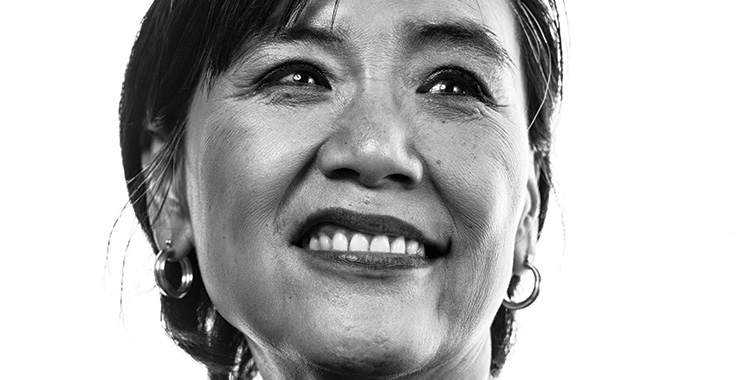
Some psychologists embrace a political role. Cynthia Ann Telles, PhD, a psychologist and professor at the University of California, Los Angeles, was nominated in June 2021 to serve as the U.S. ambassador to Costa Rica, an opportunity that grew out of a long history of philanthropy and government advisory work around health care and mental health. Psychology is also valued in Congress: Judy Chu, PhD, a congresswoman representing California’s 27th District, taught psychology for two decades. She has been especially vocal about combating anti-Asian racism during the coronavirus pandemic. A psychology background has been a boon, Chu said. “Active listening is a huge tool in politics, because many times people just want to be heard,” she said. “Of course, you have to do something about the issues, but validating people’s feelings gets you more than halfway there.”
From therapy to tech
A high emotional quotient is also an asset in tech, where psychologists often find themselves working on multidisciplinary teams. All kinds of tech companies have hired psychologists for years—big names like Microsoft, Google, and Facebook have plenty on staff—but more people with psychology backgrounds are now finding a niche at startups.
According to Forbesopens in new window, investors provided a record-breaking $1.5 billion to mental health startups in 2020 alone (see Mental health, meet venure capital). Not all those startups employ psychologists, but many companies are very serious about getting the psychological science right, said Brian Pace, PhD, a psychologist and director of clinical AI (artificial intelligence) at Lyssn, a company that uses machine learning to give psychologists feedback on their clinical work. Psychologists not only have clinical know-how and data skills but also can help develop products that are accessible, equitable, and as unbiased as possible. They have the skill set to think through issues of delivery and monitoring how tech products are being used, Pace said. “The best people to have a finger on the pulse of how these platforms are being developed, run, and used are psychologists,” he said.
Pace is one of a team of four psychologists at Lyssn. Other psychologists who’ve made the leap to tech often find themselves as the sole mental health professional on staff. That’s the case for Ali Mattu, PhD, a clinical psychologist and director of mental health at Loop, a tech startup developing an app-based program to help individuals with social anxiety.
It might seem intimidating to step into that solo role, but Mattu said that his experience in clinical rotations prepared him to work within a team as the psychology “expert in the room.”
Tech is “a world that a lot of psychologists might not think of as a place for them,” Mattu said. “That’s completely false.”
Entertainment and sports
As stigma around mental health has declined, the public profile of psychologists has grown. Psychologists are now the most asked-for experts through the media request services ResponseSource and HARO, according to digital marketing agency 10 Yetis (PRWeek, Sept. 21, 2021opens in new window). Over a 6-month period, the firms received, on average, three requests for psychologist sources per week.
Documentary filmmakers are also seeking psychology expertise. Fathali Moghaddam, PhD, a Georgetown University psychologist who studies authoritarianism, recently appeared on Netflix’s How to Become a Tyrant, a docuseries about how dictators use emotion and fear to gain control. Appearing in documentaries is a way to share psychological findings the public might not otherwise hear, Moghaddam said. “Suddenly, you’re reaching tens of millions of people, sometimes hundreds of millions, and this is a wonderful opportunity to influence the wider world through psychology,” he said.
Media work can be an extension of other education and advocacy work. Jennifer Mather, PhD, an experimental psychologist at the University of Lethbridge in Canada, has long advocated for the welfare of her experimental animal, cephalopods. She also provides consulting on scientific accuracy to the BBC, including for the David Attenborough–narrated series The Blue Planet. This led to a connection with filmmaker Craig Foster, who was working on a documentary about an octopus he’d been interacting with while diving off the coast of South Africa. Mather spent 10 days in South Africa helping Foster and his team get the science of cephalopods right. The resulting film, My Octopus Teacher, won an Academy Award in 2021. “I believe very firmly in science and the public in two different ways,” Mather said. “I think the public deserve to be involved, and I think they very much deserve to be informed.”
It’s not just nonfiction. Producers telling fictional stories are also increasingly aware of the need to portray mental health issues accurately. For example, clinical psychologist Barbara Van Dahlen, PhD, founder of the mental health nonprofit Give an Hour, consults on the ABC show A Million Little Things, which deals with issues such as suicide and interpersonal violence.
More producers are also looking for mental health help for their actors and crew. Kim Whyte, MS, a licensed professional counselor in Hinesville, Georgia, provided on-set mental health services during the filming of the Amazon Prime series The Underground Railroad. The show’s producers wanted a counselor available given the challenging subject matter of the show. However, Whyte said, mental health support can be helpful even for actors in the frothiest of comedies. Filming, especially on location, involves long, stressful days far from support networks, and performers may not have access to their usual therapist. On-set work is a growth area to watch, Whyte said. “I haven’t heard of it being widespread yet, but I know that it’s about to be,” she said. “I’m getting a lot of calls, a lot of questions.”
There is also a growing awareness that athletes have mental health needs. Sport psychologists have long helped athletes hone their attitudes for peak physical performance, but there is now more focus on making sure athletes are also in peak mental shape. The National Football League (NFL) has enlisted several psychologists to address player well-being: Amber Cargill, PsyD, director of player wellness at the NFL Players Association, and Nyaka NiiLampti, PhD, vice president of wellness and clinical services for the NFL, both serve on the league’s Comprehensive Mental Health and Wellness Committee. As of 2019, individual teams in both the NFL and National Basketball Association (NBA) are also required to have a mental health clinician on-site. While not a requirement in other professional sports leagues, many teams are choosing to hire psychologists as support for players in recognition of the unique demands of the profession.
The demand for sport psychology has also increased in collegiate sports over the past decade, said Anderson, who works with University of Minnesota Athletics as well as professional sports teams. “We’re definitely seeing the stigma of sport psychology beginning to drop,” he said. “I would say the younger athletes are much more open to it than some of the veterans in the pro sports world.”
There is even a nascent demand for sport psychology in youth sports. Katie Pagel, who has an MA in sport and performance psychology, is director of mental performance for the Colorado Rapids Youth Soccer Club, which boasts 11,000 young participants from northern Colorado. The demand is driven in part by elite athletes opening up about the importance of mental strength and stamina for peak physical performance, Pagel said. Parents also saw the importance of sports for their kids’ mental well-being when pandemic lockdowns suddenly took away practices and competition.
Sport psychology is one way to help build psychological resiliency in the population at large, Anderson said, perhaps illustrating how a psychologist outside the counseling room can help ease the pressure on the psychologists inside. “We’re seeing such a rise in mental health problems in the high school and college levels that we can’t possibly treat everybody once they get into crisis,” Anderson said. “We need more proactive programming.”